Air China: Fleet, Network and Service of China's Flag Carrier
Air China was born in 1988 from the split of the old state airline CAAC and is today China's designated flag carrier, also used for state flights. It has been a member of Star Alliance since 2007, has its main hub in Beijing and, through the Air China group, holds stakes in several regional airlines including Shenzhen Airlines, Dalian Airlines and Shandong Airlines, for a group fleet of more than 960 aircraft.
History and positioning
Being the carrier chosen for state flights is not just a matter of protocol: it positions Air China as the country's most institutional airline brand, distinct from China Eastern and China Southern in image and, in part, in routes to the most diplomatically relevant capitals. Joining Star Alliance in 2007 reinforced this stance, giving passengers access to a global interconnection network typical of a Western legacy carrier.
The fleet
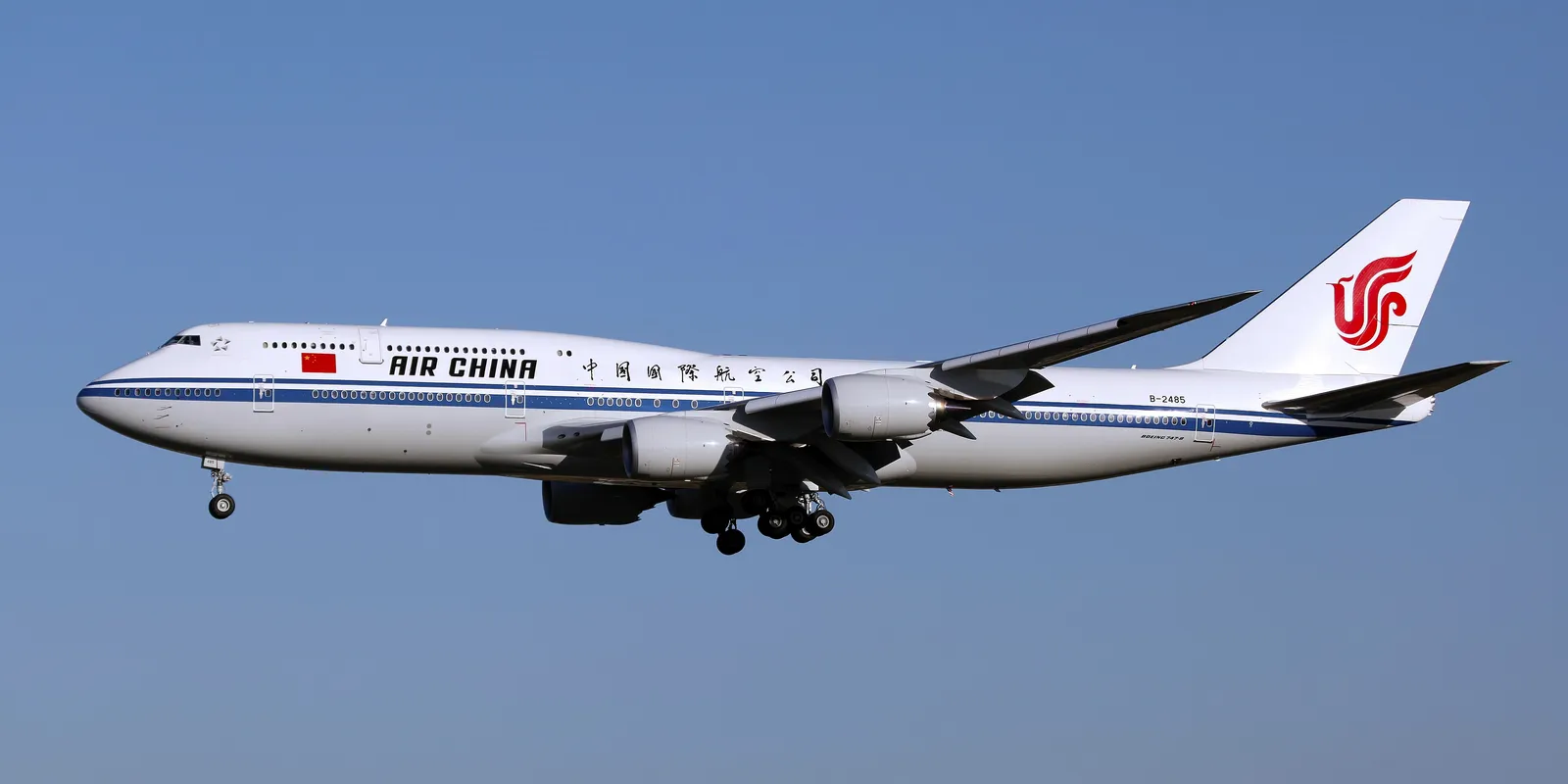
The mainline fleet numbers about 530 active aircraft across 18 different types: the widebodies include the Boeing 747-8 (a small number, also used for government flights), the 777-300ER, the 787-9 and the Airbus A350-900, while most short- and medium-haul flying is handled by the A320 family and the 737. The first COMAC C919s are also arriving, with another 35 on order for delivery between 2026 and 2028.
Routes and network
The model is hub-and-spoke centered on Beijing, with an extensive domestic network and long-haul links to Europe, North America and Oceania. Star Alliance membership ensures good interline connectivity for those arriving from other continents on a partner carrier.
On board and service
Air China holds a Skytrax 4-star rating, with business class on the 787, A350 and 777 offering largely lie-flat seats, and full meal service even on many medium-distance domestic routes, in line with its full-service rather than low-cost positioning.
What passengers say
The long-haul widebody product draws generally positive reviews, while the most frequent criticism concerns punctuality on domestic routes, penalized by very congested air traffic around Beijing, and a service quality perceived as less consistent on flights operated by the controlled regional airlines than on mainline ones.
Air China is a solid choice if you need to reach Europe, North America or Oceania with a connection in Beijing within a Star Alliance itinerary. It is less suitable if you have a tight domestic connection during peak traffic periods, when air traffic control delays are frequent. The practical tip is to leave at least ninety minutes of margin on any domestic-to-international connection in Beijing: the airport is enormous and congestion delays are not the exception.
You might also like...

Bahamasair: The ATR and Boeing Fleet of the Bahamas' Flag Carrier

Chengdu Shuangliu International Airport: where to stay, areas and recommended hotels

Aurillac Airport: where to stay, areas and recommended hotels
ITA Airways in 2026: The New Fleet, the Move to Lufthansa and What Passengers Really Say

Last-minute checklist before leaving home