Atlantic Airways: The Faroe Islands Airline That Must Always Keep a Helicopter Ready for Rescue
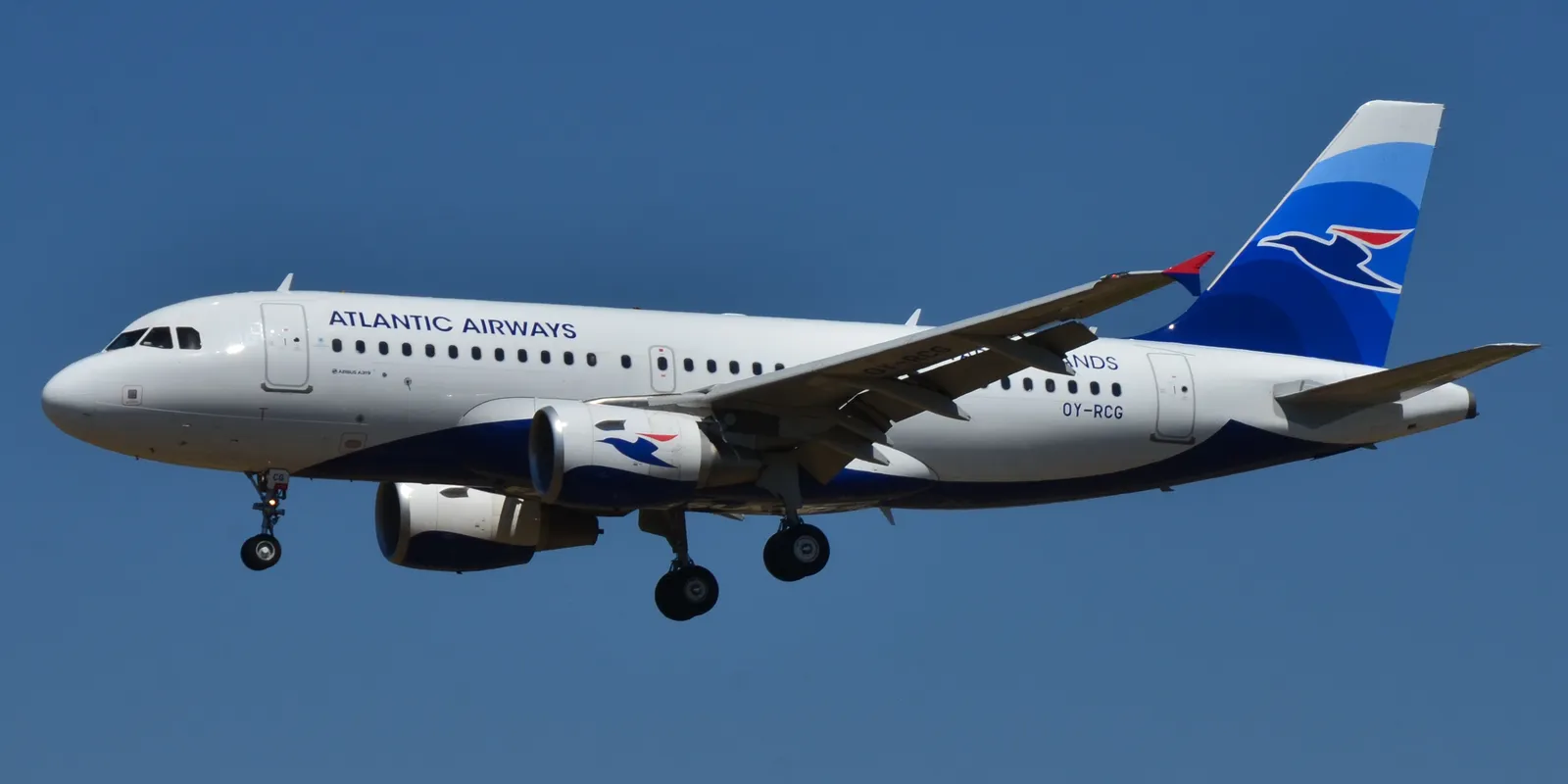
Founded in 1987 as a joint venture between the Faroese government (51%) and the Danish airline Cimber Air (49%), Atlantic Airways became wholly Faroese publicly owned in 1989. It operates from the archipelago's only airport, Vágar, serving 12 European destinations with a mixed fleet of airliners and helicopters, the latter also used for domestic links and sea rescue.
Born in a Period of Economic Crisis
The first years of operation, starting with the inaugural Vágar-Copenhagen flight in March 1988, coincided with the severe Faroese economic depression of the early 1990s, which put the sustainability of the newborn airline to a hard test. Atlantic Airways reached financial stability only in 1995, after a turbulent start tied more to the country's crisis than to any operational problems of its own.
An Airbus Fleet Being Gradually Renewed
On the fixed-wing side it operates 4 Airbus A320s (2 classic models and 2 neos), with two more A320neos already on order to gradually replace the older aircraft. Most of its pilots belong to the Faroese Pilots' Association, a detail that reflects how rooted the airline remains in the local community rather than in any multinational logic.
Vágar as the Archipelago's Only Air Access
From Vágar, routes reach Copenhagen, Billund, Paris, Barcelona and several Scandinavian cities: for people who live in the Faroe Islands, Atlantic Airways is not a choice among several options but the only direct air link with the rest of Europe, since no other carrier operates regularly at the airport.
The Dual Role: Airline and Sea Rescue
Besides passenger traffic, the company runs 2 Leonardo AW139 helicopters with 15 seats each, used both for domestic links between the islands and for the search and rescue service: by law, at least one helicopter must always remain operational and ready to respond, an obligation that makes Atlantic Airways a piece of public safety infrastructure as well as a commercial carrier.
What passengers say
Regular travelers to the Faroe Islands report a strong dependence on North Atlantic weather conditions, which can cause cancellations at short notice in the winter months, while the cabin crew is described as competent in handling these difficult operating conditions. The absence of direct air alternatives makes punctuality a more sensitive issue than elsewhere, precisely because there is no competitor's later flight to fall back on.
People who live in the Faroe Islands do not choose Atlantic Airways by comparing it with other carriers, simply because the alternative does not exist: it is the only airport, the only airline, the only way to arrive by air. It is a different matter for anyone coming from outside with a tight itinerary in winter, when cancellations tied to North Atlantic weather are more frequent.
If you fly in autumn or winter, always leave a buffer day before a fixed commitment elsewhere: with a single airport serving the entire archipelago, a day of bad weather at Vágar can mean the day's only flight is canceled with no immediate alternative.
You might also like...

Albany International Airport: where to stay, areas and recommended hotels

Kalamata Airport: where to stay, areas and recommended hotels

Bahamasair: The ATR and Boeing Fleet of the Bahamas' Flag Carrier
ITA Airways in 2026: The New Fleet, the Move to Lufthansa and What Passengers Really Say
Johannesburg: choosing the right lounge at OR Tambo