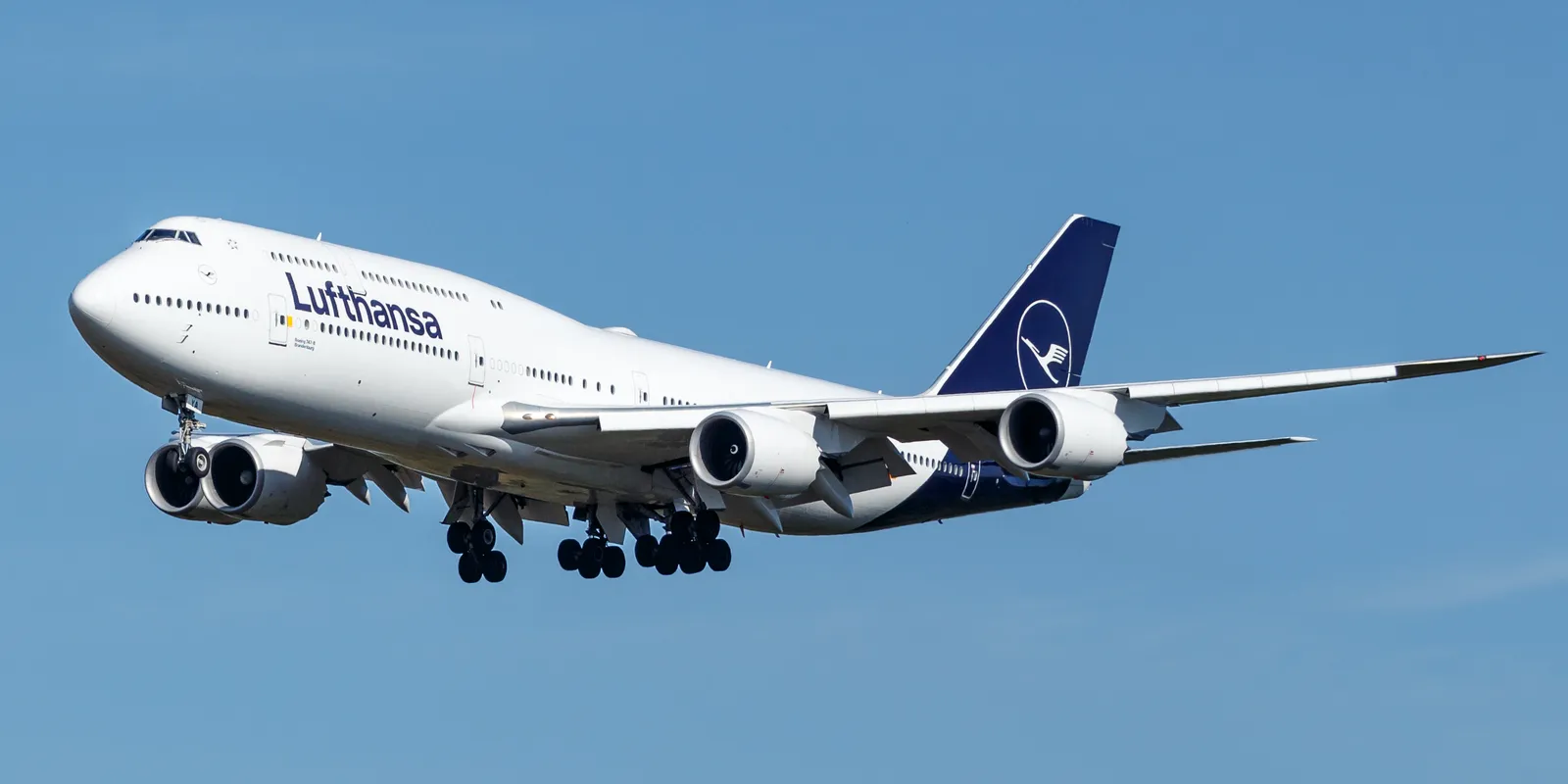
Lufthansa: Fleet, Routes and Service of the German Flag Carrier
Swiss, Austrian, Brussels Airlines, Eurowings and Discover Airlines (based in Frankfurt) are all part of the group of which Lufthansa, founded in 1926, is the heart: the German carrier operates two hubs, Frankfurt and Munich, and is among the founding members of the Star Alliance.
The Heart of a Group That Includes Swiss and Austrian
The Lufthansa group's growth came through successive acquisitions, Swiss in 2005, Austrian in 2009, Brussels Airlines in 2017, up to building one of the largest multi-carrier structures in Europe, with Lufthansa itself as the main and most prestigious brand.
From the A320neo to the 747-8, via the A350
On short and medium haul, the Airbus A320/A321 family flies, including the neo generation; on long-haul, the new-generation Airbus A350-900s coexist with the Boeing 747-8s, of which Lufthansa remains one of the few passenger operators left in the world, pending the future 787-9s ordered for the coming years.
Two Hubs, One of the Densest Networks in Europe
Frankfurt and Munich remain the two hubs on which a dense network of connections to North America and Asia (China, Japan, India) is built, among the most efficient on the continent in terms of the number of connections available within a narrow window.
In the Cabin: From First Class to Economy
First Class, offered in a dedicated terminal in Frankfurt reserved exclusively for these passengers, remains a niche product highly appreciated by frequent flyers of the Miles & More program, one of the oldest in Europe.
Pros and Cons According to Frequent Flyers
- Strengths: a network of connections in Frankfurt and Munich among the most efficient in Europe, and a First Class product highly appreciated by those who fly often.
- Weaknesses: recurring strikes by ground staff or pilots with large-scale impact, and baggage handling cited as a weak point in recent years, especially in Frankfurt.
It is the most suitable choice for those who fly long-haul often, relying on the most tried-and-tested European connections on the continent; it is less suitable for those with a very tight connection in Frankfurt, where the official minimum time between two international flights is often shorter than is comfortable in practice at the terminal, especially when switching between the two main terminals. A practical tip: with less than 60-70 minutes and a terminal change, it is worth actively checking the status of the connection rather than trusting only the minimum time declared by the booking system.
You might also like...

Pardubice Airport: where to stay, areas and recommended hotels
Jinnah International Airport: where to stay, areas and recommended hotels
Aeroitalia: The ITA Airways Lawsuit, the Growing Fleet and What to Expect On Board
ITA Airways in 2026: The New Fleet, the Move to Lufthansa and What Passengers Really Say

General Edward Lawrence Logan International Airport: where to stay, areas and recommended hotels
