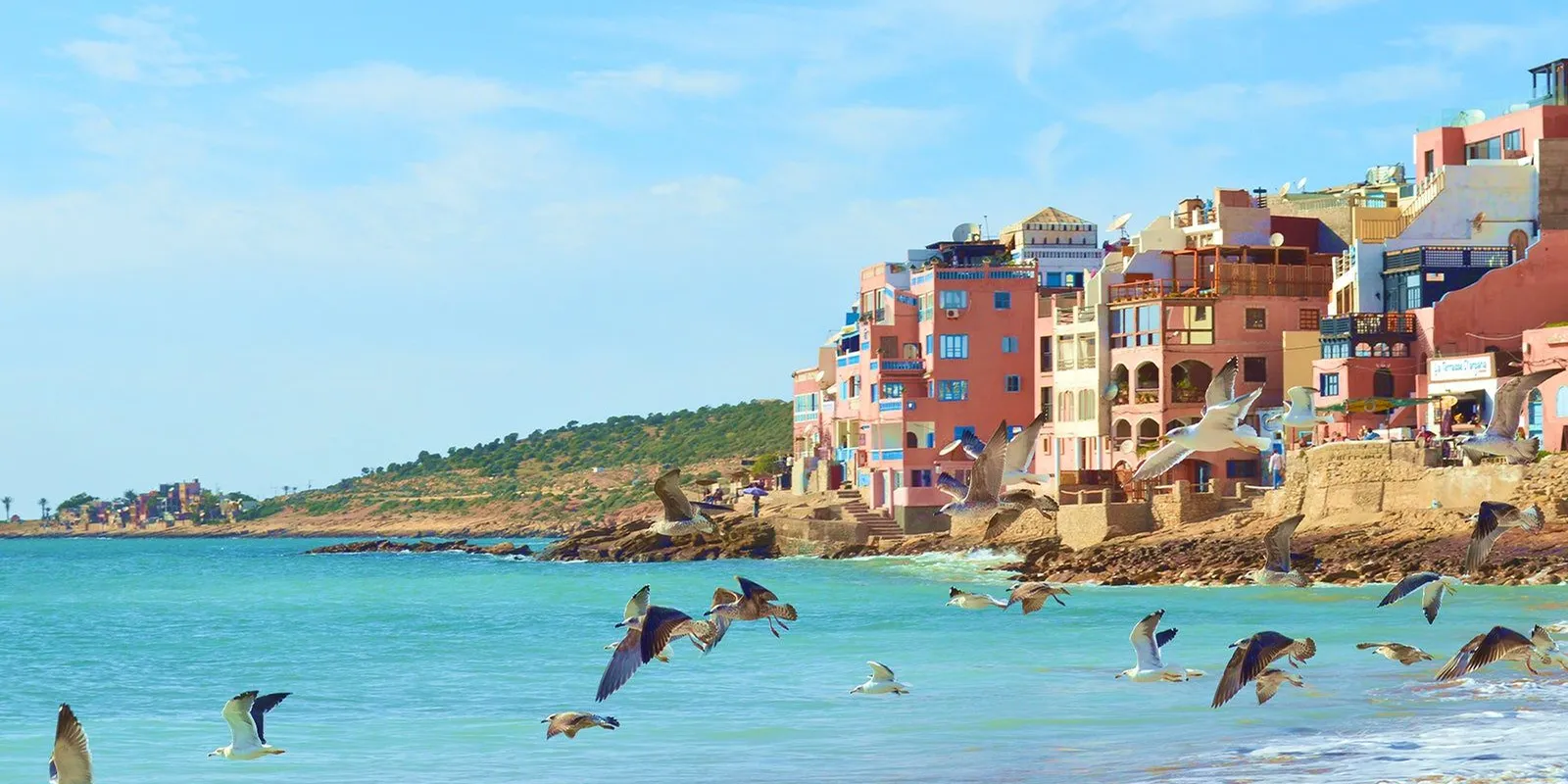

Agadir: the hilltop kasbah and the seafront
The 1960 earthquake razed the previous Agadir to the ground, killing thousands: the city visible today is almost entirely rebuilt in modern style, with a waterfront among Morocco's longest.
The city can be comfortably explored on foot along the coast, while for the hilltop kasbah a taxi is preferable.
At the top of the hill that dominates the bay, only the earth walls of the Kasbah Agadir Oufella, destroyed by earthquake, remain: an inscription in Arabic still reads 'Fear God, Respect the King', visible from much of the city below.
Descending to the port you reach the Marina of Agadir, a neighborhood built in the two-thousands with shops, restaurants and fishing and leisure boats side by side.
A short distance away, the Souk El Had, one of the largest covered markets in Morocco after Marrakech's, encloses over a thousand stalls of spices, fabrics and handicrafts behind its own walls.
Toward evening, the long city beach and the small Valley of the Birds, a garden with birds and small animals in the heart of the city, offer a more peaceful break before dinner.
The crumbling kasbah walls remain lit each evening, transforming the scar left by the earthquake into one of the city's most photographed viewpoints.
In Agadir there is virtually no "old city" to visit: the reconstruction has made the present, more than the past, the true center of the tourist experience.
Guided tours and experiences in Agadir


Related articles

You might also like...
Marrakech: what to see in 1 day
Ouarzazate: the Hollywood of the Moroccan desert

What to do if you can't complete online check-in

Campbeltown Airport: where to stay, areas and recommended hotels

City of Derry Airport: where to stay, areas and recommended hotels