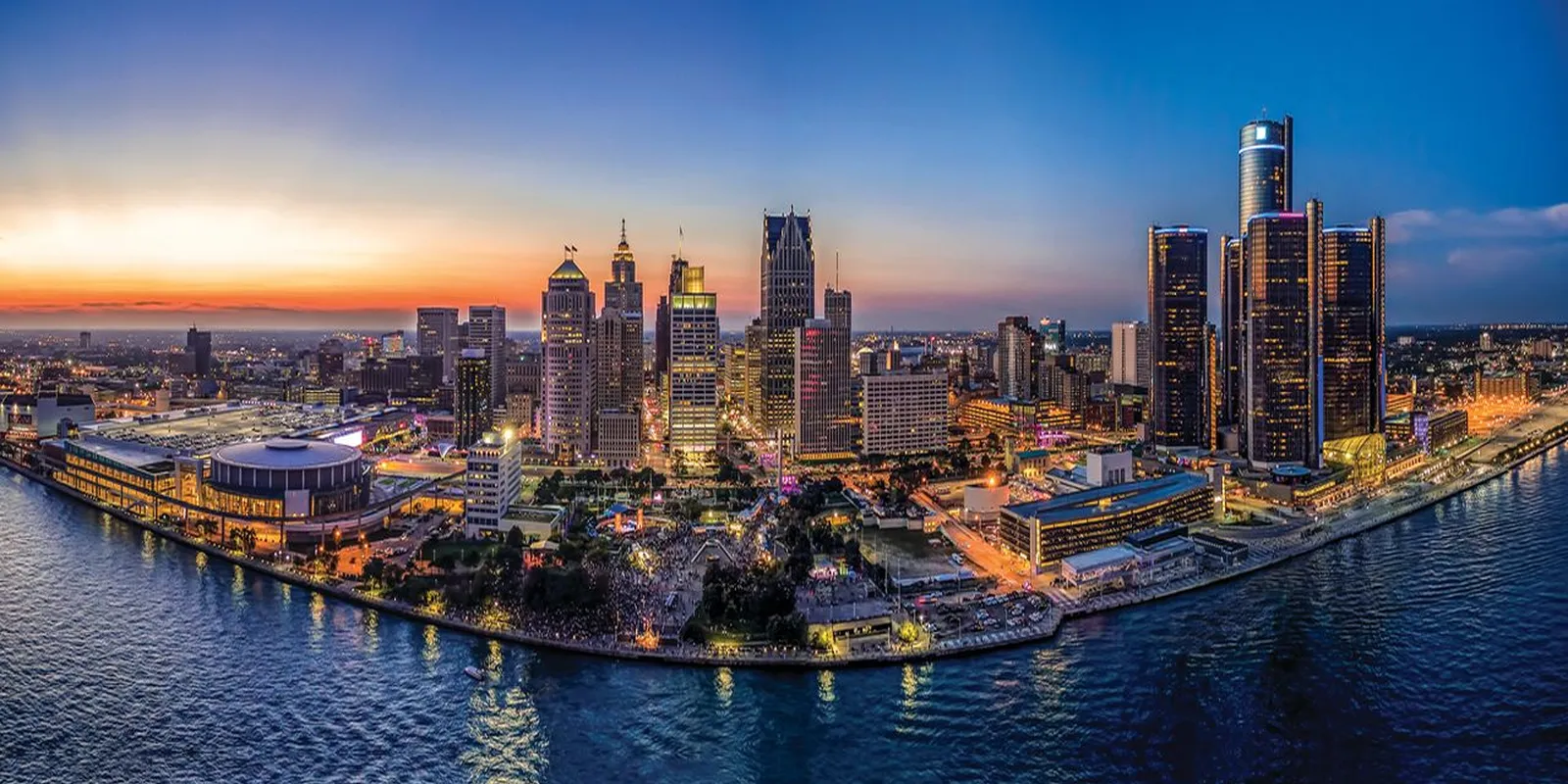

Detroit: motors, music and urban rebirth
The world capital of the automotive industry for much of the twentieth century, Detroit has passed through decades of decline to then rebuild, neighborhood by neighborhood, a cultural identity that goes far beyond its factories.
The main neighborhoods concentrate on an axis traversable by car in a day.
The Motown Museum, housed in the building that hosted Berry Gordy's first record label in 1959, preserves the original Studio A where Stevie Wonder, the Jackson 5, and the Supremes recorded, still operational for occasional recordings.
The Detroit Institute of Arts holds the cycle of murals 'Detroit Industry' by Diego Rivera, twenty-seven panels painted in the 1930s that both celebrate and question manual labor in Ford factories.
The Eastern Market, a covered market active since 1891, remains the largest historic market for fresh produce in the United States, with large-scale murals covering much of the surrounding warehouses.
The Riverwalk, over five kilometers of riverfront reclaimed along the border with Canada, offers a direct view of Windsor, Ontario, across the Detroit River.
Rivera's murals, both celebratory and critical, already in the 1930s anticipated the contradictions that would mark Detroit in subsequent decades.
The Riverwalk, built on former abandoned industrial sites, today shows that same energy redirected elsewhere — no longer the factories, but the space they left free.
Guided tours and experiences in Detroit
Related articles

You might also like...
Toledo: America's capital of glass art
A Day in Saginaw, Michigan

Endeavor Air: Who Really Operates Many Delta Connection Regional Flights and With Which Aircraft

Air Ivoire: The Story of the Flag Carrier That Disappeared in 2011
How to avoid unpleasant surprises after booking a flight
