Dhaka: the rickshaw capital on the Ganges
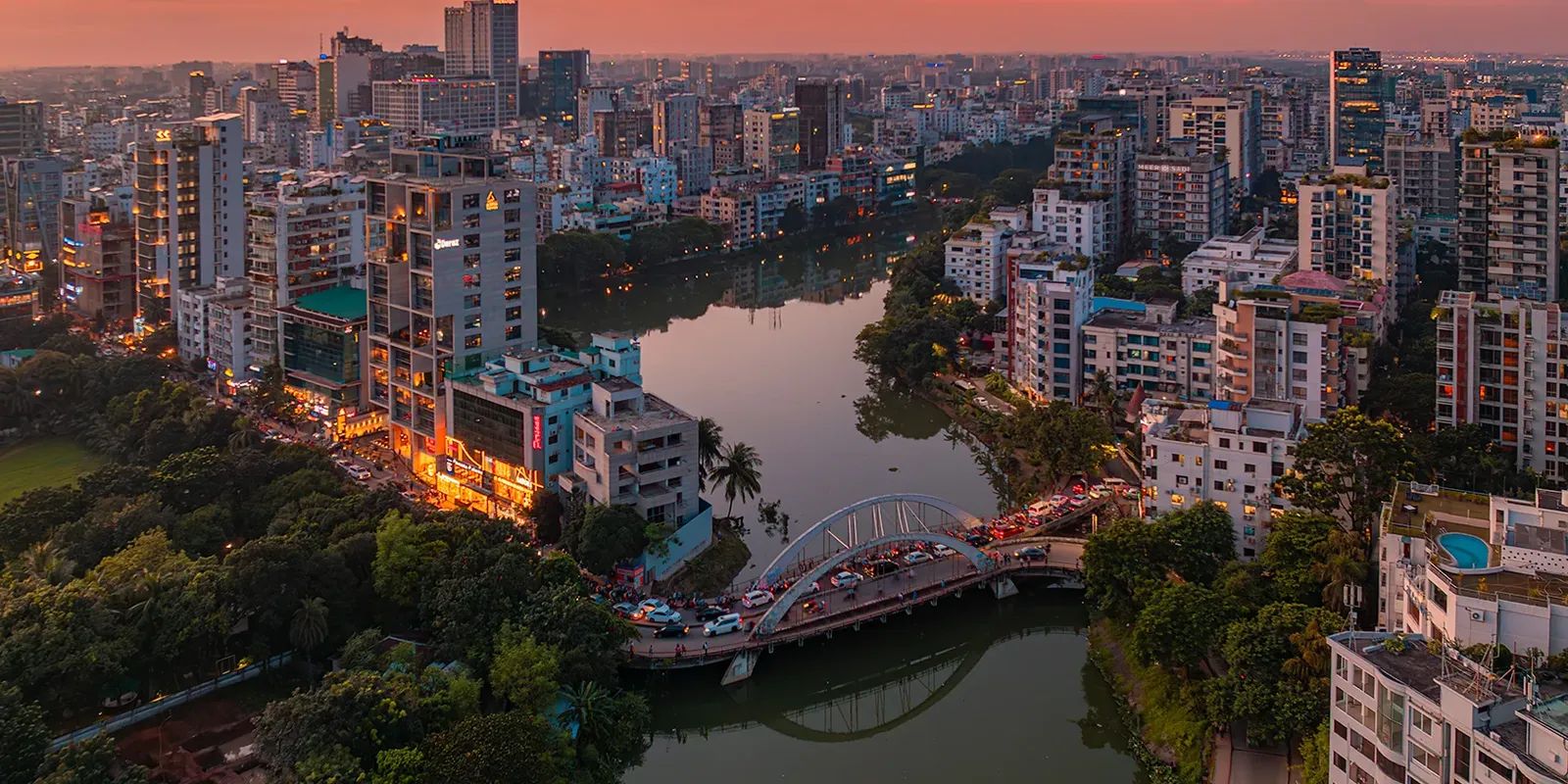
With more pedal rickshaws than any other city in the world, Dhaka remains the pulsing and chaotic heart of the Ganges and Brahmaputra delta.
Rickshaws and baby-taxis (tuk-tuks) remain the most common way to get around.
The Lalbagh Fort, an incomplete Mughal fortress of the Seventeenth century, houses the mausoleum of a governor's daughter, who died before the work's completion.
A few steps away, the Star Mosque, decorated with blue and white star-patterned tiles, remains one of the most photographed religious buildings in the old city.
Continuing toward the river, you visit Sadarghat, a river port among the world's busiest, where hundreds of boats crowd along the banks of the Buriganga river.
Toward evening, the markets of the old city enliven the textile commerce for which Dacca has been known since the Mughal era.
Dhaka hosts over one million cycle rickshaws in daily circulation, the highest number of any city in the world, earning itself the unofficial title of 'rickshaw capital.'
Dhaka was for centuries famous worldwide for the production of muslin, a cotton fabric so fine it earned the epithet 'woven air' from European merchants of the colonial era.
Related articles

You might also like...
Sylhet: the tea hills of Bangladesh
Chittagong: the maritime gateway to the tribal hills

Cape Town International Airport: where to stay, areas and recommended hotels

How to behave at the airport from departure to boarding

Brussels Airport: where to stay, areas and recommended hotels