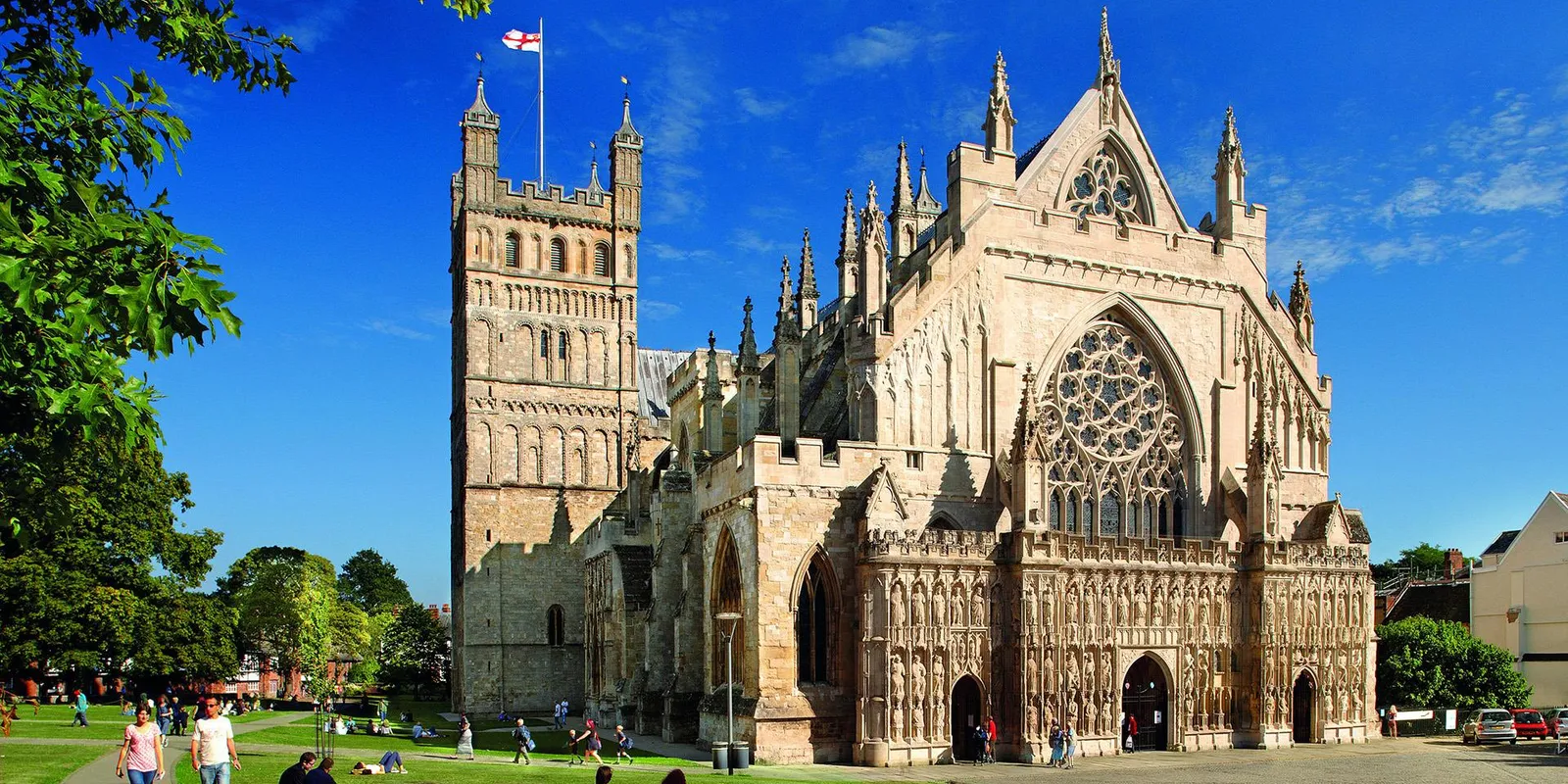

Exeter: the cathedral that survived the bombing
Founded by the Romans as Isca Dumnoniorum, Exeter preserves a Gothic cathedral that survived almost intact the German bombing of World War II.
The centre, with the cathedral that survived the war bombing, is easily explored on foot.
The Exeter Cathedral, with its unbroken Gothic vault the longest in England, survived almost intact the German bombardments of 1942 that devastated much of the city center.
A short walk away, Exeter's medieval underground tunnels, built to transport drinking water to the city, can still be visited today with guided tours.
Continuing on, one walks along the Quayside, the ancient river port on the Exe River, now converted into an area of restaurants and independent shops.
In the evening, the remains of the Roman walls of the city, among the best-preserved in England, intertwine with the medieval and modern architecture of the center.
The German bombing raids of 1942, part of the so-called 'Baedeker raids' deliberately targeting cities of historical and cultural value, destroyed much of Exeter's medieval center, sparing the cathedral almost miraculously.
The medieval underground tunnels of Exeter are a unique case in England: no other British city preserves a system of underground water conduits on this scale that is open for visitors.
Related articles


You might also like...
Cardiff: the castle at the heart of the Welsh capital
Bristol (UK): Brunel's bridge and street art

Milano Linate Airport: where to stay, areas and recommended hotels

Swollen legs on planes: how to prevent discomfort without exercise

Shenzhen: which lounge to choose at Terminal 3
