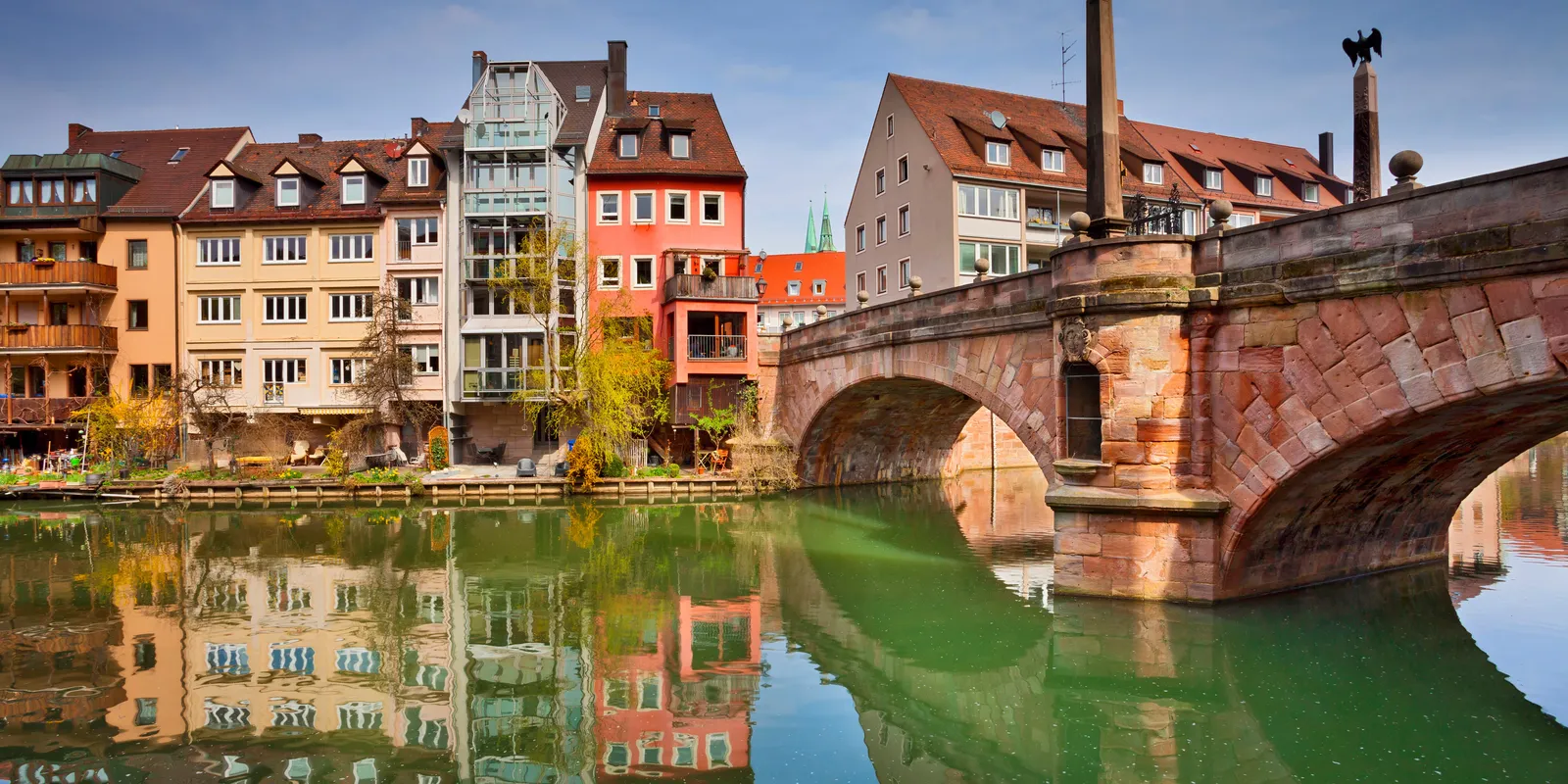

Nuremberg: Christmas markets and 20th-century memory
Birthplace of the painter Dürer and site of the trials that judged Nazi leaders, Nuremberg carries together a reconstructed medieval centre and difficult 20th-century history.
The medieval centre, famous for its Christmas markets, is easily explored on foot.
The Imperial Castle of Nuremberg, residence of the Holy Roman emperors, dominates the city from atop its fortified hill.
A short walk away, the House of Albrecht Dürer, where the painter lived and worked for decades, preserves reproductions of his works in a half-timbered fifteenth-century building.
The Nazi Congress Grounds Memorial, housed in the unfinished building designed for party rallies, tells the rise and fall of the regime through original documents.
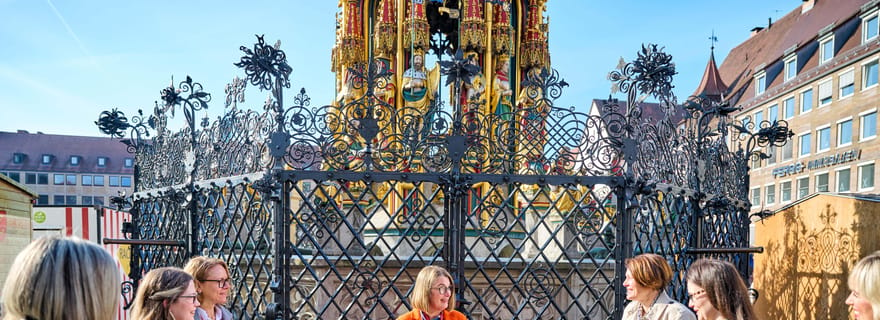
As evening falls, the Hauptmarkt, the central square with the golden fountain Schöner Brunnen, hosts every December one of Germany's oldest and most famous Christmas markets.
The Nuremberg trials of 1945-46, which judged the principal surviving Nazi hierarchs, established for the first time in history the principle that crimes against humanity could be prosecuted internationally.
The city was chosen specifically for the trials because it symbolized the regime, having been the site of major party rallies and of the racial laws that took its name in 1935.
Guided tours and experiences in Nuremberg
Related articles


You might also like...
Hof: the Bavarian gateway to the former East German border
One day in Munich: itinerary and highlights

Marsa Alam International Airport: where to stay, areas and recommended hotels

MBS International Airport: where to stay, areas and recommended hotels
Brussels-Zaventem lounges, pier by pier: which ones you can get into