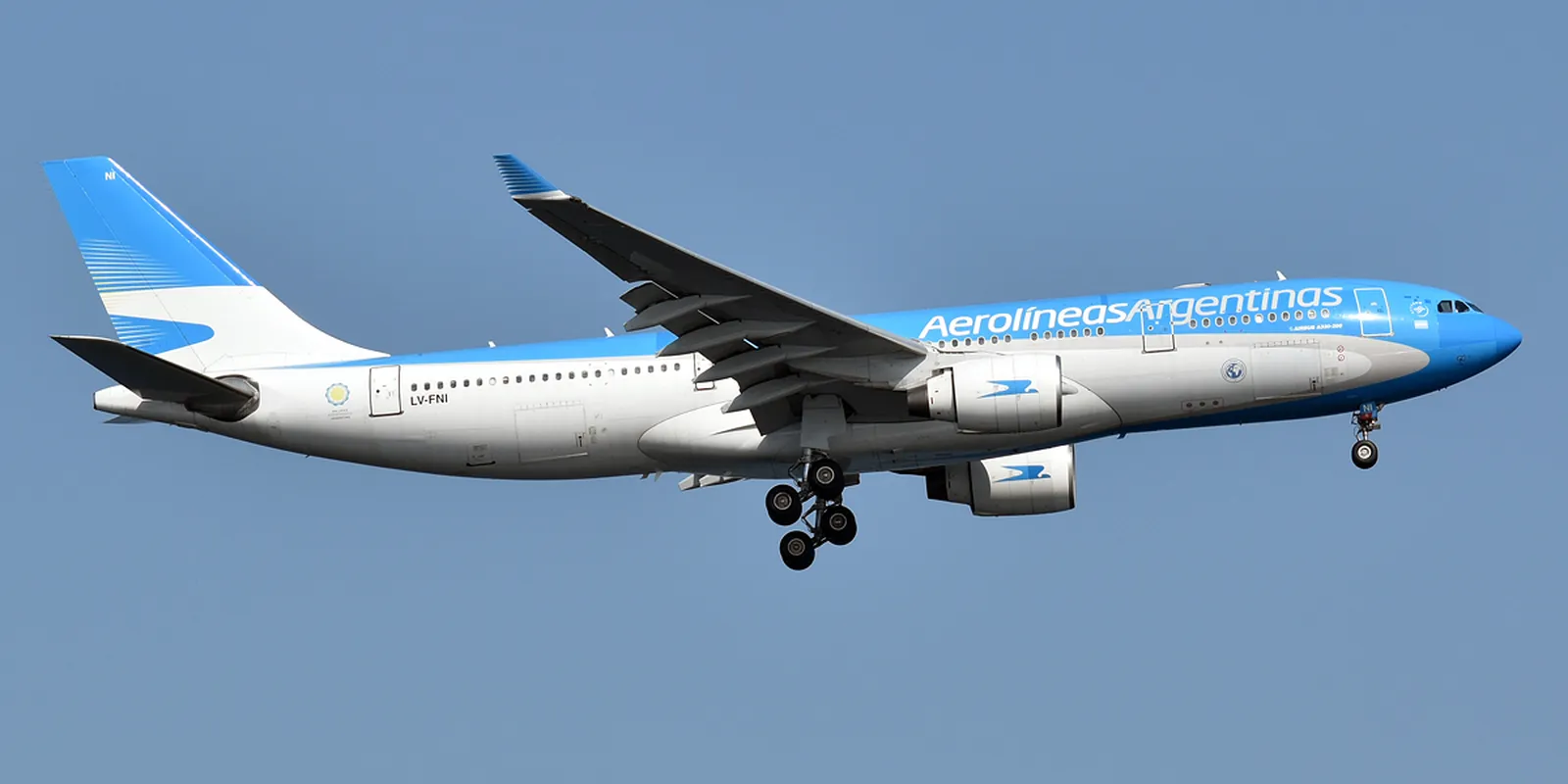
Aerolíneas Argentinas: What Passengers Really Say
From Buenos Aires radiates the network of Aerolíneas Argentinas, a flag carrier founded in 1949 from the merger of four existing carriers and renationalized by the Argentine state in 2008. It links the capital with the entire Argentine domestic network and with intercontinental destinations in North America, Europe and a few South American cities.
History and positioning
Aerolíneas Argentinas was founded in 1949 from the merger of four existing carriers and was renationalized by the Argentine state in 2008, after a period of private management under the Spanish group Marsans that was judged a failure and marked by heavy losses. Today it remains the country's leading full-service carrier, with a hub-and-spoke network centered on Buenos Aires that covers much of Argentine territory, along with intercontinental links, and with an almost public-service role on many domestic routes where it is the only regular air link. The pilots' and ground staff union retains significant bargaining weight in the airline's operational decisions, a legacy of its long history of state management.
The fleet
The short- to medium-haul fleet is made up of Boeing 737-800s and 737 MAX 8s, used on the domestic network and on regional South American routes, while the intercontinental links to North America and Europe are entrusted to Airbus A330-200s, configured with a business cabin and premium economy on the longest routes. The transition to the 737 MAX, begun after the lifting of the model's global grounding, is proceeding in parallel with the gradual retirement of the oldest 737-800s in the fleet.
Routes and network
The domestic network, which accounts for the bulk of traffic, links Buenos Aires with dozens of Argentine cities, often with no comparable direct alternatives, from Ushuaia in the far south to Salta and Jujuy in the north, while the intercontinental network reaches Madrid, Rome, Miami and New York, along with regional destinations in Brazil, Chile and Uruguay. The Madrid route remains one of the most important in the intercontinental network, also because of the strong historical and migratory ties between Argentina and Spain.
On board and service
Onboard service on intercontinental routes receives decent ratings, with meals judged average and cabin crew generally courteous, while business class on the A330s offers reclining seats and more refined catering. On the shorter domestic routes service is generally limited to a snack.
Fares and baggage
Domestic fares generally include a standard baggage allowance, while on intercontinental routes economy class offers a checked bag included and business class a larger allowance. The Aerolíneas Plus loyalty program lets you earn points on both the domestic and international networks.
What passengers say
On domestic routes, independent reviews more often cite delays linked to congested air traffic at Aeroparque and staff strikes, a recurring theme in the Argentine aviation sector because of the sector's historic union tensions. Reviews of intercontinental routes tend to be more favorable than those of domestic routes, where problems tied to congestion and strikes weigh more heavily on overall perception.
- An extensive domestic network, often with no direct alternatives on certain routes.
- Onboard service average by international standards on intercontinental routes.
- Business class on the A330s rated positively for comfort and catering.
- The Aerolíneas Plus loyalty program usable on both the domestic and international networks.
- Congestion and periodic strikes at Aeroparque, Buenos Aires's domestic hub.
- Long phone waits for booking changes and refunds.
- Delays more likely in periods of high seasonal demand.
- A network heavily dependent on the Aeroparque hub, with few direct links that bypass it.
Aerolíneas Argentinas is the natural choice for anyone who needs to travel across much of the Argentine domestic network, where it often has few direct competitors on certain routes. It is less suitable for those with a tight connection at Aeroparque on days of an announced strike: in those cases it is worth checking flight status 24-48 hours ahead. Manage booking changes online when possible, to avoid the phone queues passengers report most often.
You might also like...

Béziers-Vias Airport: where to stay, areas and recommended hotels

José Joaquín de Olmedo International Airport: where to stay, areas and recommended hotels

Bahamasair: The ATR and Boeing Fleet of the Bahamas' Flag Carrier
Republic Airlines, the Only Regional Carrier That Flies for Three Major Airlines at Once

New York JFK: how to navigate arrival in the Big Apple