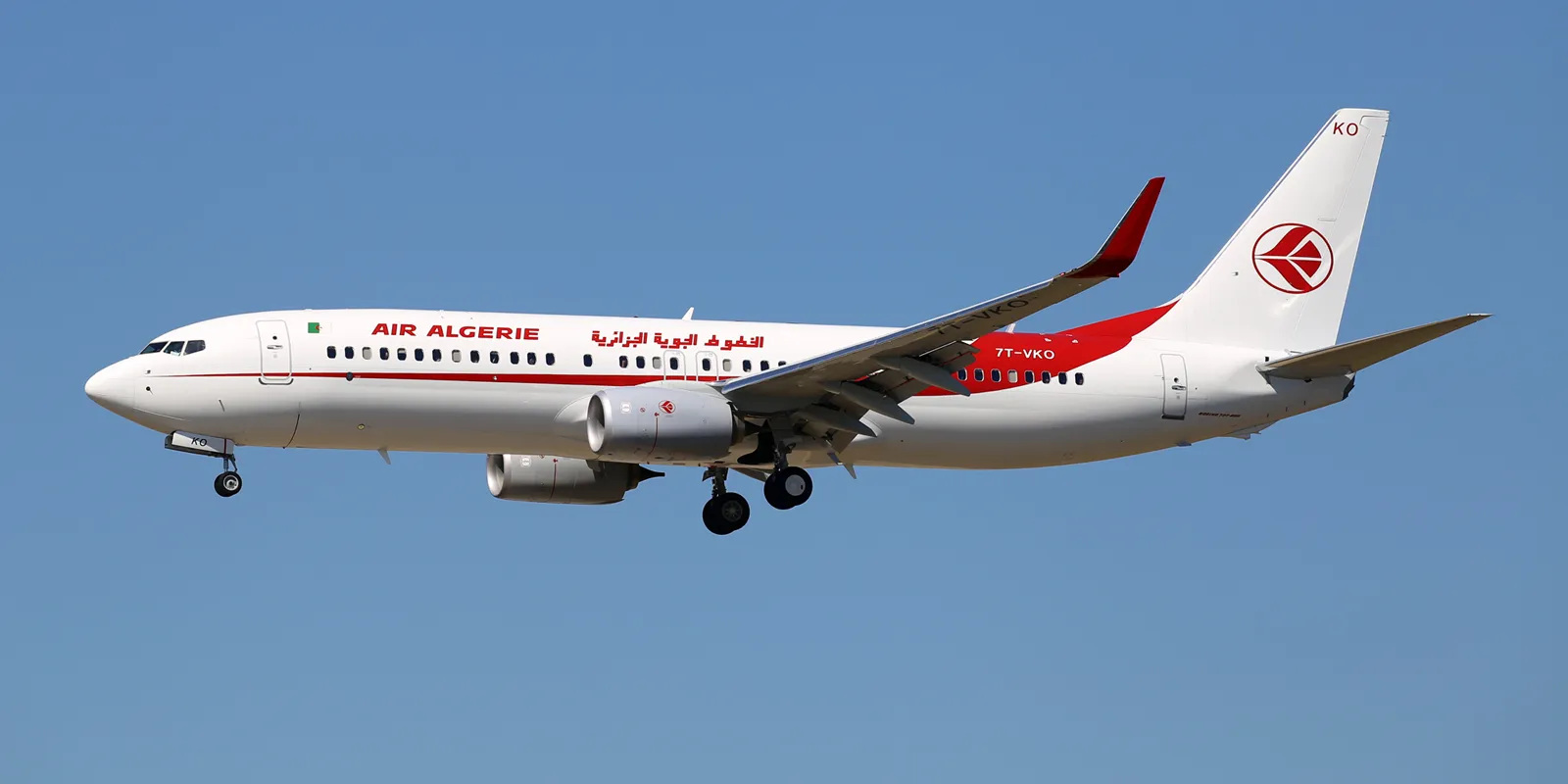
Air Algérie: Fares, Fleet and What to Expect On Board
Air Algérie was founded in 1947 and took its current name in 1953, establishing itself as the flag carrier of the Algerian state with its main hub at Algiers Houari Boumediene Airport. It operates a network linking Algeria with France, other European countries, the Middle East and West Africa, along with a dense domestic network serving a vast country poorly connected by road or rail.
History and positioning
Air Algérie was founded in 1947 as Compagnie Générale de Transports Aériens and took its current name in 1953, establishing itself as the flag carrier of the Algerian state in a historical context, that of the French colonial postwar period, very different from the present one. It operates as a traditional full-service carrier, without the unbundled model of the low-cost airlines: the base fare generally includes a checked bag and a meal on the longer routes. Its role remains in part that of an essential link for a vast country, the largest in Africa by area and poorly served by rail in the interior and desert regions, as well as the main channel for the Algerian diaspora in France and the rest of Europe, one of the largest immigrant communities on the continent. The Algerian government has also repeatedly discussed plans for partial opening to private capital, without any actual privatization of the airline ever having been reached so far.
The fleet
The fleet combines Airbus A330s for intercontinental routes and the longer European links, Airbus A320s and A319s for short- to medium-haul European and North African routes, and Boeing 737-800s together with ATR 72 turboprops for the shorter domestic links between Algerian cities, including those in the southern Saharan regions where the shorter runways require smaller aircraft. The ATR 72 part of the fleet is particularly important for the links with the cities of southern Algeria, where the shortest runways do not allow the use of larger single-aisle aircraft.
Routes and network
The hub remains Algiers Houari Boumediene airport, from which a network radiates linking Algeria with France (Paris, Marseille, Lyon), other European countries such as Spain and Italy, several capitals in the Middle East and West Africa, along with a dense domestic network serving dozens of Algerian cities otherwise reachable only by road, often with journey times of many hours in the most remote parts of the Algerian Sahara. The Paris route remains historically the busiest of the European network, followed by Marseille and Lyon, cities with a strong presence of the Algerian community living in France.
Fares and baggage
As a full-service carrier, fares typically include the standard checked-baggage allowance, without the extra costs typical of European low-cost carriers on the same routes. Passengers comparing the price with Air France or other direct carriers on Algiers-Paris often report a cost advantage for equivalent services including baggage, a relevant factor for those traveling with family or with bulky luggage tied to extended visits.
On board and service
On intercontinental routes and the longer European links operated with the A330s, onboard service includes a hot meal and a separate business cabin, while on the shorter domestic flights with the ATR 72 the service is reduced to a simple refreshment. There is no individual digital entertainment program comparable to that of the big European or Gulf carriers.
What passengers say
Frequent travelers on Algiers-Paris report competitive fares, but also recurring delays in peak periods such as summer and Ramadan, when demand rises sharply for diaspora returns. Reviews in French remain the most numerous online, a natural reflection of the large share of passengers tied to the Algerian diaspora in France.
- Fares often advantageous on Algiers-France compared with direct European carriers, baggage included.
- Catering judged decent on the long-haul routes operated with the A330s.
- A domestic network useful for reaching Saharan locations that would otherwise be isolated.
- An extensive network that reaches even the most isolated Saharan locations in the country.
- Ground check-in often described as slow at the main Algerian airports.
- Customer service response times not always quick in case of lost baggage or a canceled flight.
- Higher likelihood of delay in periods of very high demand such as summer and Ramadan.
- No individual digital entertainment program comparable to that of Gulf carriers or the major European ones.
Air Algérie is a solid choice for anyone who needs to connect Algeria with the diaspora in France or with North African cities and has no convenient direct alternatives. It is less suitable for those traveling with tight connections in high season. Get to the airport with a good margin of time in peak periods: ground check-in is often the bottleneck passengers cite most.
You might also like...
Baggage included in the ticket: how to verify it for sure
People's Viennaline: The Tiny Austro-Swiss Airline and the Routes It Really Flies
Where to wait for your flight after security
Azerbaijan Airlines: What Passengers Say About AZAL Comfort and Punctuality

Ibiza Airport: where to stay, areas and recommended hotels
