Air Zimbabwe: Why the Flag Carrier Flies Almost Only on Borrowed Aircraft
Air Zimbabwe is Zimbabwe's flag carrier, entirely state-owned, originating in 1967 as Air Rhodesia Corporation and taking its current name in 1980 with the country's independence. It is headquartered and has its main hub at Harare airport, and operates a network that is much reduced compared with the past: a few domestic and regional links and no direct intercontinental flights. Over the last fifteen years the airline's story has been dominated more by debt and fleet crises than by commercial growth.
History and positioning
Today's Air Zimbabwe descends from Air Rhodesia, which became Air Rhodesia Corporation in 1967 and was then renamed after independence in 1980. It is fully controlled by the Zimbabwean government. The numbers of the crisis speak for themselves: passengers carried fell from about one million in 1999 to just 23,000 in 2005. In 2011 IATA suspended the airline from its financial clearing system over unpaid debts, and at the end of the same year some aircraft were seized by creditors. Since March 2012 it has operated as Air Zimbabwe Private Limited, still publicly owned, in an attempt to separate the operating business from the accumulated debt, which according to figures circulated over the years exceeds 300 million dollars owed to domestic and foreign creditors.
The fleet
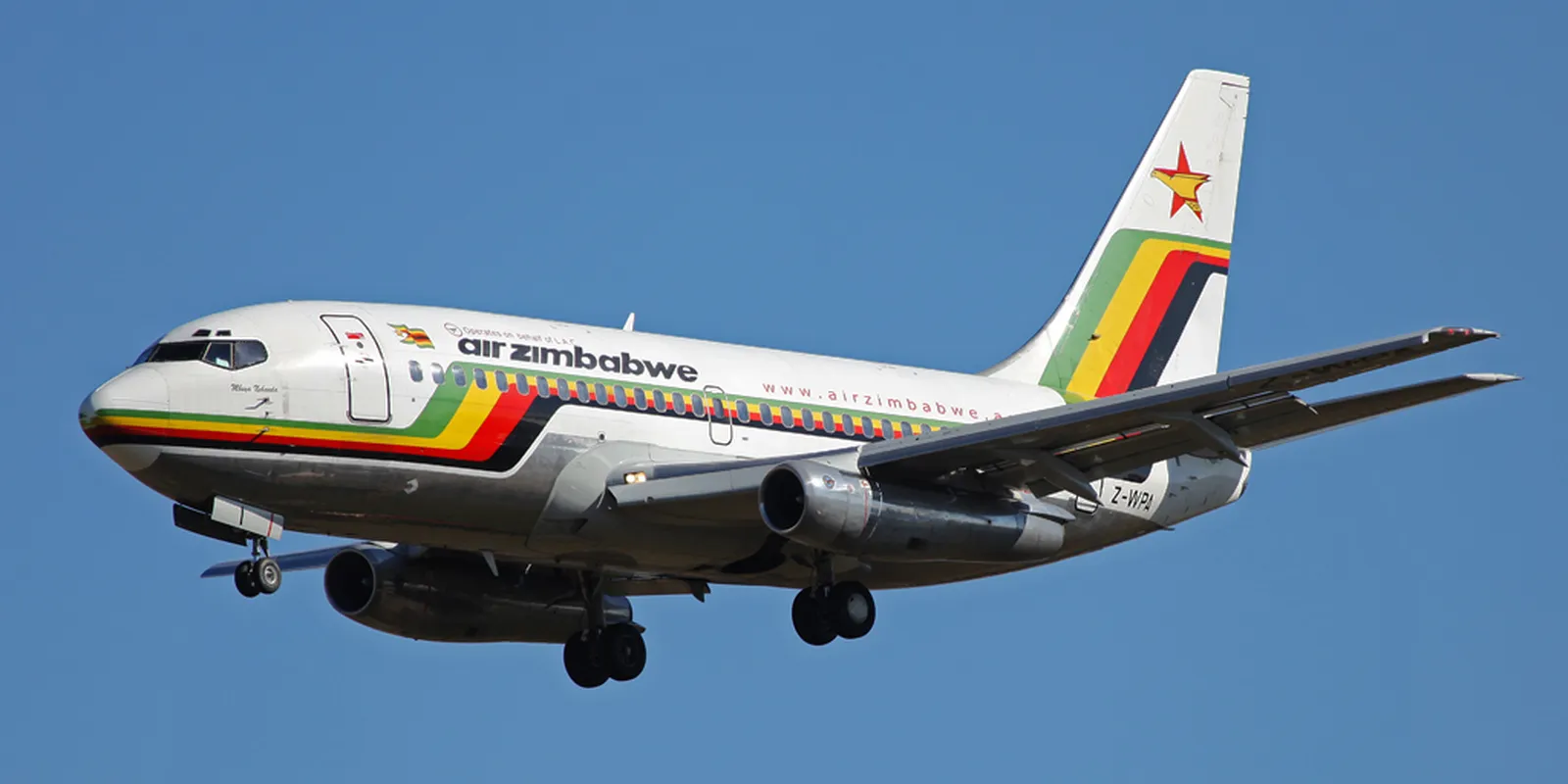
The situation of its own fleet has reached a critical point: during 2025 the last Boeing 737-200 in service flew for the last time in August, the Boeing 767-200ER has been grounded since the end of June, and the two Embraer E145s are both on the ground (one since 2023, the other since December). In practice, no aircraft owned by the airline is operational. Current flights are ensured by an ATR 42-500 wet-leased from Kenya's Renegade Air, a stopgap solution rather than a stable fleet. The government has announced a renewal plan worth about 775 million dollars over three years, with two aircraft for domestic routes, two regional aircraft and two widebodies to eventually resume long-haul services, but for now it is a project and not delivered aircraft.
Routes and network
The active network is minimal: a daily morning domestic service on Harare-Bulawayo-Victoria Falls, a regional flight to Johannesburg four times a week and one to Dar es Salaam in Tanzania twice a week. There are currently no direct intercontinental routes: anyone needing to reach Europe, Asia or the Americas from Zimbabwe must connect, typically in Johannesburg with another carrier. It is a network that serves mainly tourism to Victoria Falls and basic regional connectivity, not peak international traffic.
What passengers say
Air Zimbabwe is rated two stars by Skytrax, a low rating consistent with the operating difficulties of recent years. Direct reviews paint a picture of patchy service rather than isolated incidents.
- What is acknowledged: it is often the only direct option to Victoria Falls from within the country, useful for those who need to travel by air between Zimbabwe's main cities without a convenient road alternative.
- What is most often criticized: flight delays and reschedulings communicated at short notice, ground staff described as not very customer-oriented, domestic aircraft and terminals judged to be in a neglected state, and airport taxes not included in the ticket on the Victoria Falls route, unlike other airlines operating from the same airport.
Air Zimbabwe can make sense for anyone who needs to travel within the country or reach Victoria Falls without a long road trip, and who doesn't need guarantees of absolute punctuality. It is a choice to avoid for anyone with a tight connection to make elsewhere, given the history of delays and reschedulings of the current operation based on leased aircraft. A practical tip specific to this airline: on the Victoria Falls route, check separately whether the airport tax is included in the ticket price, because it isn't always, unlike other airlines operating from the same airport.
You might also like...

Narita International Airport: where to stay, areas and recommended hotels

Bahamasair: The ATR and Boeing Fleet of the Bahamas' Flag Carrier
People's Viennaline: The Tiny Austro-Swiss Airline and the Routes It Really Flies

Niš Airport: where to stay, areas and recommended hotels

How to handle jet lag after the flight: a practical calendar