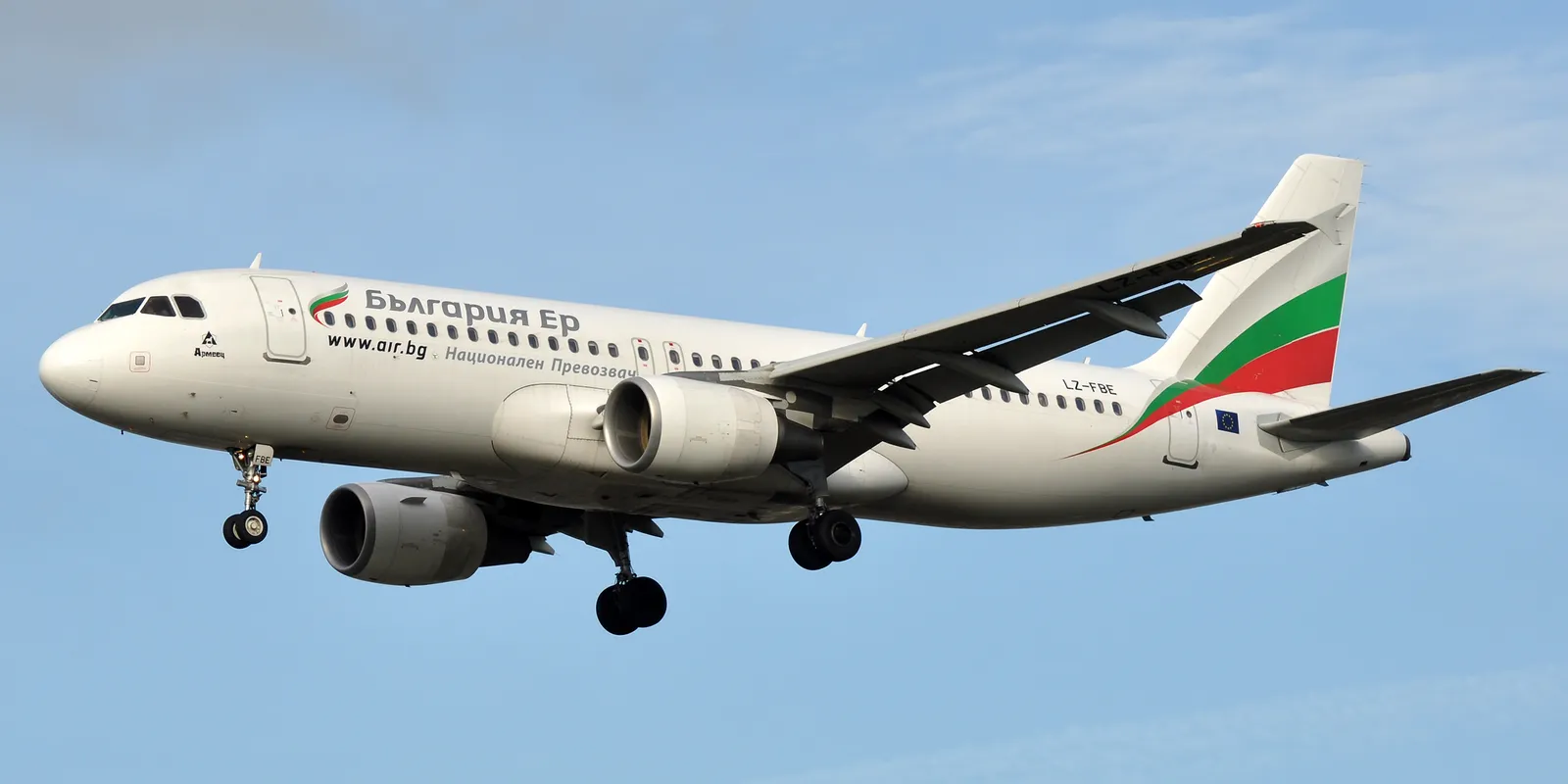
Bulgaria Air: The Bulgarian Flag Carrier as Seen by Passengers
Founded in 2002 as the successor to the bankrupt Balkan Bulgarian Airlines, Bulgaria Air is the country's flag carrier and flies from its single hub, Sofia airport. Privatized in 2006 and now controlled by Bulgarian Airways Group (Chimimport group), it operates a modern fleet of 17 aircraft made up of Airbus A220s, A319s, A320s and Embraer E190s, focused on short and medium-haul links to the main European cities.
History and positioning
Bulgaria Air was born in 2002 as the successor to the bankrupt Balkan Bulgarian Airlines and was designated the country's flag carrier in November of the same year. Privatized in 2006 — bought by a group led by Hemus Air that paid 6.6 million euros and committed to investing another 86 million over the following five years — it is now controlled by Bulgarian Airways Group EAD, part of the Chimimport conglomerate, with the Bulgarian state keeping a token stake. It positions itself as a traditional scheduled airline of small to medium size, with no ambitions of a big intercontinental alliance but with a clear role: connecting Sofia to the rest of Europe.
The fleet
The fleet counts 17 aircraft: two new-generation Airbus A220-100s and five A220-300s, one A319, five A320s and four Embraer E190s. The arrival of the A220s in recent years has noticeably improved cabin comfort compared with the previous generation of A319/A320s, with a quieter cabin and more legroom.
Routes and network
The model remains a classic hub-and-spoke with Sofia as the only real node of the network. From there, Bulgaria Air connects the main capitals and economies of central and western Europe — London, Paris, Frankfurt, Vienna, Madrid — along with several cities with a strong Bulgarian diaspora. The network remains short to medium-haul: there are no direct intercontinental links.
What passengers say
Independent ratings remain mixed and depend heavily on the route and the aircraft used.
- Cabin crew described as courteous on direct flights to and from Sofia.
- The cabin of the new A220s judged quiet and comfortable even on routes of a few hours.
- Competitive prices on many central and eastern European destinations.
- A reduced network of connections, with low frequencies on several destinations.
- Slow customer support in handling booking changes and refunds.
- Punctuality that worsens noticeably at the peaks of the summer high season in Sofia.
Bulgaria Air is a sensible choice for those who need to reach Sofia or Varna without stopovers, especially now that the A220 fleet has raised the level of comfort. Those who instead need many daily frequencies or a dense network across Europe would do better to consider a carrier with a bigger hub. It is worth booking the fare that includes checked baggage at the time of purchase: adding it later costs considerably more.
You might also like...
Azerbaijan Airlines: What Passengers Say About AZAL Comfort and Punctuality

Diori Hamani International Airport: where to stay, areas and recommended hotels
Indonesia AirAsia: Low-Cost Fares, Paid Baggage and What to Expect on Board

Perugia San Francesco d'Assisi Airport: where to stay, areas and recommended hotels

Flight discounts: how to find the best fares