Finnair: How Routes to Asia Have Changed Since 2022
Among the longest-lived airlines still in operation, Finnair was founded in 1923 and is today Finland's national carrier and a member of Oneworld, with its hub at Helsinki-Vantaa, historically the shortest connecting point between Europe and Asia thanks to the polar route, now made more complicated by the closure of Russian airspace.
A Geographic Position That Made Finnair's History (and Fortune)
For decades the polar route let Finnair connect Europe to Asia in less time than almost any continental competitor, building a business model centered on transit traffic from Helsinki to Tokyo, Seoul and several Chinese cities. Since February 2022, the closure of Russian airspace has forced the airline to reroute these flights along much longer southern corridors, wiping out that geographic advantage.
The Fleet: A350s on Long-Haul, Narrowbodies in Europe
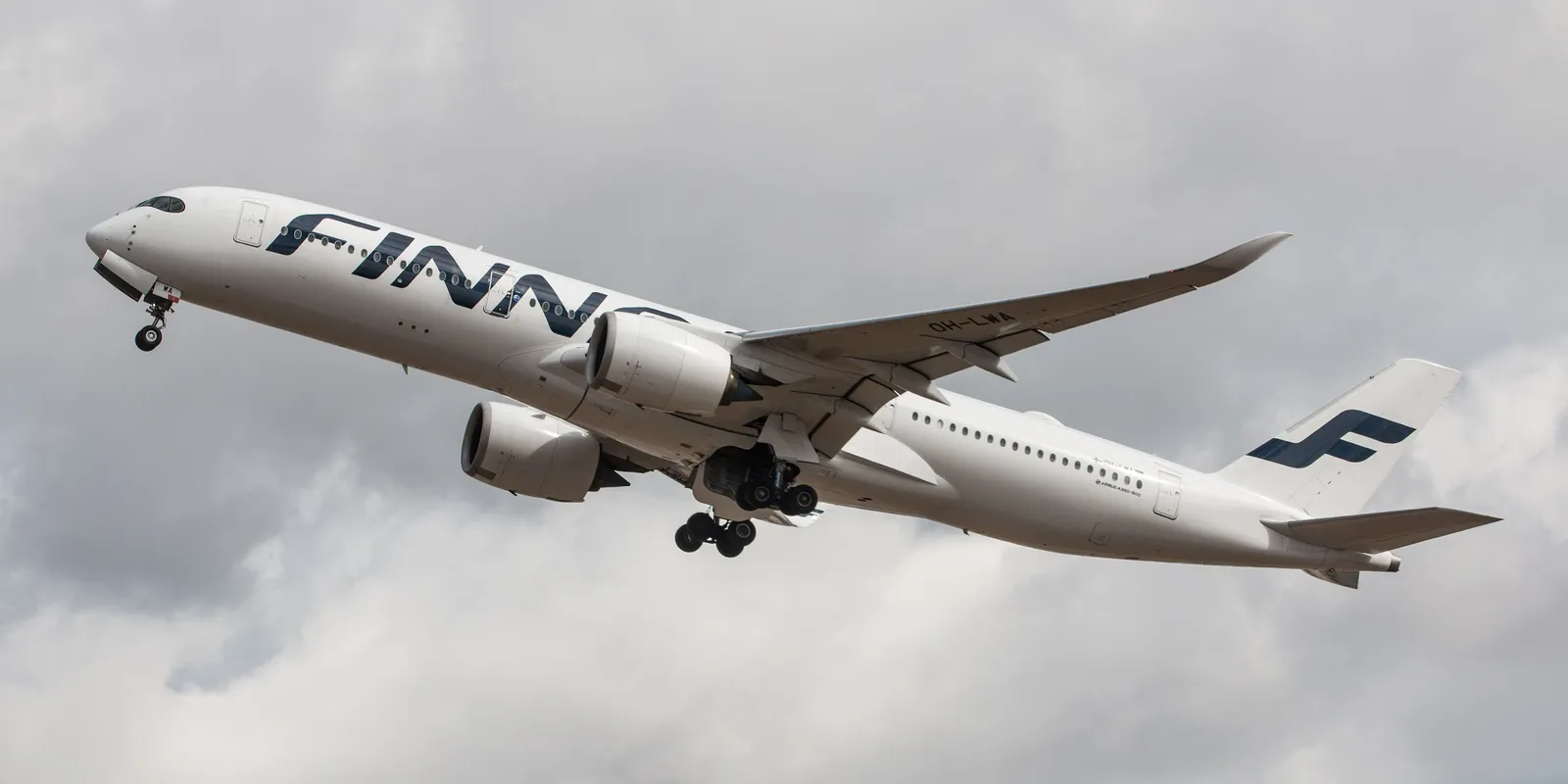
Long-haul is handled by the Airbus A350-900, while the short- and medium-haul European network feeding the Helsinki hub flies with A320s and A321s. The old A330s have been gradually retired as the new widebodies arrived.
Routes and Network After the Closure of Russian Skies
Asia remains central to the strategy, but with a network scaled back from the past: some Chinese routes have been cut or made less frequent, while Japan and South Korea are still served, along with a North American network centered on New York. The role of connecting hub to and from Europe nonetheless remains the heart of the model.
What Passengers Say
- What works: punctuality above the European average, minimalist Scandinavian cabin design that passengers appreciate, and staff described as professional and discreet.
- What doesn't convince: Asian flights that have become longer and more expensive than before 2022, catering judged meager by economy passengers, and ticket change policies perceived as rigid.
Finnair remains the most convenient choice for a European traveler heading to Asia via Helsinki with a short connection, and less suitable for those looking for the fastest route to Japan today, where the Gulf carriers have recovered the time advantage Finnair has lost. A practical tip: allow at least 90 minutes of margin at the Helsinki connection for intercontinental non-Schengen flights, because at peak hours the dedicated security checks can take longer.
You might also like...
Southwest Airlines Changes Its Skin: Assigned Seats and Paid Baggage, What Changes in 2026

Verona Villafranca Airport: where to stay, areas and recommended hotels
ITA Airways in 2026: The New Fleet, the Move to Lufthansa and What Passengers Really Say

Cataratas International Airport: where to stay, areas and recommended hotels

Bhairahawa Airport: where to stay, areas and recommended hotels