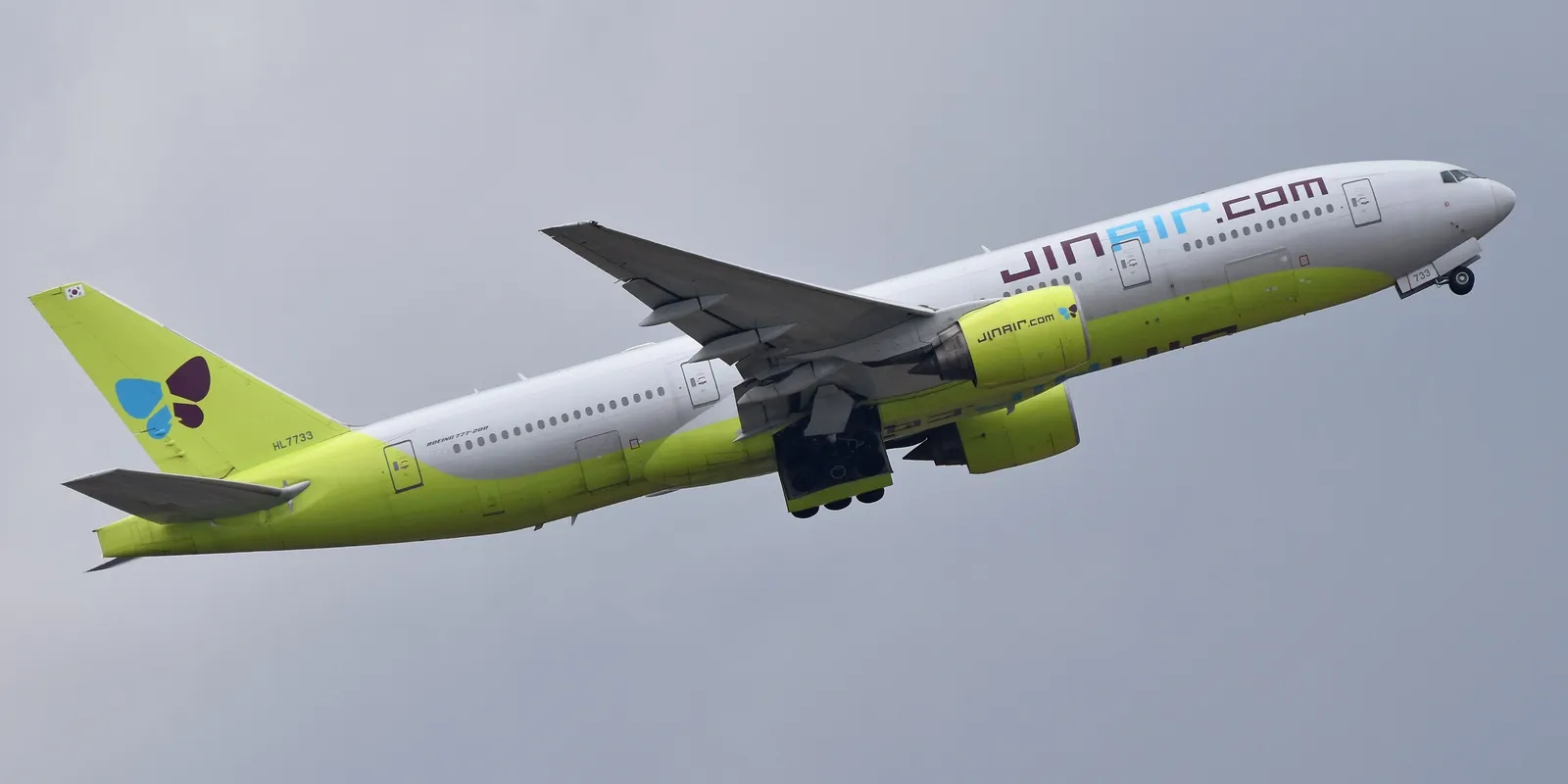
Jin Air: Korean Air's Low-Cost Carrier That Also Flies the Boeing 777
Jin Air, founded in 2008 as a low-cost subsidiary of Korean Air, operates from its Incheon base with a hybrid positioning: most of the fleet is dedicated to short and medium-haul routes, but the airline stands out from other Korean low-cost carriers for its use of widebodies on some longer-haul leisure routes.
A low-cost carrier with the Korean Air group's mark
Jin Air was created to capture the low-cost leisure demand left uncovered by the group's main brand, while keeping operating and safety standards shared with the parent company. The commercial positioning, built around the slogan "Fly, Style, Jin Air", aims for a young, informal image compared with Korean Air's more traditional tone.
The fleet
Most of the fleet is made up of Boeing 737-800s and 737-900s, but Jin Air is one of the few low-cost carriers in the world to also use the Boeing 777-200ER, inherited from Korean Air's older fleet, on longer-haul leisure routes where the extra capacity justifies the use of a widebody.
Routes and network
The short-haul routes connect the main South Korean cities and the nearest leisure destinations in Japan and Southeast Asia, while the 777 is used on longer links to destinations such as Hawaii, where South Korean tourist demand justifies greater capacity while still keeping a low-fare product.
Fares and baggage
The fare structure follows the standard low-cost model, with checked baggage and seat selection bought separately on the base fare. On routes operated with the 777, the higher-density configuration compared with Korean Air's full-service flights still reflects the low-cost nature of the product, even aboard an aircraft normally associated with traditional airlines.
What passengers say
- In its favor: the chance to reach faraway destinations such as Hawaii at lower fares than full-service carriers, cabin crew described as helpful.
- Critical points: reduced legroom on routes served by the 777 compared with what a passenger would expect from a widebody, more limited inflight entertainment than Korean Air.
Jin Air is a good option if you want to reach more distant leisure destinations such as Hawaii without paying a full-service carrier's fares, accepting a simpler onboard product. It is less suitable if, on a long flight, you want the same level of comfort and entertainment as parent company Korean Air.
If you book one of the routes served by the 777, check the seat configuration in advance: the higher density compared with the group's full-service flights can mean less space than expected on a flight of several hours.
You might also like...
Tunisair in 2026: The Fleet Crisis, the Recovery Plan and What to Expect On Board
Aeroitalia: The ITA Airways Lawsuit, the Growing Fleet and What to Expect On Board
Washington National: the right lounge for every concourse

City of Derry Airport: where to stay, areas and recommended hotels
Name error on your ticket: how to fix it right away