Kenmore Air: What It's Like to Fly by Seaplane from Seattle to the San Juan Islands
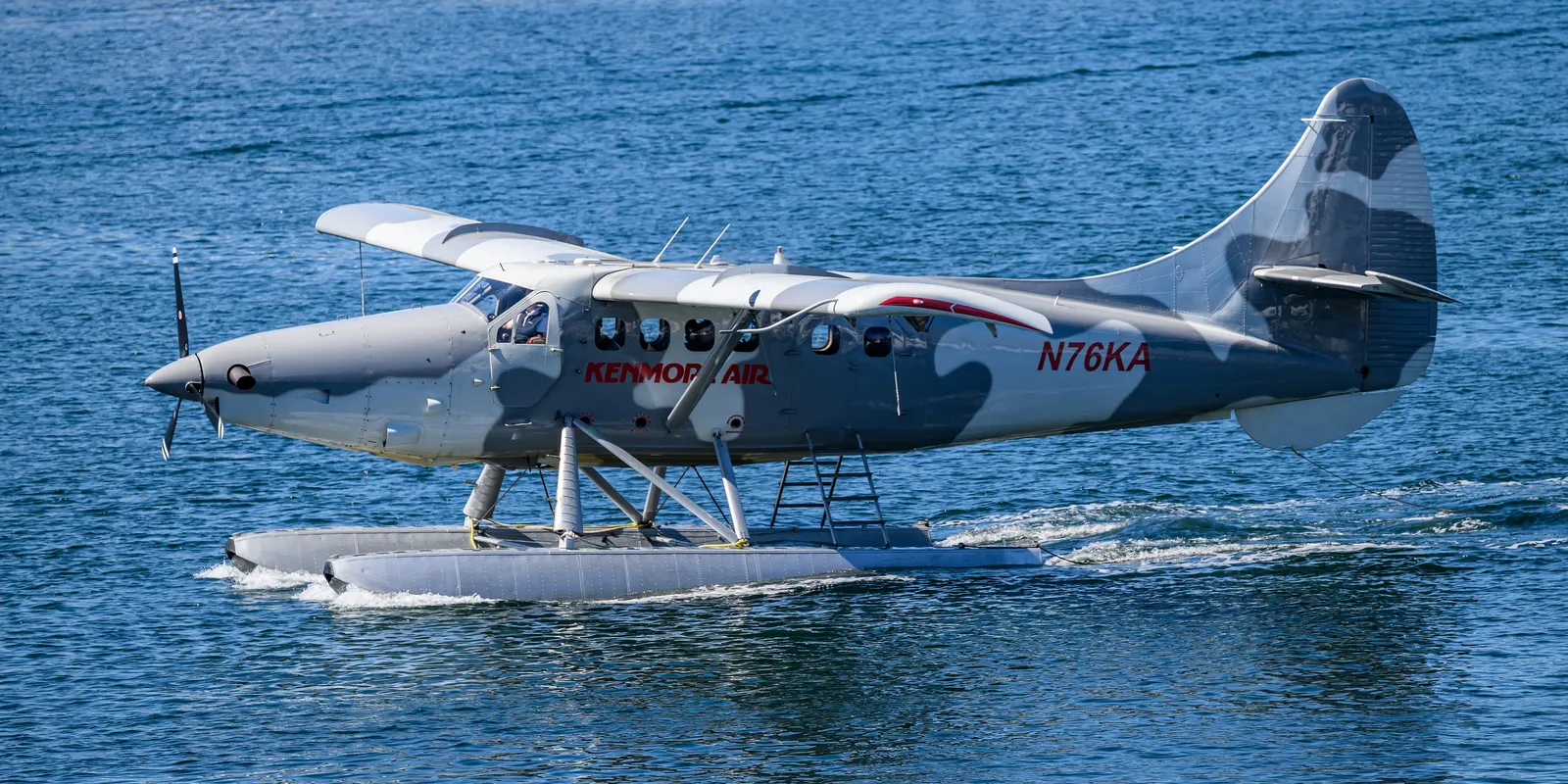
Since 1946, when Bob Munro started the business on the north shore of Lake Washington, Kenmore Air has become the largest seaplane airline in the United States. It takes off and lands on the water right from downtown Seattle, between Lake Union and Lake Washington, to connect the San Juan Islands and the Canadian city of Victoria, adding to its scheduled flights charters to remote lodges in British Columbia and short scenic tours.
History and positioning
Born as a small local flying operation in the town that gives it its name, north of Seattle, Kenmore Air has grown over the decades by absorbing other seaplane operators in the region until becoming an almost unique reference point of its kind in North America. It is not a general-purpose carrier: the whole business revolves around the idea of reaching places that a conventional runway doesn't, often landing on the water right in front of a dock or a resort.
The fleet
The fleet includes several dozen piston-engine De Havilland Beaver DHC-2s, the airline's signature aircraft, along with Otter DHC-3s converted to turbine power for the longer or more heavily loaded routes. Some links, in particular to Friday Harbor, are also operated with conventional wheeled aircraft when the destination allows it, but it is the seaplane that defines the brand's identity.
Routes and network
The core of the offering is the multiple daily scheduled flights between downtown Seattle and Friday Harbor, Roche Harbor and Orcas Island in the San Juan Islands, plus the international route to the harbor of Victoria, Canada, with customs built in on arrival. In summer, charters are added to isolated fishing lodges in British Columbia, reachable only by air or water, along with scenic flights over Mount Rainier and the Seattle skyline.
What passengers say
- The experience of boarding and taking off from the water judged unique, often cited as the main reason for booking.
- Direct link between downtown Seattle and downtown Victoria that avoids the ferry and customs by land.
- Staff described as informal and competent, in keeping with the spirit of a small regional airline.
What to know before you go
- Weather-related cancellations more frequent than on a conventional airplane, given the dependence on visibility conditions for landing on the water.
- Fairly tight baggage weight limits, a direct consequence of the seaplanes' reduced carrying capacity.
- Higher fares, for the same distance, than an equivalent link on a wheeled aircraft.
Kenmore Air makes sense for those who want to reach the San Juan Islands or Victoria while experiencing the journey as part of the adventure, not just as a transfer. Those with bulky luggage or a schedule that can't tolerate weather delays should build in a safety margin, because landing on the water requires visibility conditions that a conventional airport doesn't need. It's worth weighing your luggage at home before you get to the boarding dock, to avoid surprises about the weight limit allowed on board.
You might also like...

Vigo Airport: where to stay, areas and recommended hotels
ITA Airways in 2026: The New Fleet, the Move to Lufthansa and What Passengers Really Say
Louis Armstrong New Orleans International Airport: where to stay, areas and recommended hotels

Traveling with a newborn: what happens to their body in flight

Bahamasair: The ATR and Boeing Fleet of the Bahamas' Flag Carrier