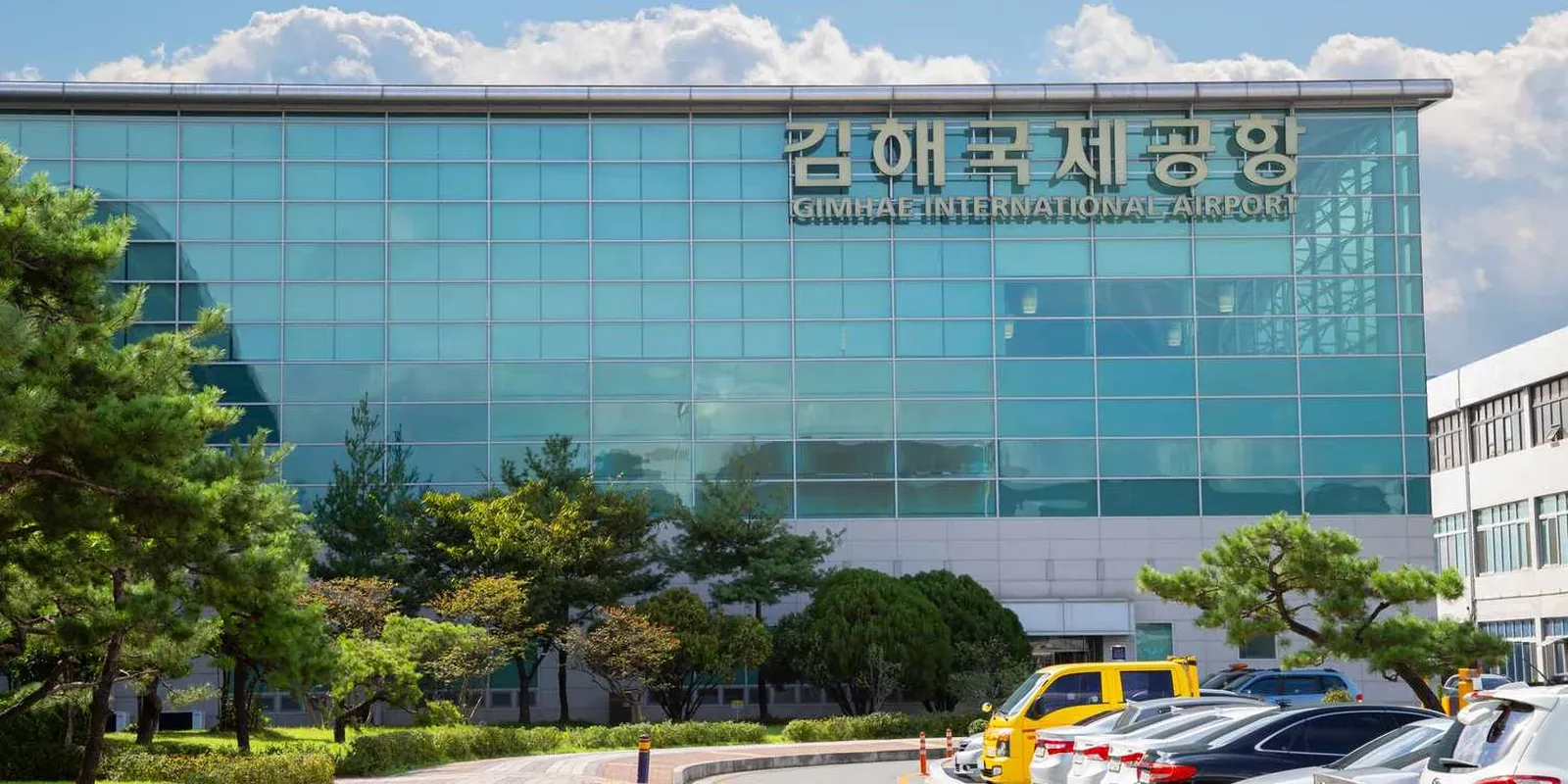

Gimhae International Airport serves Busan, South Korea's second city, known for its beaches, port, and the famous Jagalchi Fish Market.
It is located approximately 27 km from the city center, an access point to vibrant coastal life and Buddhist temples in the region.
How to get to Gimhae International Airport
By Car
By Train
By Bus
Average travel time to PUS
Parking near Gimhae International Airport
A multi-story parking structure is adjacent to the terminal building.
Parking costs are aligned with area standards.
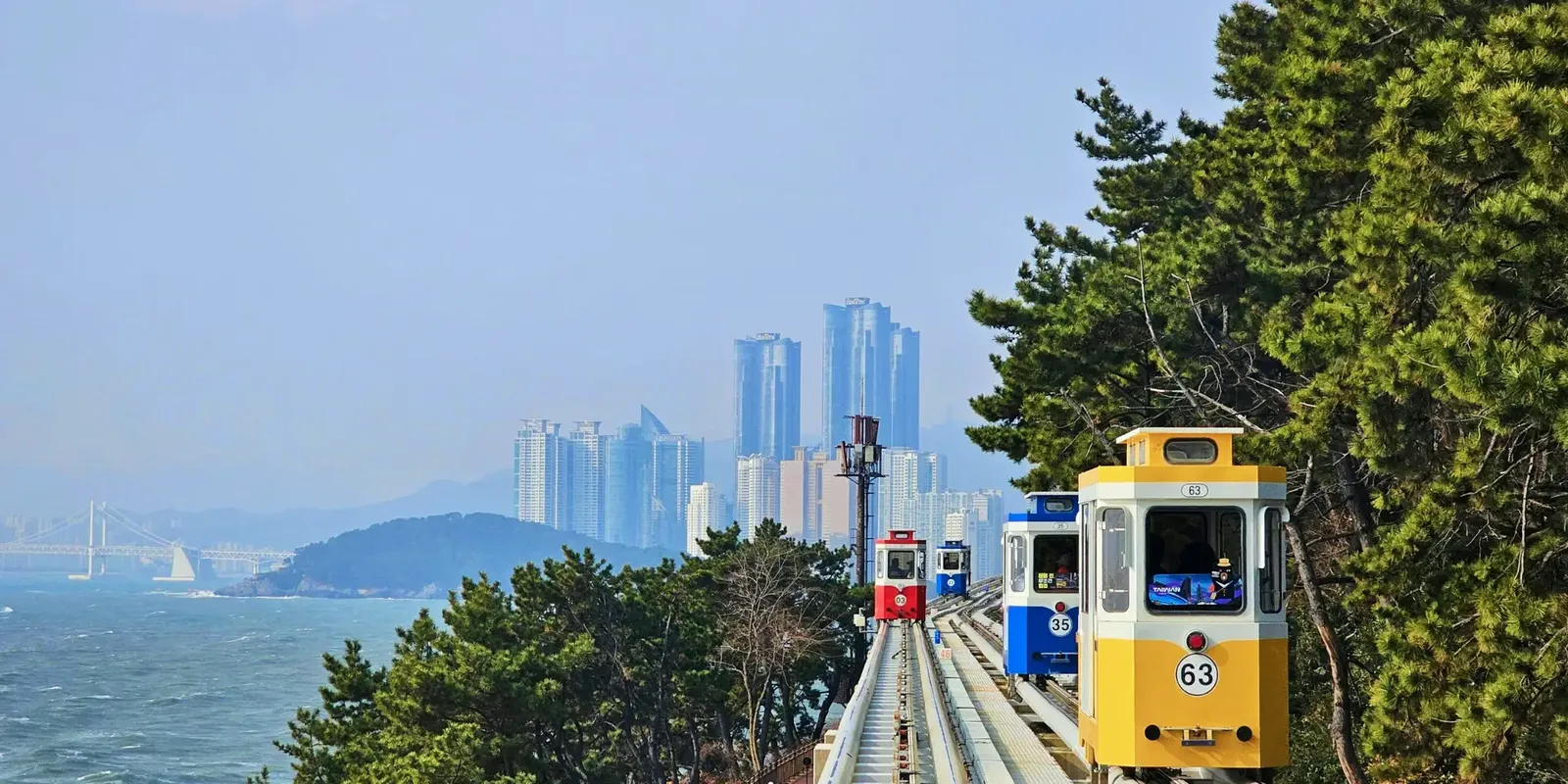
How to get to Busan from PUS
By Train
By Bus
By Taxi
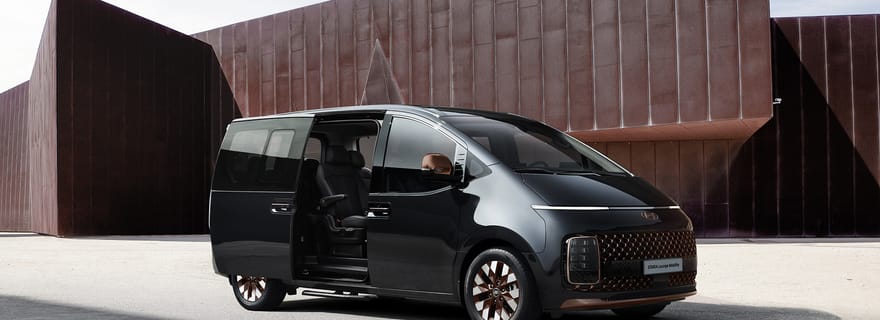
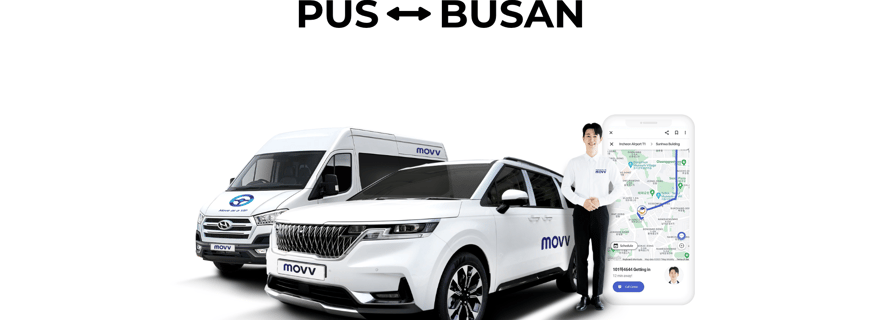
Airport transfers you can book in advance
Shuttles and private transfers you can book online, picked from the best rated by travelers.
Car rental at Gimhae International Airport
Leading car rental companies have desks at the airport.
A driver's license, passport, and credit card are needed; the IDP is normally also required.
Hotels near Gimhae International Airport
Gangseo-gu, the airport area
AIRPORT Guesthouse is about a kilometre from the terminal; the Hotel Airport is 5 minutes away with a free shuttle available 24 hours on request.
Best for: Dawn flights, late-night arrivals and one-night layovers, when it's not worth heading into the city.
- A few minutes by taxi or free shuttle from the terminal, without relying on the Light Rail
- Lower rates than any area of the city
- Mostly industrial warehouses of Gangseo-gu around: in the evening there's almost nothing within walking distance
- For downtown or the beaches you still need the Light Rail with a change at Sasang, at least 45 minutes in all
Recommended hotels
- AIRPORT Guesthouse Guesthouse about a kilometre from the terminal, designed for those with a dawn flight or a short layover; simple rooms with air conditioning, free private parking and a shared garden. View availability
- Hotel Airport 5 minutes from the terminal with the free shuttle, available 24 hours on request; an in-house restaurant handy for those arriving or departing at awkward hours. View availability
Seomyeon and Busan Station
BGLRT Light Rail from the airport to Sasang in about 30 minutes; from Sasang metro line 2 reaches Seomyeon in another 3 minutes, from which line 1 reaches Busan Station in 12 minutes (combined ticket from 2,800 won, the change included in the fare within 30 minutes).
Best for: Those who want to stay in the city with good connections to the airport, using Seomyeon or the train station as a base.
- The Ramada Encore is attached to Busan Station, with metro exits, the KTX platform canopy and tourist buses just steps away
- Seomyeon is the city's main hub for shops and restaurants, with direct metro access from the BIFC complex, where the Avani is located
- There is no direct link from the airport: you need the Light Rail and at least one metro change, 45 minutes in all
- Around Busan Station foot traffic stays heavy until late evening
Recommended hotels
- Ramada Encore by Wyndham Busan Station A 26-storey tower opened in 2019 next to Busan Station, with the metro exit and the KTX platform canopy just steps away. View availability
- Avani Central Busan Inside the Busan International Finance Centre in Munhyeon, with direct metro access; five minutes' walk from Seomyeon, 15 minutes by car from Busan Station and the cruise terminal. View availability
Nampo-dong and Songdo Beach
By taxi from the airport 15-35 minutes to Nampo-dong/Jagalchi (about 15.6 km, 18,000-28,000 won depending on traffic); the hotels on the Songdo waterfront are a few minutes further along the same route.
Best for: Those who want Busan's historic centre, between the Jagalchi market and the Songdo waterfront, spending less than in Haeundae.
- Closer to the airport than Haeundae, with a direct taxi with no changes
- The Jagalchi market, the Gukje Market and BIFF Square are reachable on foot or in a few minutes by taxi
- Poor connection by Light Rail: in practice a taxi is needed, public transport requires more changes
- In the evening the buzz is concentrated in the market streets, not along Songdo beach
Recommended hotels
- Wyndham Grand Busan Upscale hotel on the Songdo waterfront, 9 minutes' walk from the beach and 2-3 minutes by car from Nampo-dong and the Gukje Market; all rooms have a sea view. View availability
- Fairfield by Marriott Busan Songdo Beach Mid-range, right on Songdo beach, a few minutes' walk from the waterfront and the Nampo-dong district. View availability
Haeundae Beach and Centum City
By taxi 24-60 minutes from the airport depending on traffic (25.6 km, 33,000-40,000 won); alternatively, the Light Rail to Sasang and then metro line 2 with no further changes to Centum City or Haeundae, 55 minutes in all. The Haeundae-Gijang line 1 shuttle bus runs hourly and costs 9,500 won.
Best for: A few days at the beach, shopping in Centum City or an upscale stay, accepting a longer transfer from the airport.
- Beaches, bars and the traditional Haeundae market a few minutes' walk from the hotels in the area
- Centum City brings together the BEXCO convention centre, the Shinsegae department store and the line 2 metro station for getting around the city
- It's the area farthest from the airport among those in this guide, with transfer times that vary a lot depending on traffic
- A touristy area: higher prices than elsewhere and heavy crowds on summer weekends
Recommended hotels
- The Westin Josun Busan On Haeundae beach, between Dongbaek Island and the sea, two minutes' walk from the water; indoor pool and the Westin brand's Heavenly Bed. View availability
- Park Hyatt Busan In Marine City, on the side of Haeundae-gu towards Centum City, in a tower designed by architect Daniel Libeskind with a spa, indoor pool and views of the bay. View availability
- Travelodge Suites Busan Centum 4 minutes' walk from the BEXCO convention centre and 6 from the Shinsegae Centum City mall, with Centum City metro station 340 metres away; budget-friendly for the area. View availability
- Best Western Haeundae Hotel About a hundred metres from the entrance to Haeundae beach and its traditional market; budget-friendly for the area, five minutes' walk from the metro. View availability
Airport services
Shopping & Duty Free
Lounges & relaxation
Connectivity & Wi-Fi
Families & Children
Terminal guide
The international terminal, recently expanded, handles connections to Asia-Pacific.
An advance of 2.5–3 hours is the recommended standard for international flights.
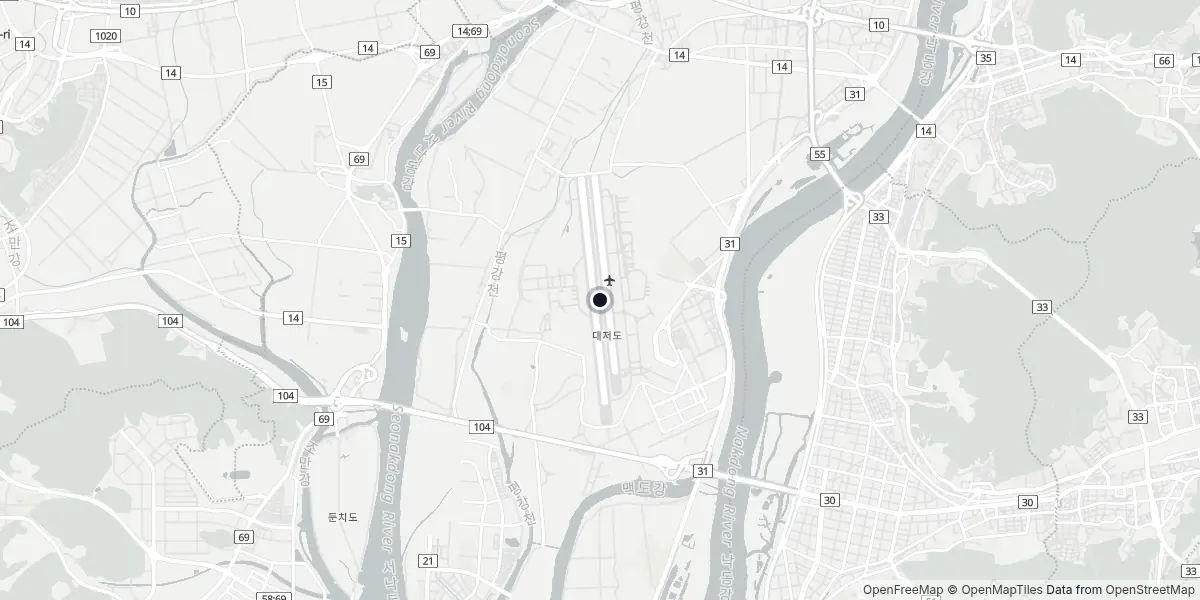
Map of Gimhae International Airport
Frequently asked questions
Q. Why is Busan known in the film world?
It hosts the Busan International Film Festival (BIFF), the most important film festival in East Asia, which every autumn brings the Haeundae district to life with screenings, red carpets and international guests.
Q. Is Gimhae connected to the Busan metro?
Yes, via the Gimhae Line, which links up with the city's metro network.
Q. What can you visit near Busan?
The beaches of Haeundae and Gwangalli, the famous Jagalchi Fish Market and several Buddhist temples in the region.
Q. Is Busan Gimhae an international hub?
Yes, it is South Korea's second international airport, with connections to Japan, China and Southeast Asia.
Flight board
Real-time status of arriving and departing flights