24 hours in Zagreb: what to see
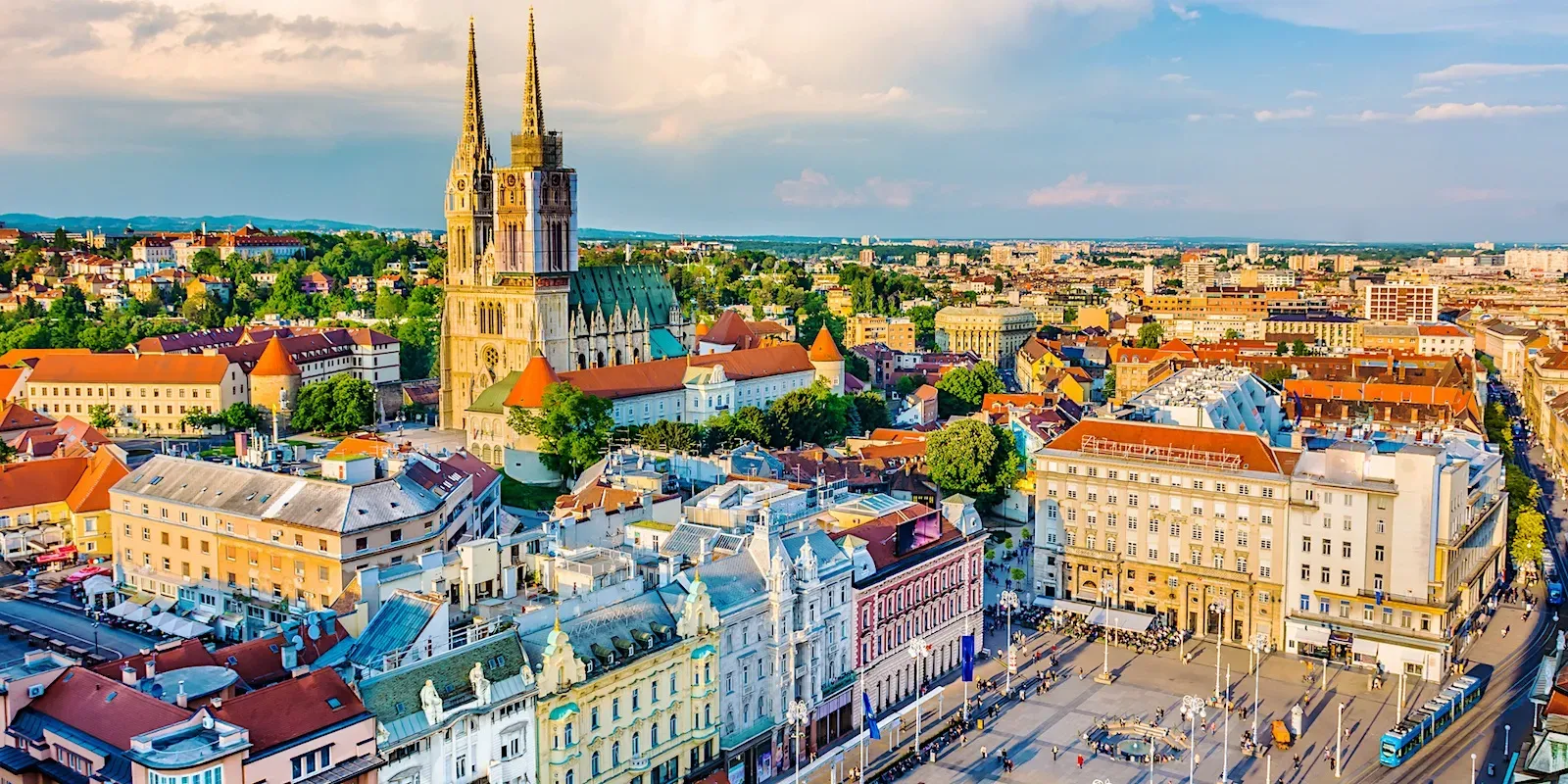
Zagreb divides between the medieval Upper City, perched on a hill, and the nineteenth-century Lower City built when the Croatian capital expanded in the Austro-Hungarian era.
Between century-old funiculars, open-air markets, and Austro-Hungarian squares, a single day is enough to traverse the city's two souls by climbing and descending between its levels.
Ban Jelačić Square works well as a first stop: the large central square, dominated by an equestrian statue of Ban Josip Jelačić, is the natural meeting point between the Upper and Lower towns.
Riding the Zagrebačka žičara, the world's shortest cable car still in operation, you reach the Upper Town (Gornji Grad), where the Church of Saint Mark stands out for its roof of coloured tiles that reproduces the coats of arms of Zagreb and Croatia.
Nearby, the Lotrščak Tower still fires a cannon at noon today, a tradition that has continued unbroken since the 19th century.
For lunch, the Dolac Market, with its red-umbrella stalls overlooking the main square, is the best place to taste fresh local produce.
The Zagreb Cathedral, with its twin spires dominating the skyline, is Croatia's tallest church.
The Maksimir Park, south-eastern Europe's first landscaped public park, offers instead with its small lakes and tree-lined avenues a welcome change from the city centre.
The Tkalčićeva neighbourhood, a pedestrian street full of cafes and venues set in old bourgeois houses, works well for dinner in the centre.
Ban Jelačić Square, the Upper Town, and Dolac market explain the historic heart of Zagreb on their own, while the afternoon choice between the Cathedral and Maksimir Park adds its religious or natural side.
The Museum of Broken Relationships, devoted to objects from ended love stories, and a trip to Plitvice Lakes, a couple of hours outside the city, remain chapters for a second visit. Seeing the multicolored tiled roof of the Church of Saint Mark condensed into a single scene is what sums up Zagreb.
Guided tours and experiences in Zagreb
Related articles

You might also like...
Ljubljana: what to see in 1 day
Rijeka: the city that invented the torpedo

Stornoway Airport: where to stay, areas and recommended hotels

King Mswati III International Airport: where to stay, areas and recommended hotels
Trans Air Congo: The Regional Network Between Congo and Central Africa