Abidjan: the Plateau and Ébrié Lagoon
Former capital of Côte d'Ivoire and still its economic center, Abidjan faces a lagoon that separates the business district from surrounding residential neighborhoods, crossed daily by thousands of ferry commuters.
The Plateau can be explored on foot; Banco National Park requires a short drive by car.
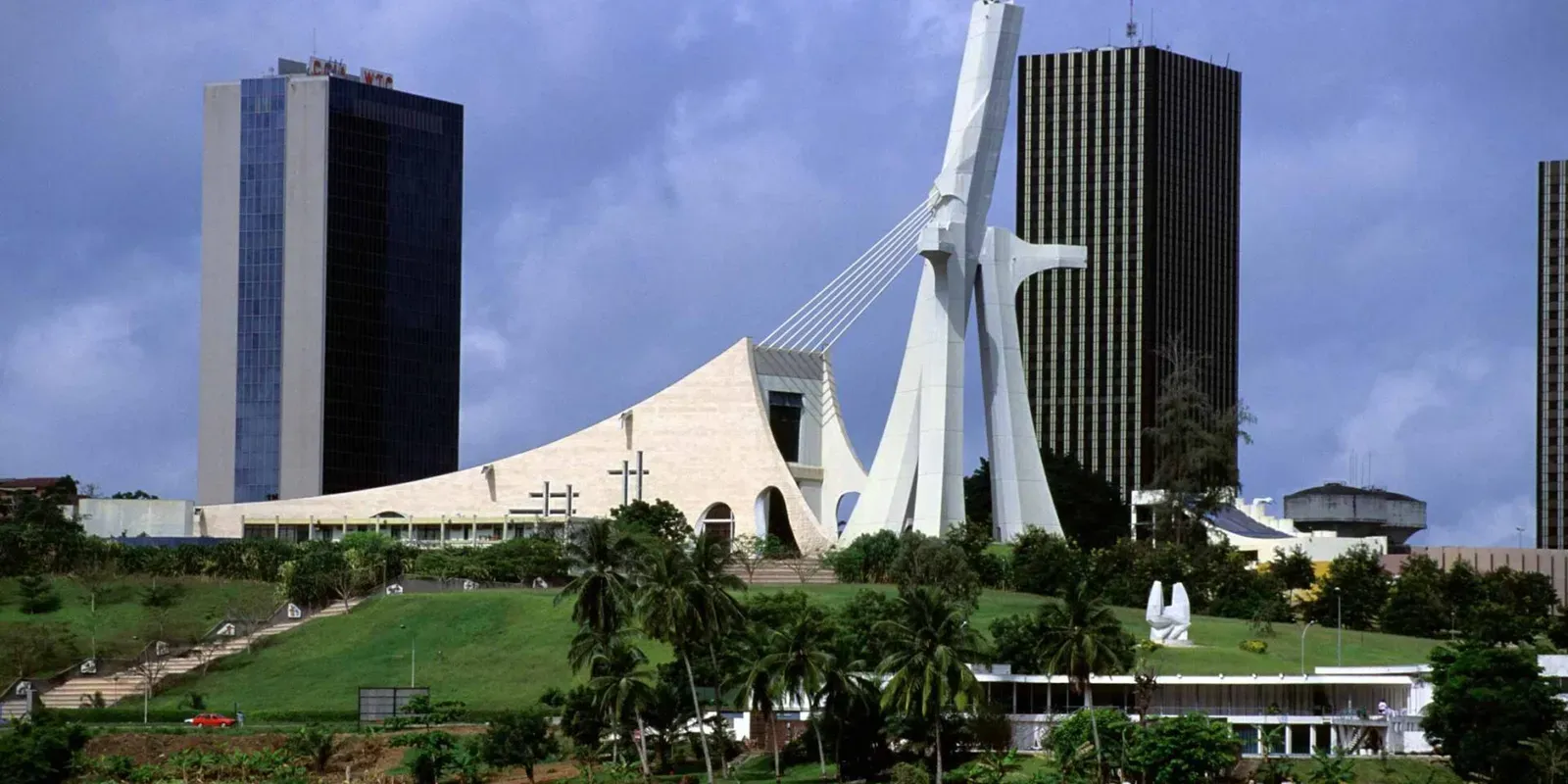
The day begins at the Plateau, which has grown on a peninsula surrounded by the Ébrié lagoon: here modern skyscrapers gather around the Cathedral of St. Paul, a building with futuristic shapes built in the nineteen-eighties.
Just steps away, wax fabrics, wooden masks and handicrafts from all over West Africa are sold on multiple floors at the Grand Market of the Plateau, in the heart of the financial district.
Just a few minutes from the skyscrapers, the Banco National Park protects monkeys and other wildlife species in a primary rainforest enclosed within the city's boundaries.
Toward evening, bridges and ferries cross the Ébrié Lagoon, the geographical element that more than any other defines the urban shape and connects the city's neighborhoods.
At sunset, ferries to the Plateau fill with office workers heading home: a few minutes on the water is enough to separate the work day from the evening in residential neighborhoods.
Although not the political capital of the country—officially Yamoussoukro since 1983—Abidjan remains the true economic and financial center of Côte d'Ivoire, as well as its most populous city.
Related articles

You might also like...
Kumasi: the golden capital of the Ashanti kingdom
Accra in a day: what to see
KM Malta Airlines: Malta's New Flag Carrier After Air Malta
Proflight Zambia: How to Get to Victoria Falls and the South Luangwa Reserves

Brunei International Airport: where to stay, areas and recommended hotels