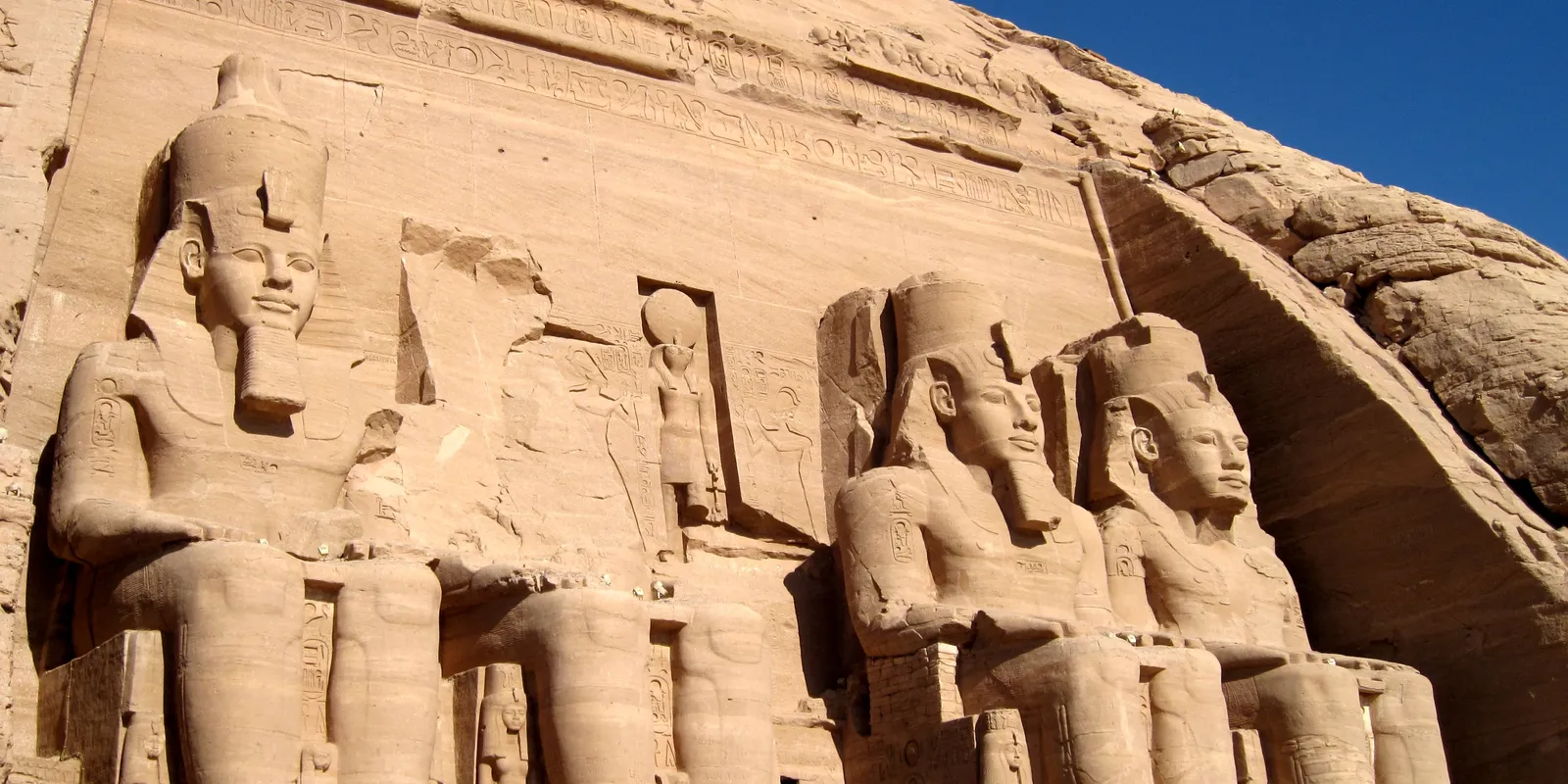

Abu Simbel: the temples saved from the water
In the 1960s, UNESCO dismantled and reconstructed the temples of Abu Simbel block by block to save them from the waters of the artificial lake created by the Aswan Dam.
The site is visited on foot; most visitors arrive on day trips from Aswan.
Carved into rock in the thirteenth century B.C., the Great Temple of Ramses II is preceded by four colossi of the pharaoh, each over twenty meters tall.
Inside, a hypostyle hall with other statues of Ramses leads to the innermost sanctuary, where twice a year the sun directly illuminates the statues of the gods.
Just steps away, the Small Temple dedicated to Queen Nefertari is one of the few Egyptian temples where the statue of the sovereign has the same dimensions as that of the pharaoh.
Walking around the site, you can still see the cutting lines left by the disassembly project of the 1960s, when the entire complex was moved higher to escape Lake Nasser.
The solar illumination phenomenon in the sanctuary occurs only on February 22 and October 22, dates that Egyptologists believe correspond to Ramses II's coronation and birthday.
The entire temple was cut into over a thousand numbered blocks and reassembled sixty-five meters higher and two hundred meters further back from its original position, saving it from the waters of the artificial lake.
Related articles

You might also like...
Aswan: Egypt's most peaceful stretch of the Nile
Dongola Today: Sudanese Nubia Caught in Civil War

Quick layover: how not to miss your connection

Paderborn Lippstadt Airport: where to stay, areas and recommended hotels

Sheremetyevo International Airport: where to stay, areas and recommended hotels