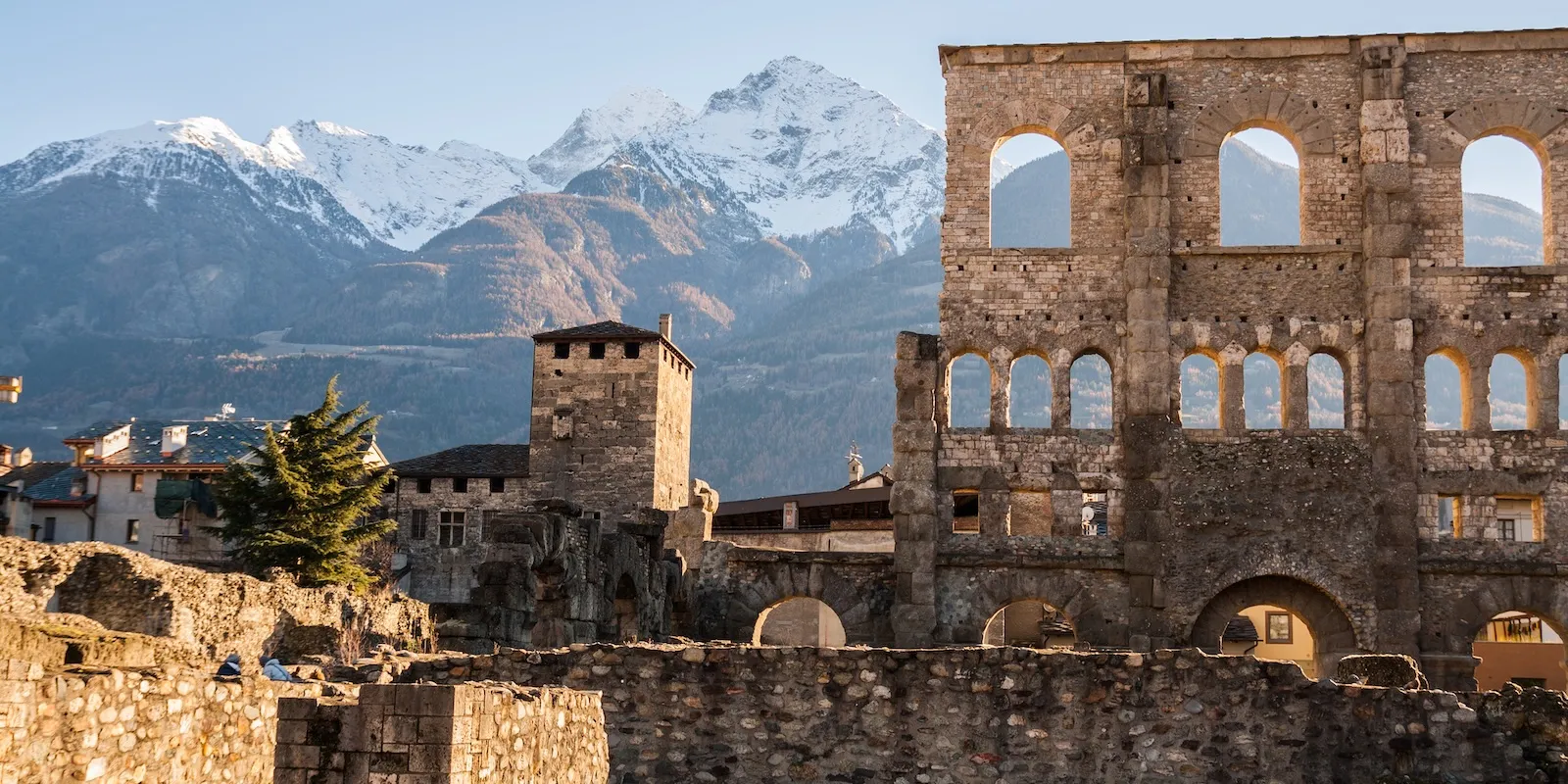

Aosta: the Rome of the Alps
Founded by the Romans in 25 BC at the foot of Mont Blanc and the Matterhorn, Aosta preserves one of the Alps' best-kept archaeological cores.
The center, nicknamed the Rome of the Alps for its Roman remains, is comfortably explored on foot.
The Arch of Augustus, erected in 25 B.C. to celebrate the Roman victory over the Salassi, still marks one of the historic entrances to the city today.
Just steps away, the Roman Theater, with its facade twenty-two meters high, remains one of the best-preserved Roman monuments in all the Alps.
Continuing through the city center you walk along the perimeter of the Roman walls, still visible in several sections despite two thousand years of subsequent reconstructions and the expansion of the medieval city above them.
Toward evening, from the city center the silhouettes of Mont Blanc and the Matterhorn are distinguishable, both reachable in less than an hour by car from Aosta.
Aosta is sometimes nicknamed the 'Rome of the Alps' precisely for its concentration of well-preserved Roman monuments, rare for a mountain city so far from the empire's capital.
The city's position at the opening of two historic Alpine passes toward France and Switzerland made it a strategic Roman outpost long before it became today's Alpine tourist destination.
Guided tours and experiences in Aosta
Related articles

You might also like...
What to see in Turin in 1 day
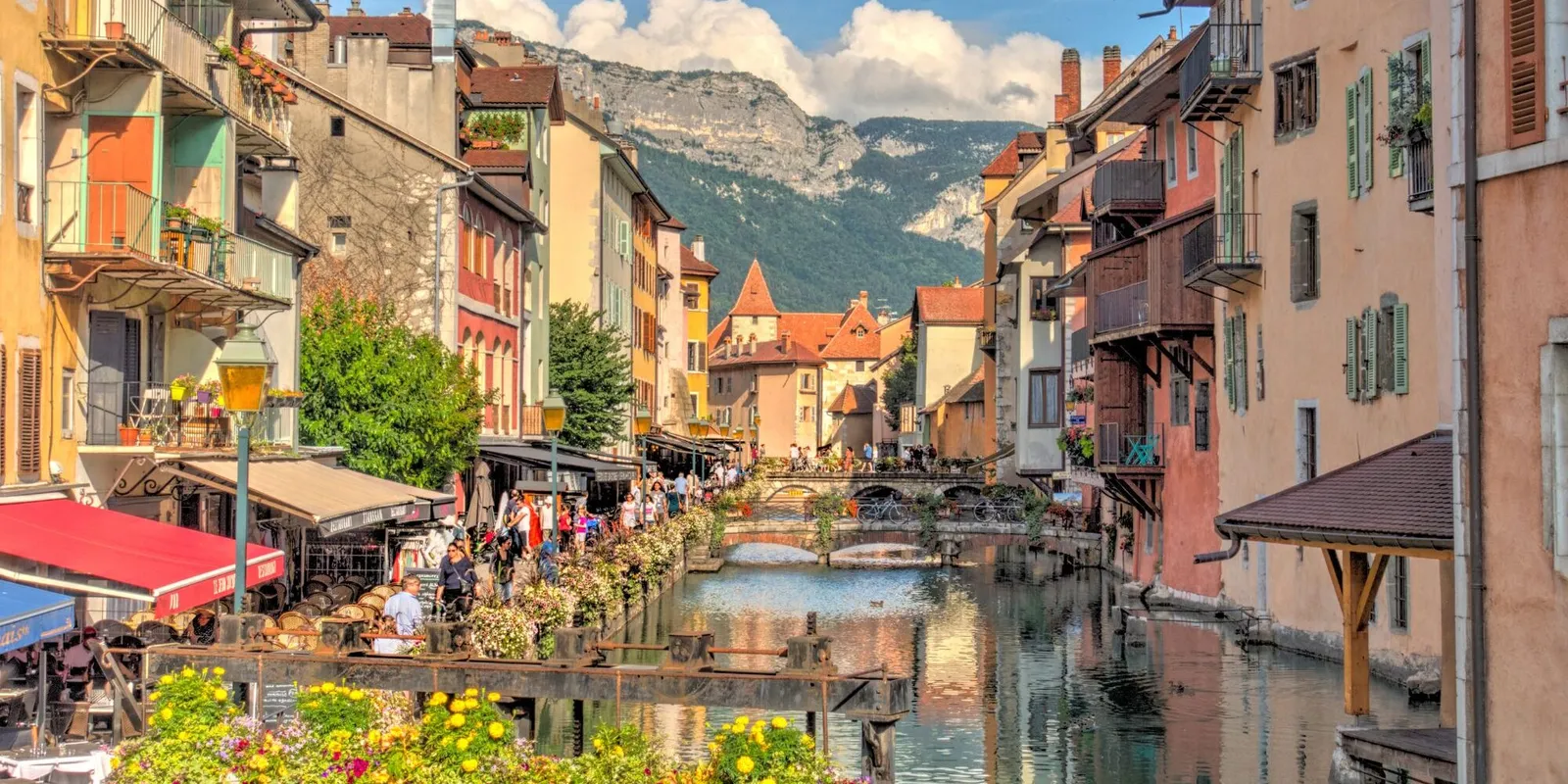
Annecy: the Venice of the French Alps

Tampere-Pirkkala Airport: where to stay, areas and recommended hotels
Paris Beauvais Tillé Airport: where to stay, areas and recommended hotels

How to organize the morning of departure