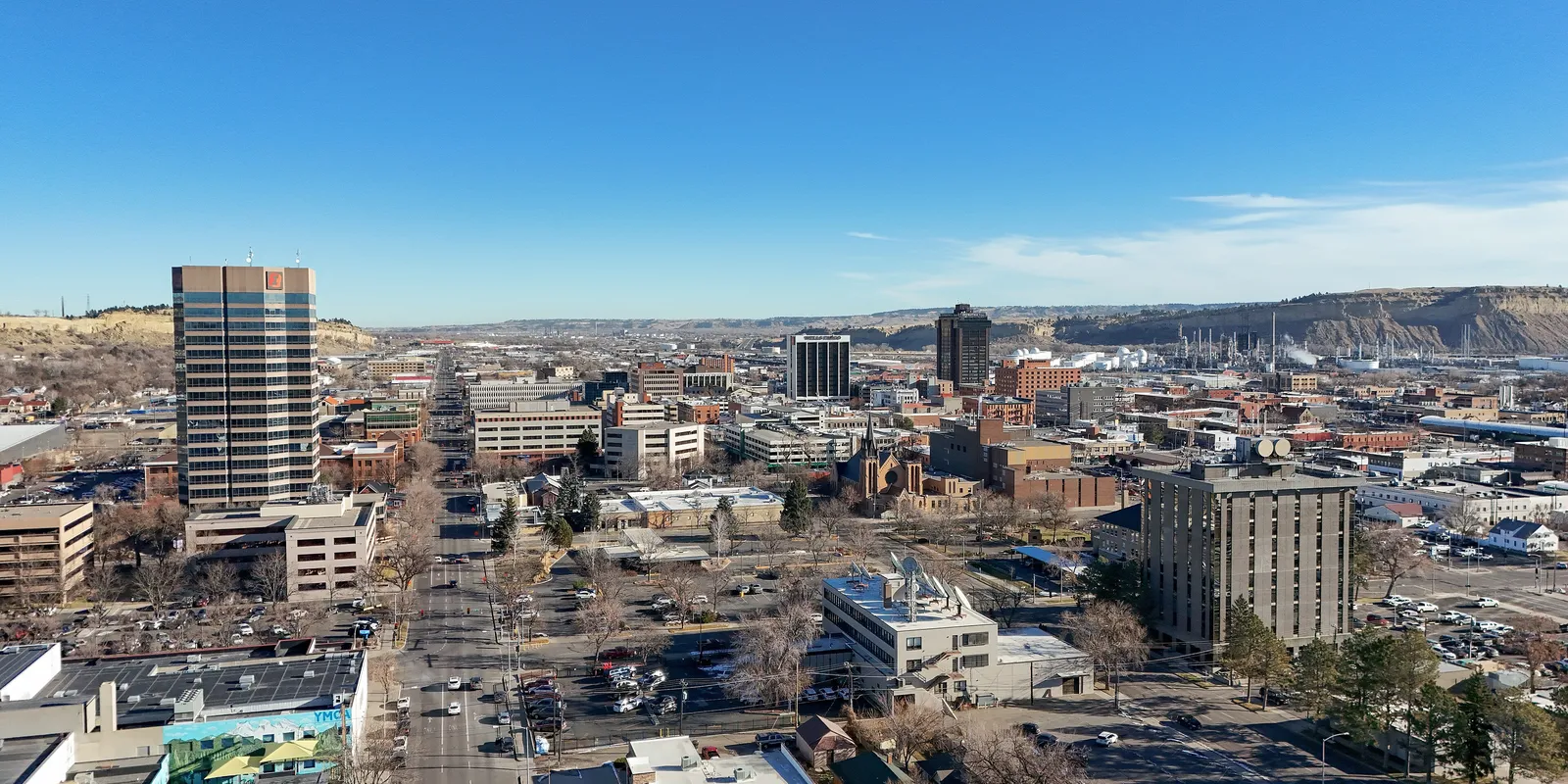

Billings: the gateway to wild Montana
The largest city in all of Montana along the Yellowstone River, Billings holds ancient rock carvings among the high rocky and arid cliffs surrounding it.
A car is absolutely necessary to thoroughly explore all the surrounding areas.
The Pictograph Cave State Park preserves rock paintings created by Native American populations more than two thousand years ago, among the oldest in Montana.
A few minutes away, the Rimrocks, rocky formations that surround the entire city, offer panoramic viewpoints over the vast valley of the Yellowstone River below.
Heading east, you reach Pompeys Pillar, a rock where captain William Clark personally inscribed his own name during the Lewis and Clark Expedition of 1806.
In the evening, Billings' historic downtown comes alive with restaurants and lively bars in early twentieth-century buildings.
Pompeys Pillar, where William Clark carved his name in 1806, remains the only visible and verifiable sign left along the entire route of the Lewis and Clark Expedition across the American continent.
The rock paintings of Pictograph Cave, created by various Native cultures who succeeded one another in the area over centuries, tell a story of over two thousand years of human history at the foot of the Montana mountains.
Related articles

You might also like...
Casper: on the pioneers' trail through Wyoming
Salt Lake City: temple, mountains and salt lake

Dortmund Airport: where to stay, areas and recommended hotels

Airline alliances and miles: how to travel in business class

Jet lag: how to prepare in the days before your trip