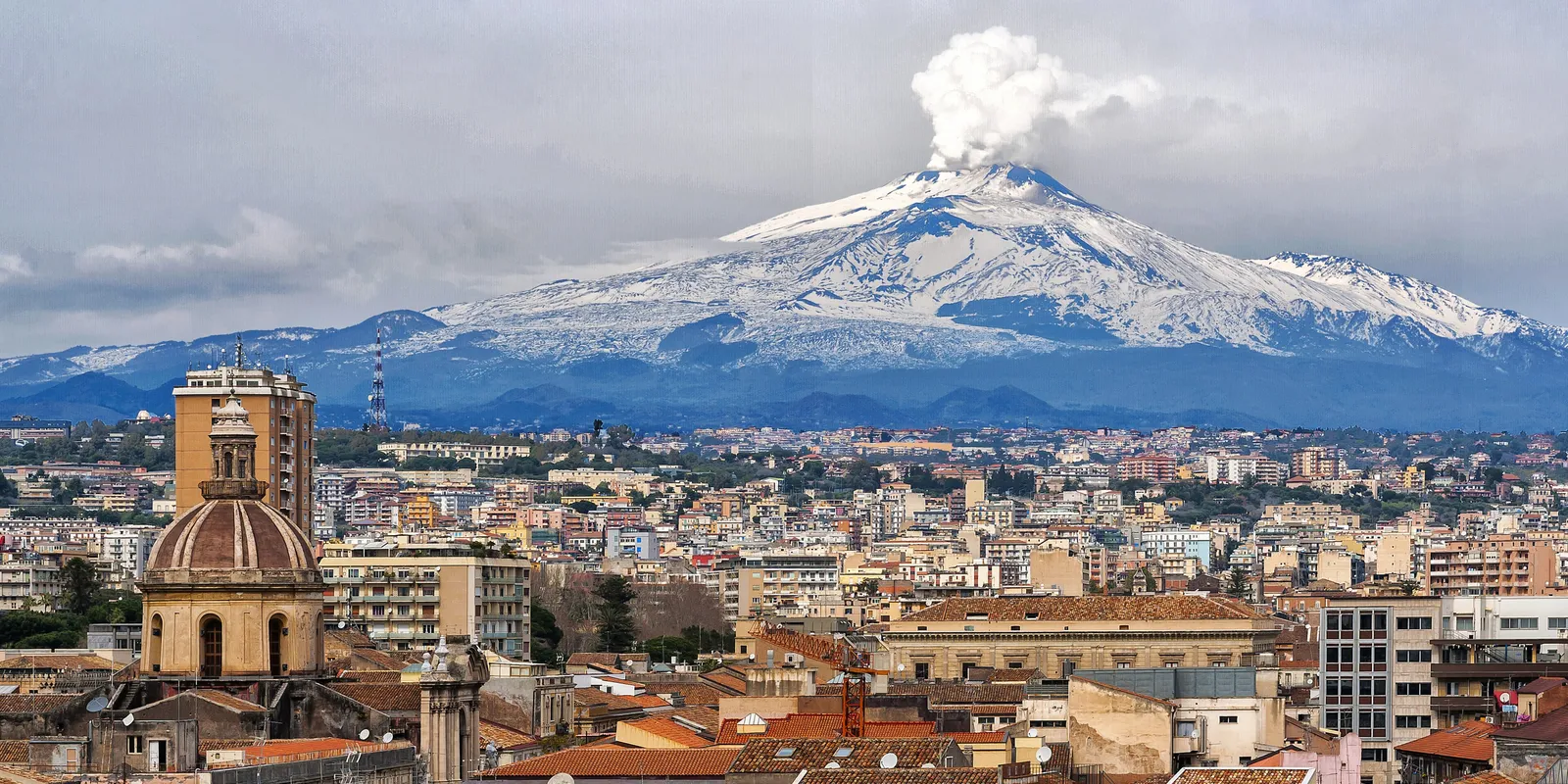

Catania: baroque at the foot of Etna
Rebuilt in Baroque style after the 1693 earthquake using lava stone from the very same volcano that had destroyed it many times before, Catania lives out a daily relationship with Mount Etna visible from nearly every street in the center.
The Baroque historic center, a UNESCO World Heritage site, can be comfortably explored on foot in the shadow of Etna.
The day begins at Piazza del Duomo, dominated by a stone elephant from lava topped with an Egyptian obelisk, which has become the unofficial symbol of the city.
Just behind the cathedral, vendors' shouts and market stalls unchanged for generations enliven each morning at the Pescheria Market.
From here also starts the Via Etnea, which for over three kilometers points straight toward the volcano, framing its silhouette against the background whenever weather conditions allow.
Hidden among the buildings of the center, not far away, a Roman Theater closes the visit with its tiers in volcanic stone that survived medieval and Baroque building constructed literally over the ruins.
The very lava that has threatened Catania for centuries is what the city rebuilds with each time: a dangerous material that became, almost by necessity, its principal building material.
On nights of intense activity, the red glow of Etna is clearly visible even from Catania's center, more than twenty-five kilometers away in a straight line from the summit crater.
Guided tours and experiences in Catania

Related articles

You might also like...
Reggio Calabria: the Riace Bronzes
24 hours in Palermo: what to see

Islas Malvinas Airport: where to stay, areas and recommended hotels

Eurowings: Fares, Routes and Reviews of Lufthansa's Low-Cost Airline

Dabolim Airport: where to stay, areas and recommended hotels