Cuneo: the city wedged between two rivers
The city's name itself tells its shape: built on a wedge-shaped plain between two rivers, Cuneo is also the gateway to the Occitan alpine valleys of Piedmont.
The center, wedged between the Stura and Gesso rivers, is easily explored on foot.
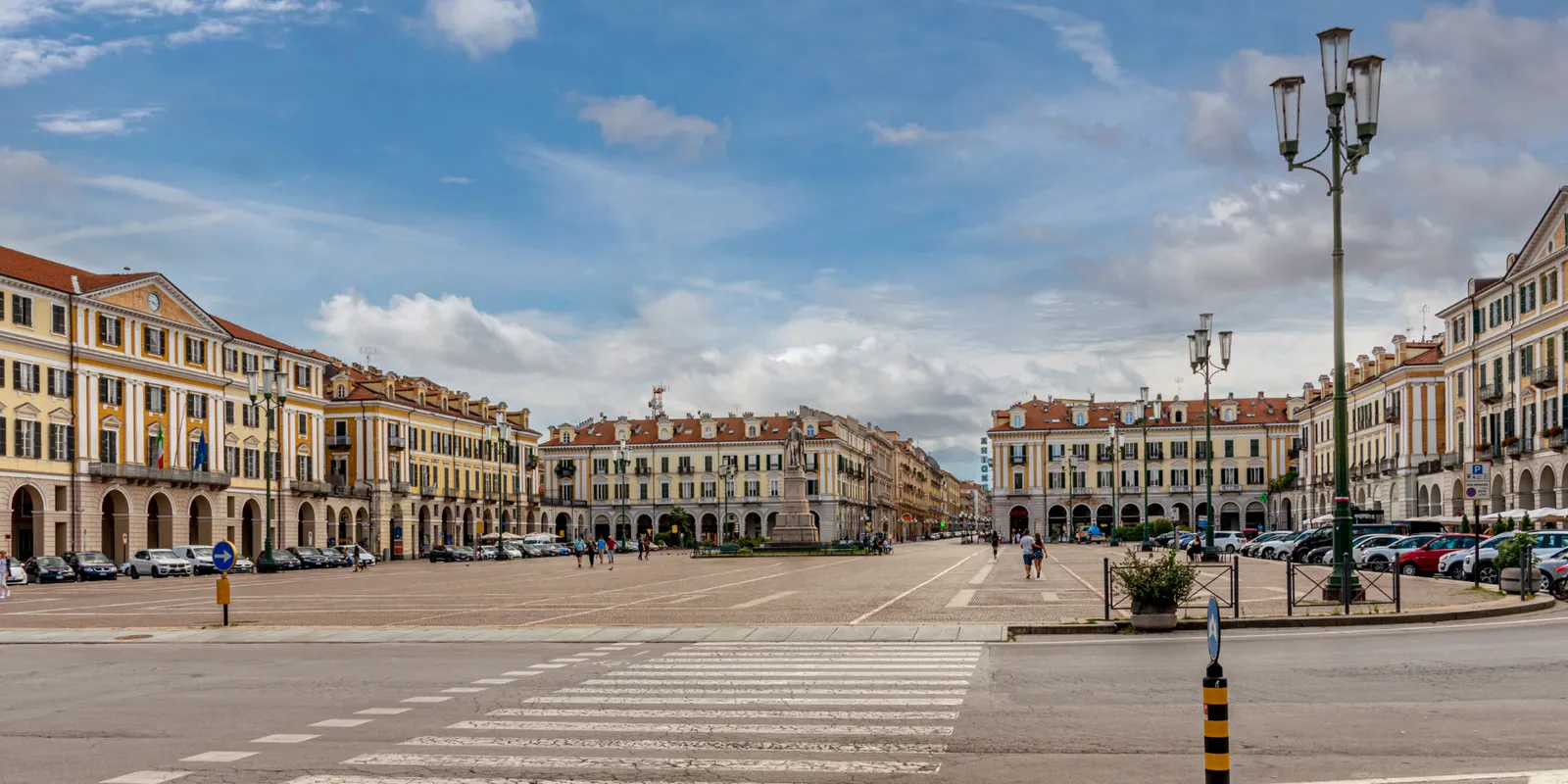
The Piazza Galimberti, among Piedmont's most spacious porticoed squares, hosts one of the province's busiest markets every week, with stalls of local products.
Just steps away, the Church of San Francesco, in Gothic style, preserves one of the old town's best-kept cloisters, now hosting temporary exhibitions.
Walking to the edges of the plateau, you observe the point where the rivers Stura di Demonte and Gesso meet, forming the 'cuneo' (wedge) that gives the city its name.
Toward evening, a historic pastry shop in the center offers cuneesi al rum, a traditional sweet made with meringue and chocolate and rum cream.
The original recipe for rum-soaked cuneesi cakes, created in the early twentieth century, is still jealously guarded by some of the city's historic pastry shops as a family secret.
Cuneo serves as a gateway to several Occitan Alpine valleys, where a Provençal-origin language distinct from both French and Italian is still spoken today.
Related articles

You might also like...
Albenga: the Roman city of the ten Ligurian towers
What to see in Turin in 1 day
NordStar: Flights to Norilsk, the Russian City with No Roads Linking It to the Rest of the Country

Reykjavik Airport: where to stay, areas and recommended hotels
Surinam Airways: The Only Direct Flight Linking Suriname to Europe
