
Donegal: wild cliffs in Ireland's northwest
A county less struck by mass tourism than the rest of Ireland, Donegal offers some of Europe's highest cliffs and villages where Gaelic remains a daily language.
A rental car remains necessary to explore the county.
The Castle of Donegal, a fifteenth-century fortress on the Eske River, preserves rooms with carved stone fireplaces and Jacobean furnishings.
Along the coast, the Cliffs of Slieve League, among the highest in Europe at almost six hundred meters above the sea, remain less crowded than the more famous Cliffs of Moher.
Continuing through the Gaeltacht, a region where Irish Gaelic remains the daily language, you encounter fishing villages with an authentic atmosphere.
Toward evening, a traditional pub in Donegal Town offers live Irish folk music and local dark beer.
The Slieve League cliffs exceed the height of the more famous Cliffs of Moher but remain far less visited, offering a often more solitary and authentic experience for those seeking to escape crowds.
Irish Gaelic, an official language but spoken daily only in a few areas of the country, remains a living language in the Gaeltacht villages of Donegal, still used in everyday life.
Related articles

You might also like...
Sligo: the landscapes that inspired the poet Yeats
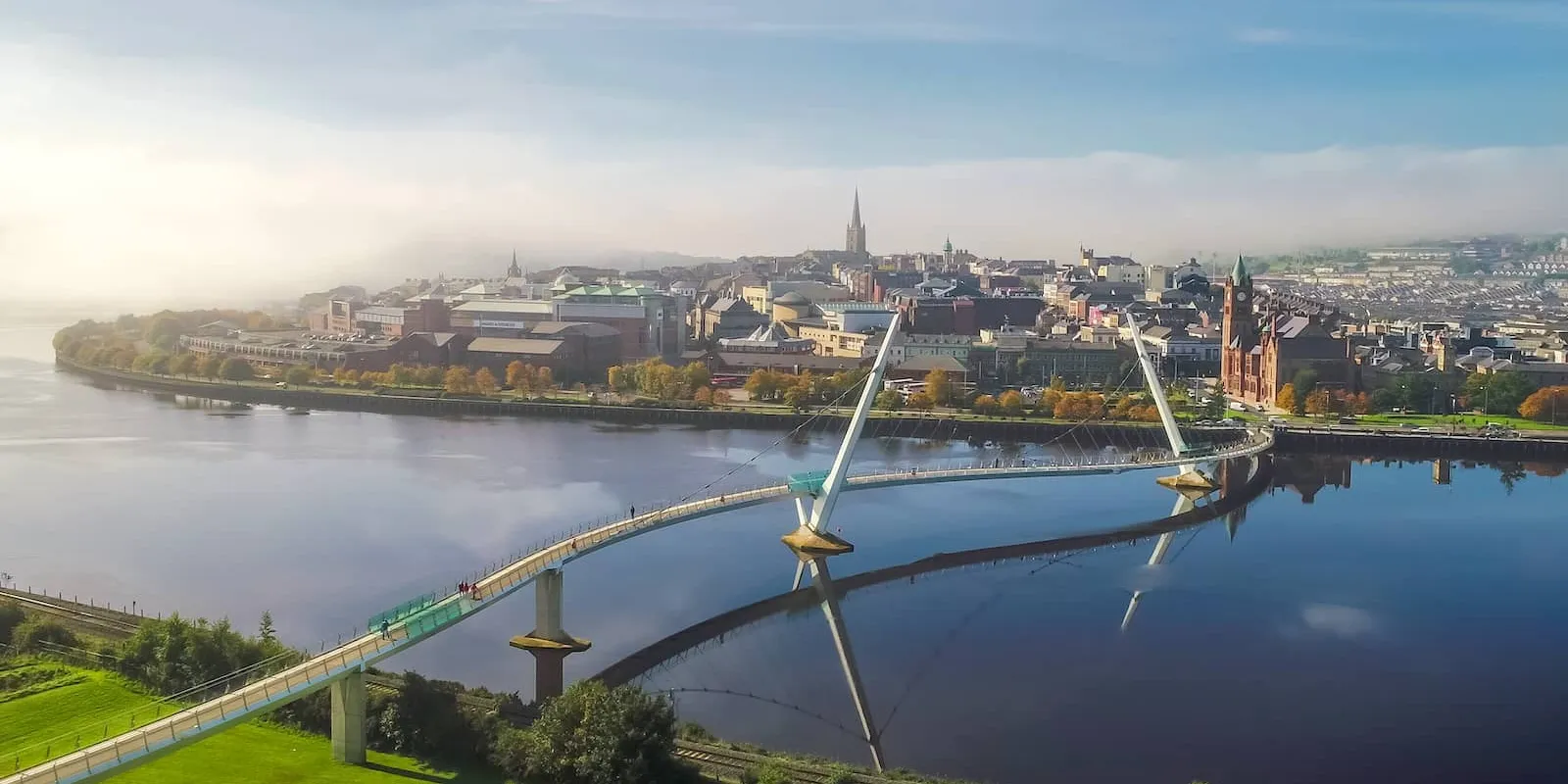
Derry: Ireland's last besieged walls

L'Espérance Airport: where to stay, areas and recommended hotels

Melbourne International Airport: where to stay, areas and recommended hotels

PAL Express: Philippine Airlines' Regional Network Across ATRs, Airbus and the Smaller Islands