
Heraklion: Knossos and the Minoan legacy
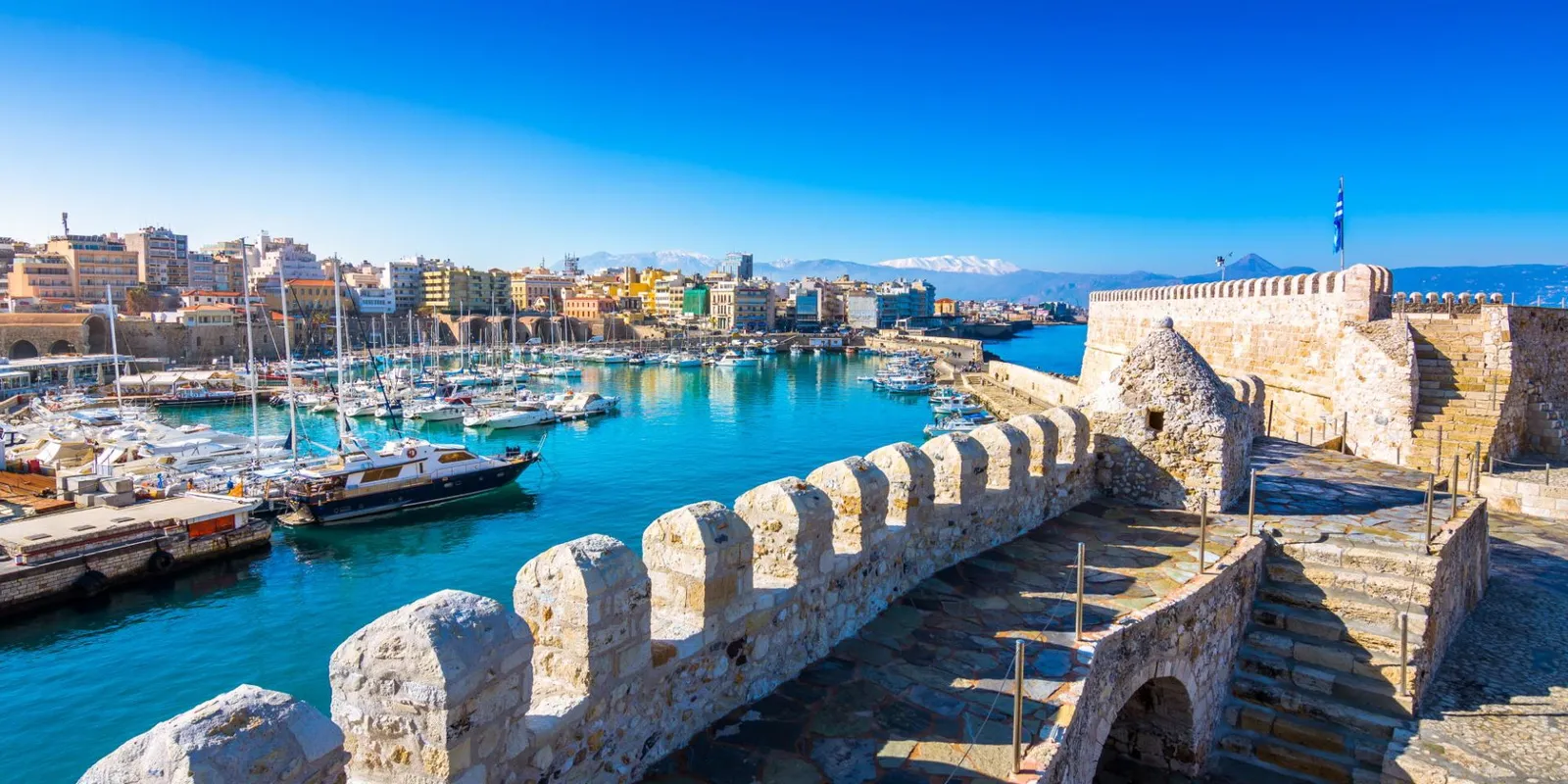
Gateway to Minoan civilization, the oldest in Europe, Heraklion preserves beneath Venetian walls built against the Ottomans the remains of a palace that inspired the Greek myth of the labyrinth and the Minotaur.
Knossos, just outside the city, requires a short public bus ride or a taxi.
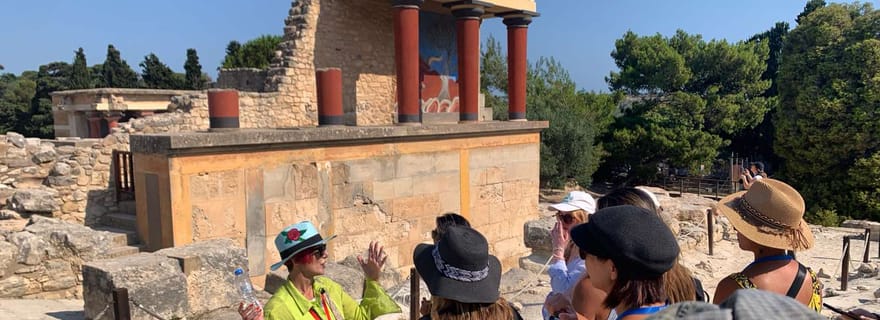
The Palace of Knossos, center of Minoan civilization in the time of the legendary King Minos, was brought to light at the beginning of the twentieth century by British archaeologist Arthur Evans, who reconstructed parts of it in a way now controversial but made famous worldwide.
The Heraklion Archaeological Museum holds the world's most important collection of Minoan art, including the original frescoes from Knossos and the famous Phaistos Disc, still undeciphered in its writing.
The Koulés Fortress, a Venetian bastion from the sixteenth century at the entrance of the old harbor, withstood an Ottoman siege lasting over twenty years, among the longest in European military history.
The Fountain of Morosini, in the Lions Square in the heart of the city, was built by the Venetians in the seventeenth century to bring running water to the city through an aqueduct over fifteen kilometers long.
The Phaistos Disk, displayed in the archaeological museum, remains undeciphered despite over a century of study: few objects in the world remain so stubbornly mute after such academic attention.
Koules Fortress, which resisted siege for decades, and Knossos Palace, which instead collapsed from a single natural event thousands of years earlier, measure the island's history on completely different timescales.
Guided tours and experiences in Heraklion


Related articles

You might also like...
Crete: the Minotaur's labyrinth at Knossos
Chania: Crete's Venetian harbour

Star Perú: The Last Boeing 737-300s Still Flying on the Routes of the Peruvian Amazon

What to wear on a long flight

Thai Lion Air: A Guide to Low-Cost Flights in Thailand, Fares and Punctuality