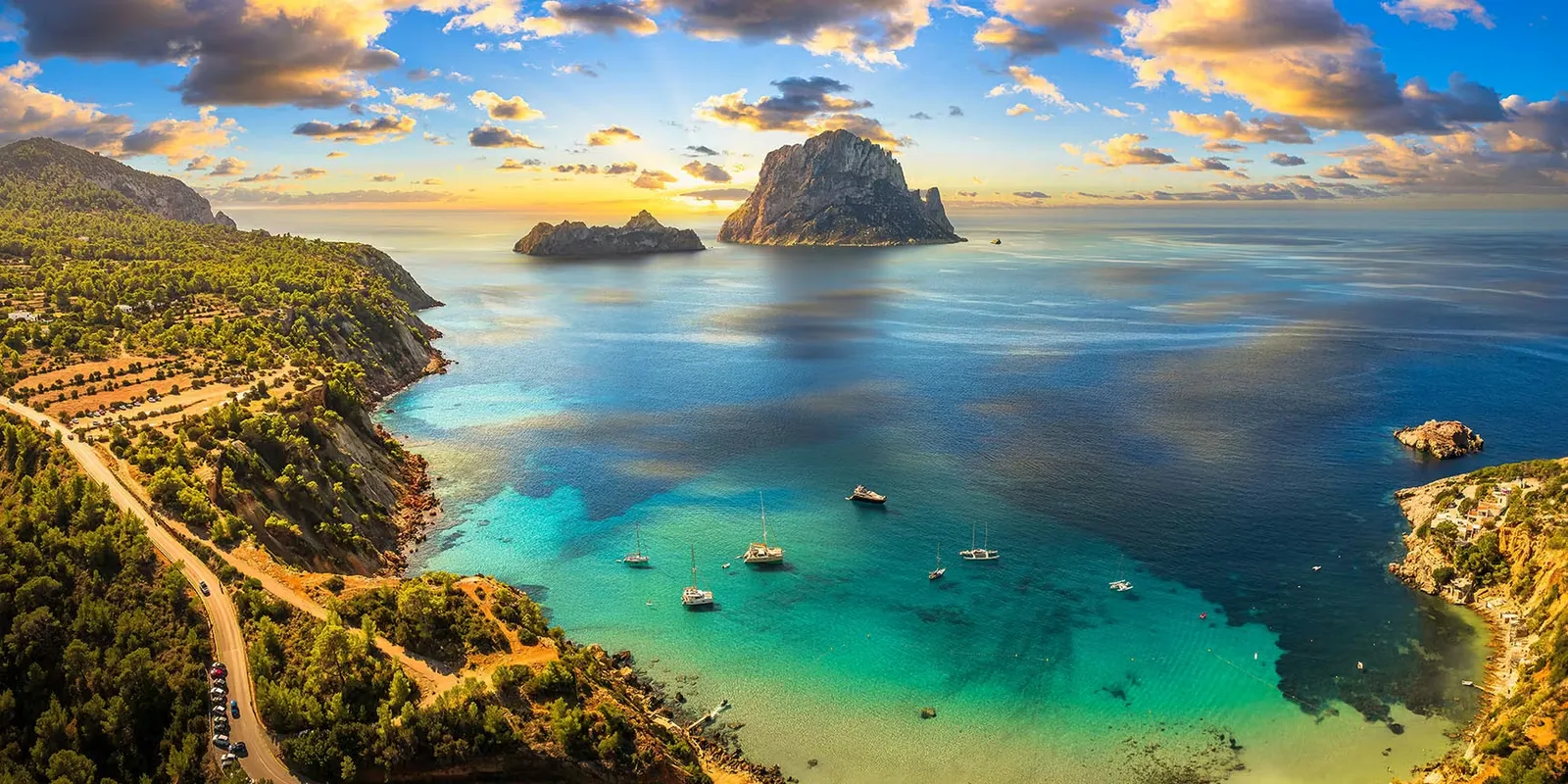

Ibiza: Dalt Vila beyond the nightlife
Known worldwide for its clubs, Ibiza safeguards in its fortified historic center nearly three thousand years of history spanning Phoenicians, Carthaginians, Romans and Moors, a UNESCO World Heritage site since 1999.
Dalt Vila is explored on foot along cobblestone streets that climb steeply.
Dalt Vila, the high walled city, is ringed by Renaissance fortifications built in the sixteenth century on order of the Spanish crown to defend the island from attacks by Barbary pirates.
The Cathedral of Saint Mary, atop the hill, mixes thirteenth-century Catalan gothic elements with a baroque bell tower added centuries later, and is visible from the sea for kilometers around.
The necropolis of Puig des Molins, among the largest Punic necropolises ever discovered in the Mediterranean, preserves over three thousand tombs carved into rock between the seventh century BC and the Roman era.
The port of Sa Penya, at the foot of Dalt Vila, alternates hippy craft shops born in the 1960s with waterfront bars where arriving ferries can be watched.
The Punic tombs of Puig des Molins are twenty-seven hundred years old; the first clubs that made the island famous are less than sixty: Ibiza contains both timescales effortlessly.
From Dalt Vila, with its Renaissance walls, that same party island appears only as a distant strip of lights on the coast, almost a marginal detail in the city's longer history.
Guided tours and experiences in Ibiza

Related articles


You might also like...
Palma de Mallorca: cathedral and old town
One day in Valencia: itinerary and highlights

Baggage insurance: how to get the maximum refund

Nauru Airlines: The Air Thread Holding the Central Pacific Islands Together

Kirkwall Airport: where to stay, areas and recommended hotels