Medellín: from Comuna 13 to the Metrocable
Once one of the world's most dangerous cities in the nineteen nineties, Medellín invested in the following decade in public transportation and cultural spaces precisely in its most challenging neighborhoods, transforming its social skyline alongside its urban one.
The metro and urban cable car system conveniently connects all the day's stops.
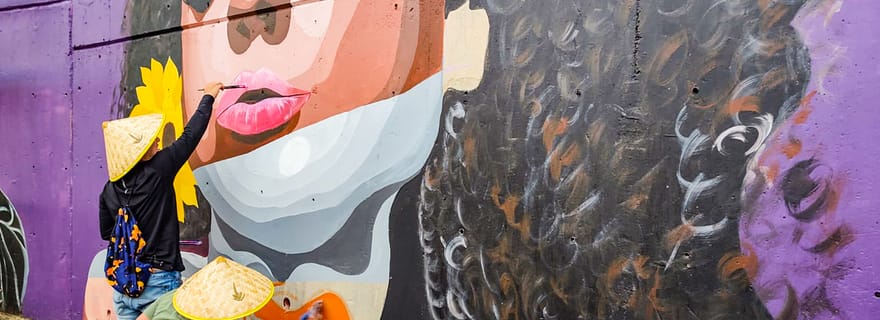
The Comuna 13, once among the city's most violent neighborhoods, today welcomes visitors along outdoor escalators installed in 2011 and walls covered in murals directly narrating the neighborhood's conflict and renewal history.
The Metrocable, a system of urban cable cars integrated into the metro since 2004, was the first in the world specifically designed to connect poor hillside neighborhoods to the rest of the city, not as a tourist attraction.
Plaza Botero, in the historic center, displays in the open air twenty-three bronze sculptures donated by artist Fernando Botero, all characterized by the exaggerated proportions that have made his style famous worldwide.
The Pueblito Paisa, a miniature replica of a typical colonial antioqueño village built on a central hill, offers from above a complete view of the entire valley where Medellín spreads.
The escalators of Comuna 13 were built as transport infrastructure for real residents, not as an attraction — yet today they are probably the city's most photographed stop.
Botero's sculptures, with their deliberately bloated forms, seem to comment from afar on this very capacity of Medellín to reinvent positively what once weighed heavily on its image.
Guided tours and experiences in Medellín

Related articles

You might also like...
Pereira: the heart of the Coffee Triangle
Armenia: the city that shares its name with a country

Jose Maria Córdova International Airport: where to stay, areas and recommended hotels

Osvaldo Vieira International Airport: where to stay, areas and recommended hotels
Jetstar Japan: Fares, Baggage and Routes of the JAL and Qantas Low-Cost Carrier