
Nanjing: imperial walls and 20th-century memory
Capital of six Chinese dynasties and the Republic of China before 1949, Nanjing preserves beneath its identity as a university city one of the world's best-preserved imperial walls.
The sites are spread over a wide area: alternating between the metro and short walks is the best approach.
The Walls of Nanjing, built in the fourteenth century on orders of the first Ming emperor and originally extending for over thirty-five kilometers, remain among the longest city walls ever built in the world, still walkable in sections on foot or by bicycle for approximately twenty-five kilometers of surviving path.
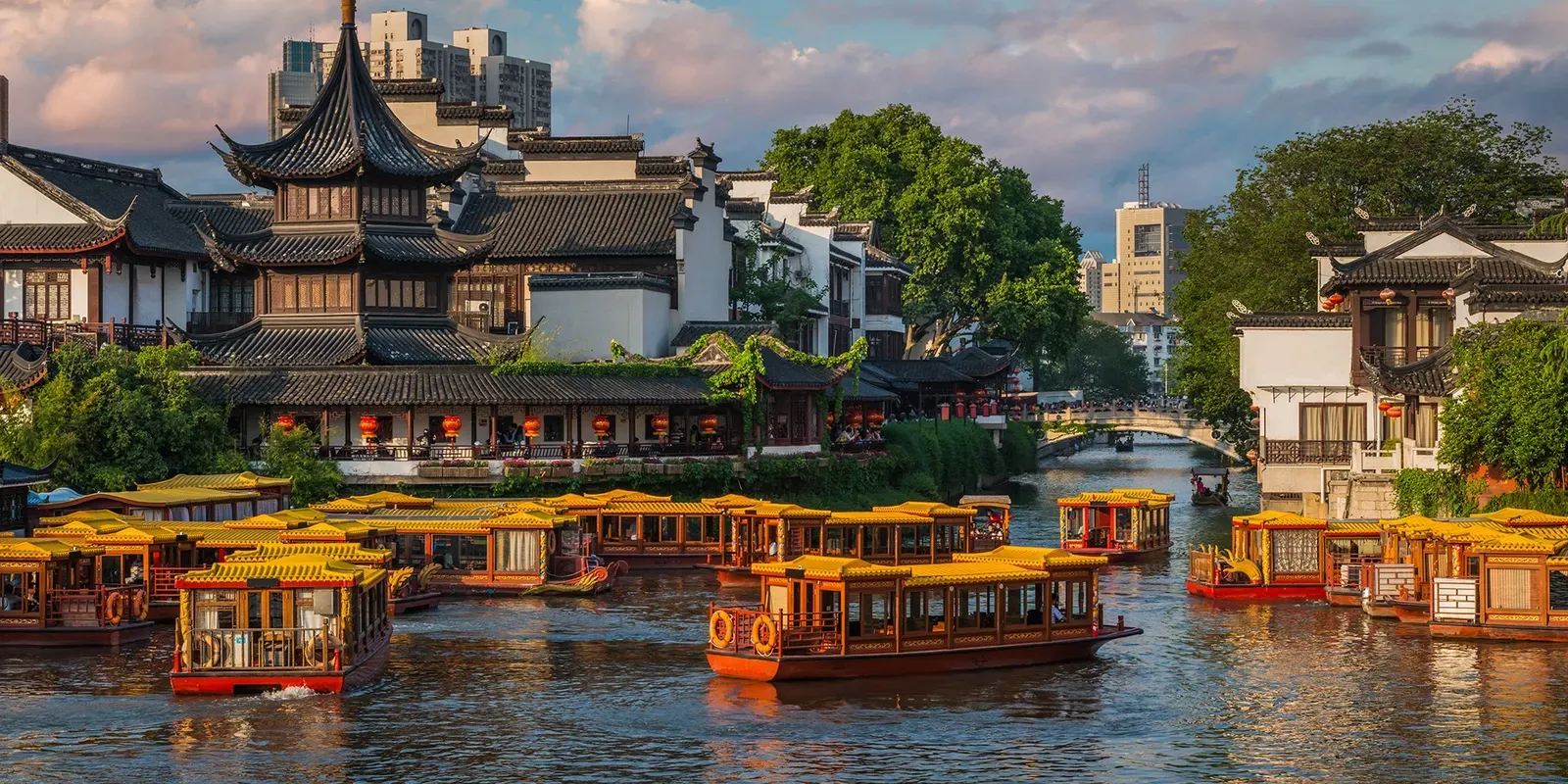
The Confucius Temple, rebuilt several times after successive destructions, overlooks the Qinhuai River in an area enlivened in the evening by colored lights and tourist boats, the historic seat of imperial exams for civil service.
The Mausoleum of Sun Yat-sen, father of Republican China, requires climbing three hundred ninety-two steps along the side of Purple Hill before reaching the white marble memorial hall.
The Nanjing Massacre Memorial documents with photographs, testimonies, and archaeological remains the Japanese occupation of 1937, in an exhibition explicitly designed not to diminish the gravity of events.
The imperial walls of the fourteenth century and the 1937 memorial tell two extremes of the same city's story: the construction of power and its most brutal denial, centuries apart.
Confucius Temple, enlivened each evening without much historical weight, remains the place where Nanjing seems to grant itself a respite from both extremes.
Related articles

You might also like...
Hefei: the scientific gateway to the Yellow Mountains
Hangzhou: West Lake and Buddhist temples

Early check-in: when it's really worth it

Esenboğa International Airport: where to stay, areas and recommended hotels

Tianjin Binhai International Airport: where to stay, areas and recommended hotels