
New Delhi in a day: forts and markets
A capital built in successive layers, New Delhi blends the British imperial Delhi of tree-lined avenues with the Mughal Delhi of minarets and the even older Delhi of Chandni Chowk's markets, seamlessly layered across epochs.
A single day forces a choice: here the itinerary prioritizes historical layering over geographical breadth.
The Qutub Minar, the highest minaret in India at over eight hundred years old, towers over a complex that also houses remains of the first mosque built by Delhi's sultans, with Quranic inscriptions carved along its entire shaft.
The Humayun's Tomb, a marble and sandstone funerary garden built in the sixteenth century, anticipates in its proportions and dome the Taj Mahal, constructed nearly a century later by descendants of the same Mughal emperor.
At Chandni Chowk, the city's oldest market, extremely narrow alleys open onto shops dealing in spices, fabrics, and sweets right next to the Jama Masjid, India's largest mosque.
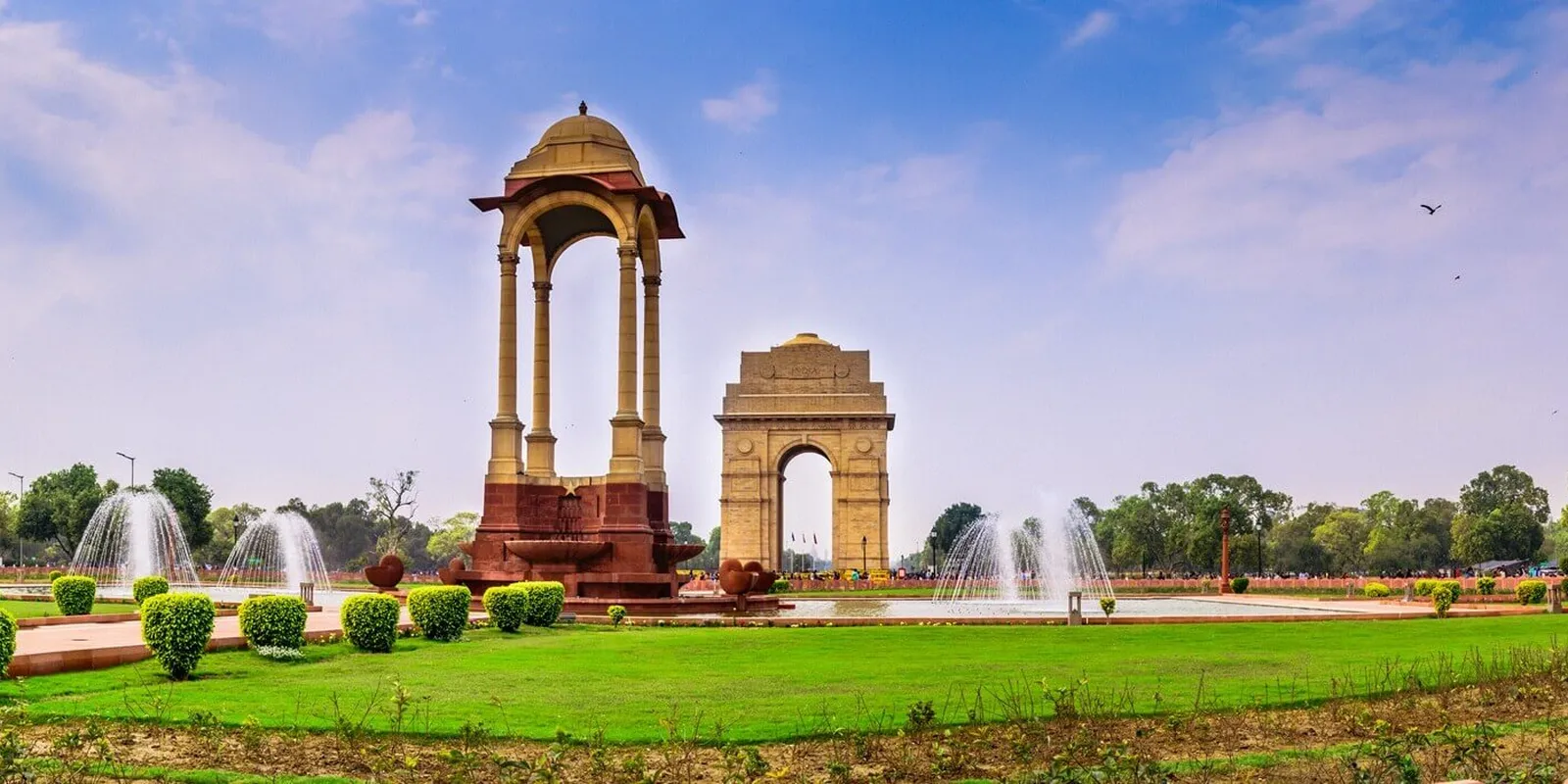
The India Gate, a memorial arch dedicated to Indian soldiers who died in the First World War, closes the day on the city's most orderly and monumental side, with the long grassy Rajpath avenue stretching toward the presidential palace.
Between Qutub Minar and Chandni Chowk, eight hundred years of history pass, yet both remain part of the same living city, not museum artifacts.
It's this coexistence between eras, more than any single monument, that's the reason a single day in Delhi always leaves the feeling of having seen too little.
Guided tours and experiences in New Delhi

Related articles

You might also like...
What to see in Jaipur in 1 day
Amritsar: the Sikh golden temple

Senou Airport: where to stay, areas and recommended hotels

Air Mauritius: A Guide to the Indian Ocean's Flag Carrier

How to entertain a child during the airport wait