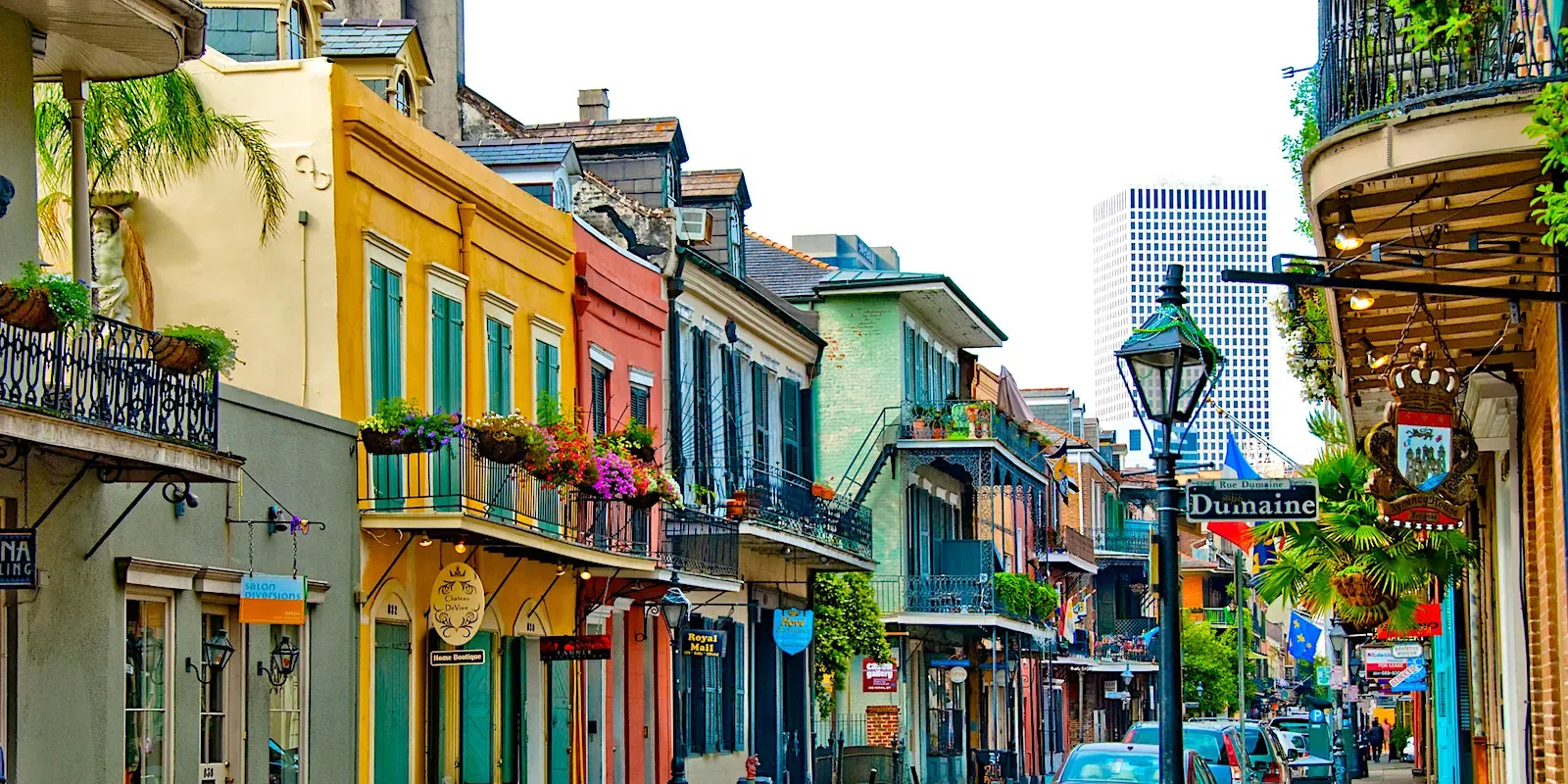

New Orleans: jazz and above-ground cemeteries
Founded by the French in 1718 and largely rebuilt under Spanish rule, New Orleans carries in its historic center an architecture more Iberian than French, despite the district's name.
The French Quarter can be comfortably explored on foot.
Jackson Square features the Cathedral of Saint Louis, the oldest active Catholic cathedral in the United States, overlooking street artists and jazz musicians.
A few steps away, Café du Monde, open since 1862, still serves fried and sugared beignets with the same chicory coffee of the Creole tradition.
Walking toward the center you visit, by guided tour only since 2015, Saint Louis Cemetery No. 1, where all tombs are elevated above ground due to the city's high water table.
In the evening, Preservation Hall, home since 1961 to concerts dedicated to traditional New Orleans jazz, closes the day with live music in a venue that has remained almost unchanged over time.
The ban on underground burial does not stem from a written rule but from centuries of coffins that re-emerged from the ground after heavy rains: aboveground tombs were a practical solution that became the city's distinctive trait.
At the Preservation Hall there is neither air conditioning nor numbered seating: the public sits on simple wooden benches, exactly as it did in the sixties.
Guided tours and experiences in New Orleans

Related articles

You might also like...
Gulfport: Mississippi's sandy beaches
Baton Rouge: the capital on the great river

Le Havre Octeville Airport: where to stay, areas and recommended hotels

Bhavnagar Airport: where to stay, areas and recommended hotels

How to carry liquids in your carry-on