Paramaribo: Dutch colonial architecture in the tropics
Capital of Suriname, the only Dutch-speaking country in South America, Paramaribo houses a UNESCO World Heritage colonial historic center.
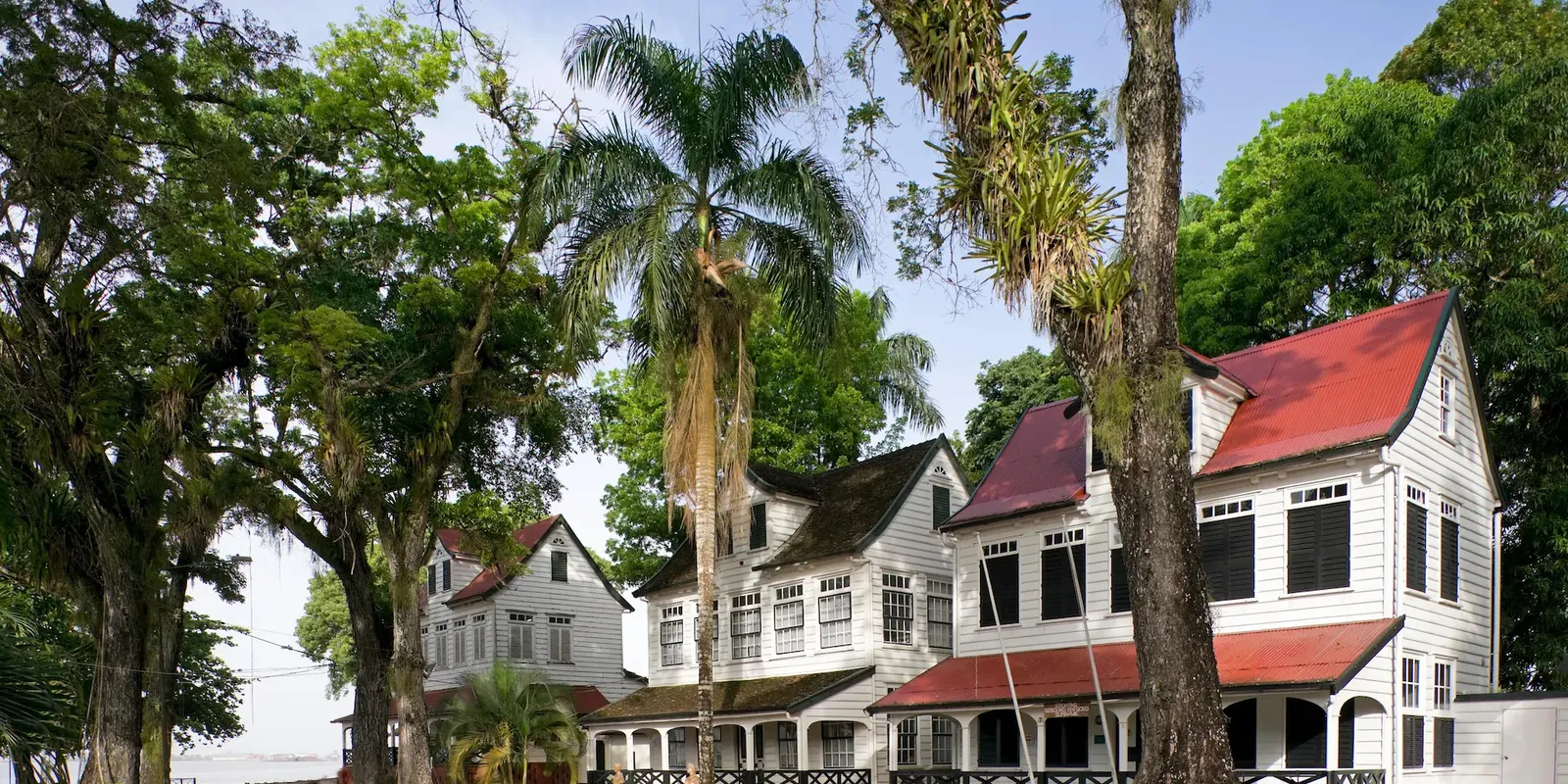
The Dutch colonial center, a UNESCO World Heritage site, is comfortably explored on foot.
The historic center of Paramaribo, a UNESCO heritage site, preserves white wooden buildings built using Dutch techniques but adapted to the South American tropical climate.
Just steps away, the Neveh Shalom Synagogue and the nearby Keizerstraat Mosque stand side by side, symbols of the city's extraordinary religious diversity.
Continuing along the Suriname river, one visits Fort Zeelandia, a seventeenth-century Dutch fortress that tells the story of colonial expansion and slave trade in the region.
Toward evening, local markets animate trade in Indian, Javanese and African spices, reflecting Suriname's multiethnic population.
Paramaribo is home to one of South America's most ethnically diverse populations, with descendants of enslaved Africans, Indian and Javanese contract workers, as well as Chinese and Jewish communities, all having coexisted for centuries in relative harmony.
The synagogue and mosque in Paramaribo, situated literally next to each other, even share a common parking lot, a symbol of religious coexistence rare in the world and often noted by visitors.
Related articles
You might also like...
Cayenne: the gateway to French Amazonia
Georgetown: colonial wooden architecture

Gaziantep International Airport: where to stay, areas and recommended hotels

Congonhas Airport: where to stay, areas and recommended hotels
Don Mueang airport lounges: which one to pick between T1 and T2