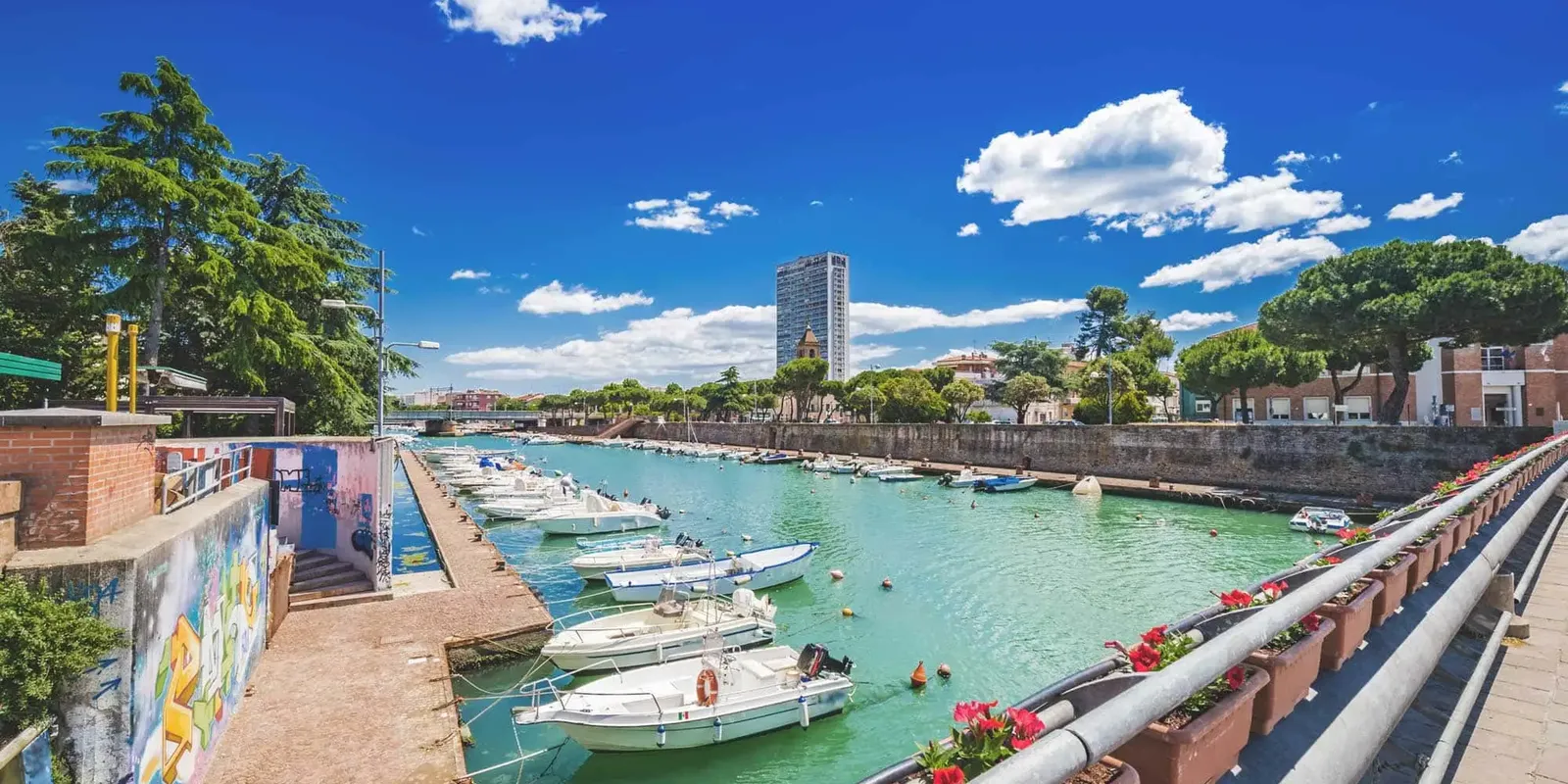

Rimini: ancient Rome and the Adriatic riviera
Capital of the Romagna coast and birthplace of filmmaker Federico Fellini, Rimini hides behind kilometers of beach resorts a Roman center among the best-preserved on the Adriatic.
The historic center can be explored on foot; the waterfront requires more time given its sprawling extent.
The day begins at the Arch of Augustus, erected in 27 B.C. in honor of the first Roman emperor: it remains the oldest Roman arch still existing in northern Italy, the starting point of the Flaminian Way toward Rome.
Walking through the historic center you reach the Bridge of Tiberius of 21 A.D., which two thousand years after its construction in Istrian stone still supports pedestrian and bicycle traffic over the city canal today.
Not far away, among Castel Sismondo and other buildings of the center, the Fellini Museum retraces the career of the Rimini director through stage costumes, original sketches and immersive projections.
In the afternoon it's worth going down toward the sea: since the nineteen-fifties, over fifteen kilometers of equipped beach make the Rimini Waterfront one of the most frequent seaside destinations in Italy.
In summer, around seven in the evening, the beach establishments empty out while the waterfront fills with people out for an evening stroll before dinner: two different times on the same beach, almost two cities in sequence.
Rimini's Grand Hotel, made famous by childhood memories recounted in Federico Fellini's films, remains one of the city's most luxurious hotels and a symbol of its Belle Époque.
Guided tours and experiences in Rimini
Related articles

You might also like...
Forlì: rationalist mosaics in the heart of Romagna
Ancona: the gateway to Monte Conero

Newark airport lounges: which one to pick, terminal by terminal

Aosta Corrado Gex Airport: where to stay, areas and recommended hotels

Montgomery Regional (Dannelly Field) Airport: where to stay, areas and recommended hotels