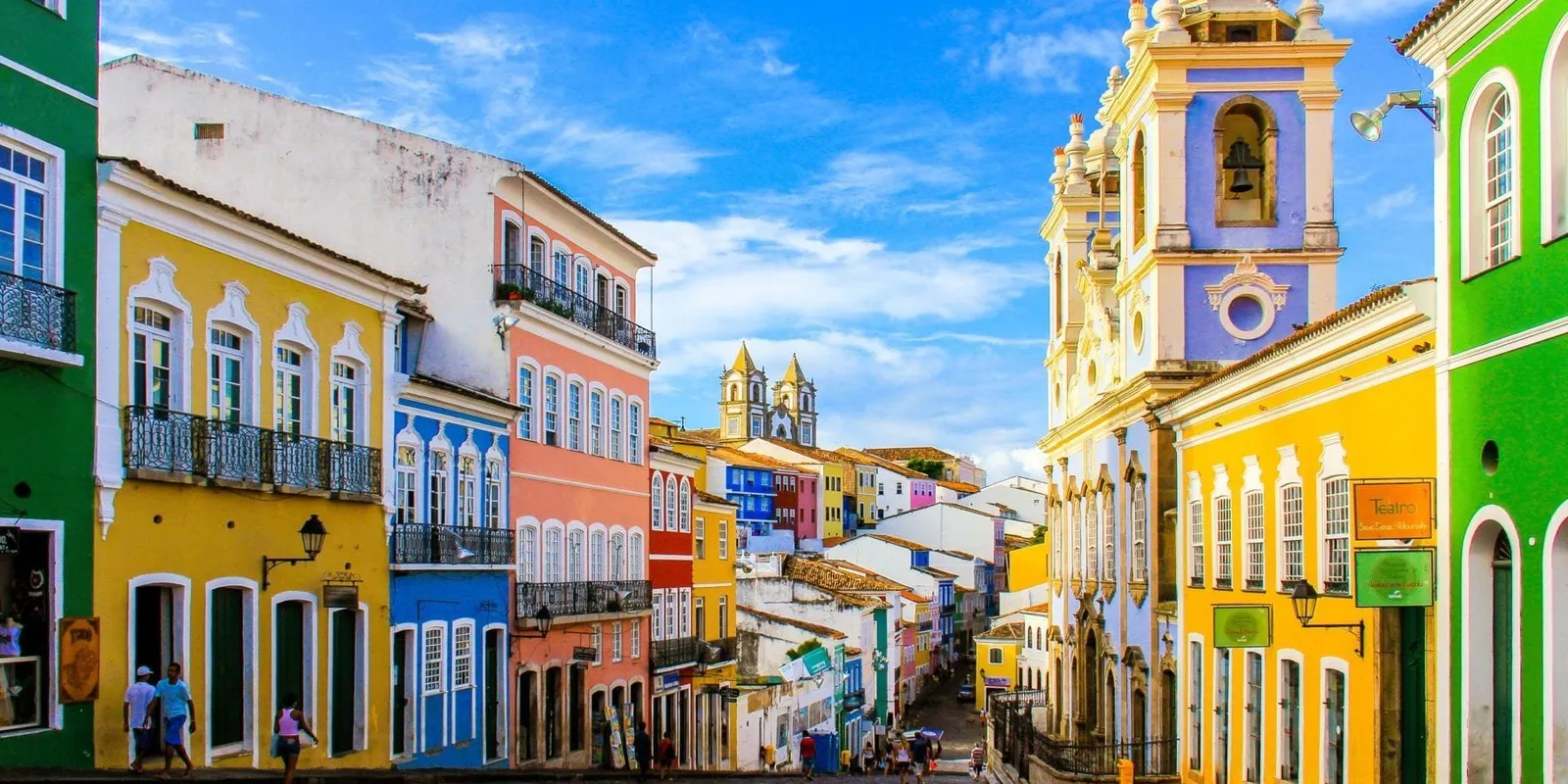

Salvador: the Pelourinho and Afro-Brazilian heritage
Brazil's first colonial capital and the principal arrival port of the African slave trade to the country, Salvador preserves in the historic center of Pelourinho the highest concentration of Portuguese Baroque architecture in the Americas.
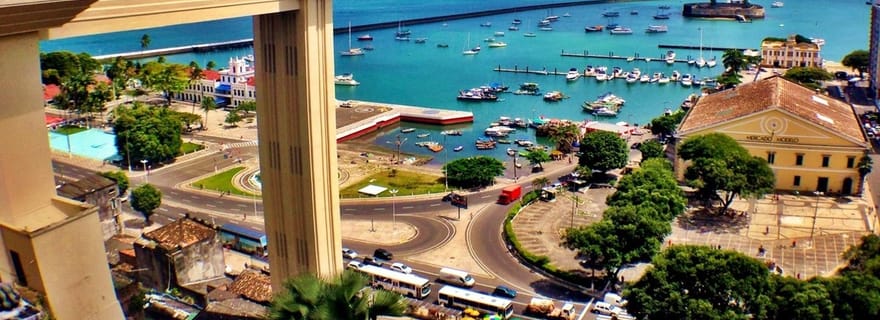
Cidade Alta, where Pelourinho is located, is reached from Cidade Baixa by the Lacerda Elevator.
The Pelourinho, a UNESCO World Heritage site since 1985, takes its name from the whipping post once used for public punishment of enslaved people, now replaced by colonial houses painted in vivid colors housing galleries and music venues.
The Church of Saint Francis, with its interior entirely covered in gold leaf, was built by enslaved workers who also carved grotesque figures as a silent form of protest, according to many historians' interpretation.
The Lacerda Elevator, a public elevator in service since 1873 and refurbished several times, connects in seconds the colonial Cidade Alta to the commercial Cidade Baixa, sparing a steep seventy-meter climb.
The Mercado Modelo, in the Cidade Baixa, occupies the former port customs building of the city and today sells handicrafts, Afro-Brazilian musical instruments and live capoeira in its internal courtyards.
The grotesque figures carved in the Church of São Francisco by enslaved hands remain one of the most direct, and least known to visitors, testimonies of the violence on which the city's colonial wealth was built.
The capoeira danced today in the courtyards of Mercado Modelo was born from that very same history, transformed over centuries into martial art, dance, and cultural resistance all at once.
Guided tours and experiences in Salvador
Related articles

You might also like...
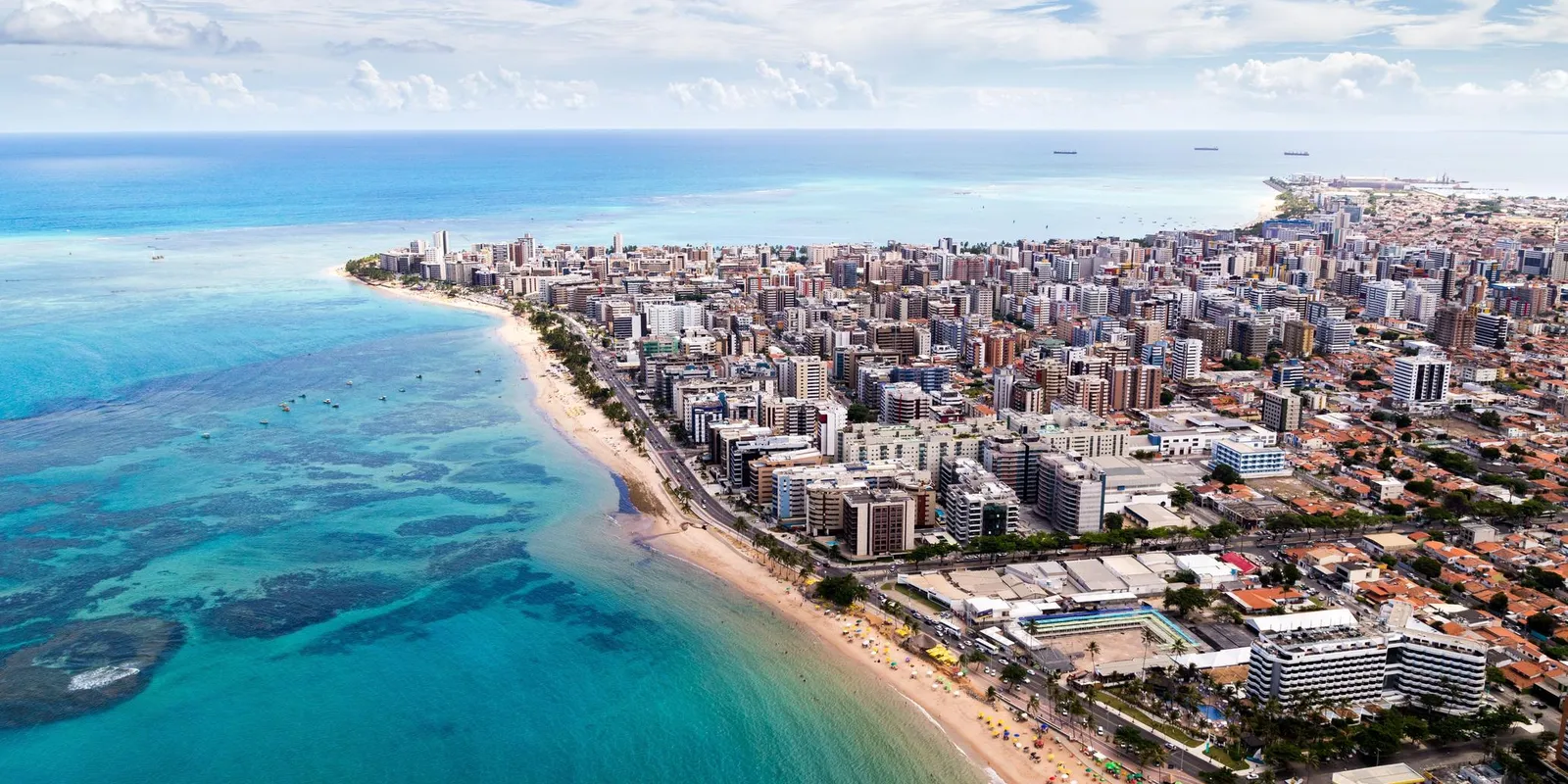
Maceió: the natural pools of Pajuçara
Recife: canals and Brazil's Venice

Check-in with checked luggage: what changes
The New Cyprus Airways: How the Airline Reborn in 2017 Flies Today
Air Corsica: Flights and Fares for the Island's Public Service Obligation (PSO) Link
