
Tampere: textile mills between two lakes
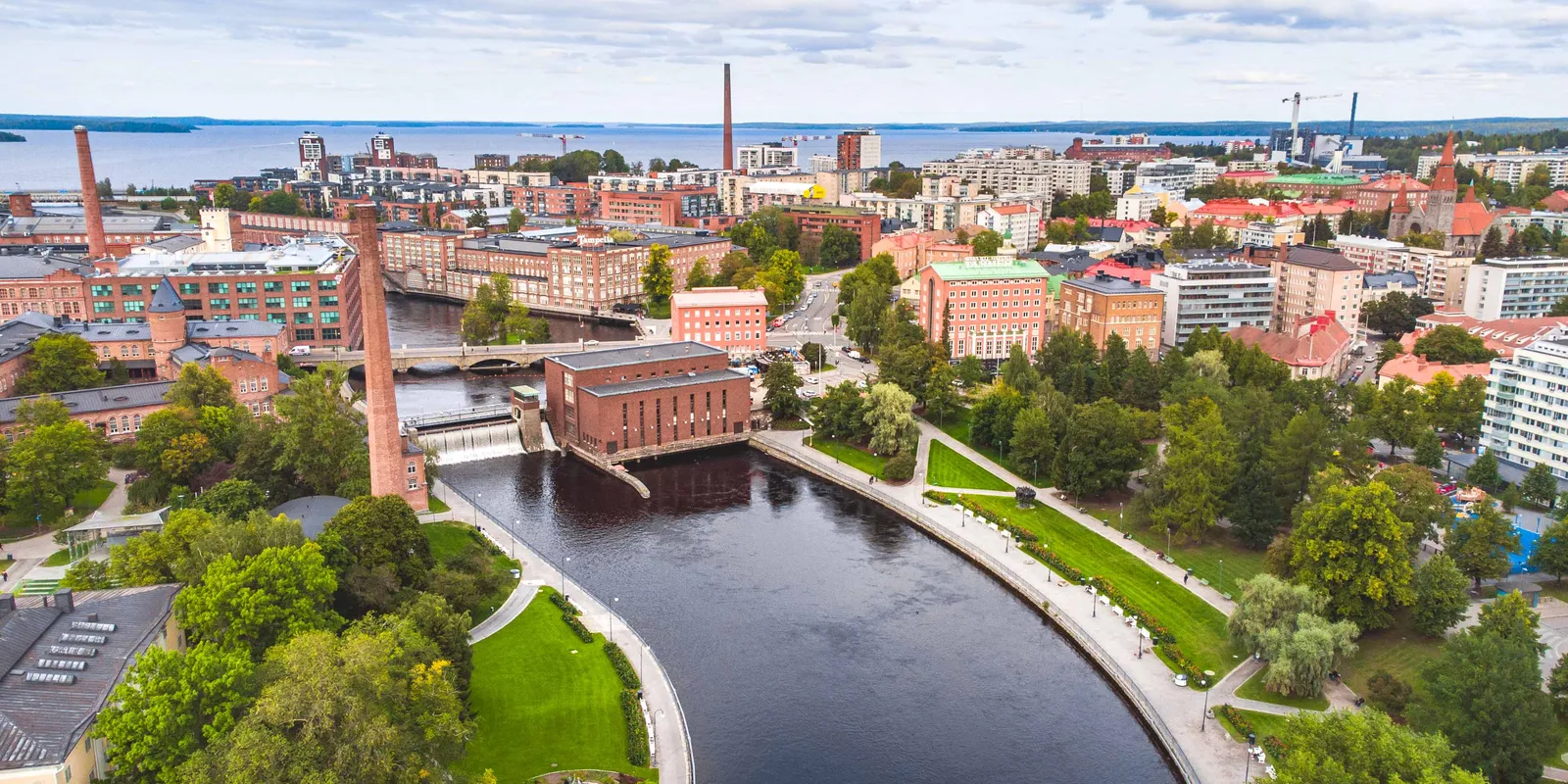
Built on an isthmus between two large lakes, Tampere remains Finland's third-largest city, with a textile industrial heritage converted into museums and venues.
The center, among former textile factories and two lakes surrounding it, can be comfortably visited on foot.
The Finlayson district, a former nineteenth-century textile complex along the city's rapids, today houses museums, cinemas and restaurants inside red brick buildings.
A few steps away, the Moomin Museum, dedicated to the famous characters of Finnish writer Tove Jansson, displays the original illustrations from the books.
Continuing along the Tammerkoski rapids, you visit the Tampere Cathedral, with its own symbolist frescoes that sparked controversy at its inauguration in 1907.
Toward evening, the Näsinneula panoramic tower, on the shores of Lake Näsijärvi, offers a view of the city at sunset.
The rapids of Tammerkoski, which connect the two lakes on opposite sides of the city, provided the hydroelectric power that made Tampere the principal center of Finland's textile industry during the nineteenth century.
The frescoes of Tampere Cathedral, painted by Hugo Simberg with Symbolist themes such as a skeleton watering a garden, scandalized religious public opinion when they were inaugurated, remaining to this day among Finland's most debated works of art.
Related articles

You might also like...
Pori: jazz on the banks of the Kokemäenjoki River
Jyväskylä: the city of architect Alvar Aalto

Sheppard Air Force Base-Wichita Falls Municipal Airport: where to stay, areas and recommended hotels

Ben Gurion International Airport: where to stay, areas and recommended hotels
Republic Airlines, the Only Regional Carrier That Flies for Three Major Airlines at Once