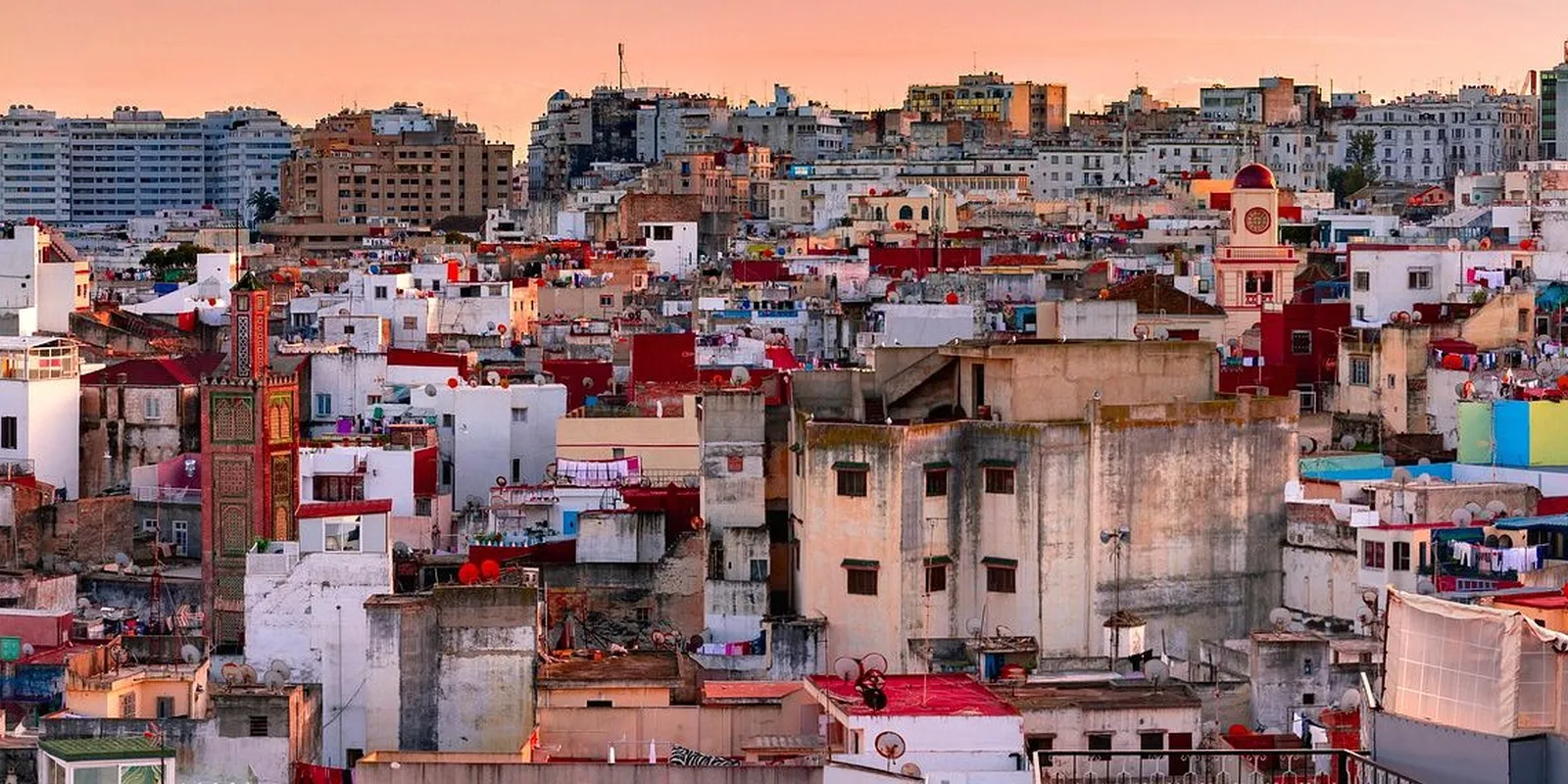
Tangier: where the Atlantic meets the Mediterranean
The northernmost point of Africa overlooking the Strait of Gibraltar, Tangier was an international zone administered by multiple foreign powers for decades in the twentieth century, attracting artists and writers from around the world.
The Kasbah and medina can be explored on foot; Cape Spartel requires a car or taxi.
The Kasbah, a fortified neighborhood on the summit of the medina, preserves the former palace of the sultan now transformed into a museum, with white alleyways that open unexpectedly onto the strait below.
The American Legation, the first public property of the United States outside its borders, received as a gift from the Moroccan sultan in 1821, today houses a museum devoted to historical relations between the two nations.
Cape Spartel, where according to local tradition the Atlantic Ocean meets the Mediterranean, houses a still-functioning nineteenth-century lighthouse and, nearby, Hercules Caves overlooking the ocean.
The Grand Socco, the main plaza at the entrance to the medina, mingles spice stalls and handicraft with cafes where writers like Paul Bowles spent much of their lives in Tangier.
The American Legation, a diplomatic gift from two centuries ago, and the Grand Socco cafés frequented by twentieth-century writers tell of two different eras of Tangier's same role: a gateway between distant worlds.
At Cape Spartel, with two seas meeting before one's eyes, that role seems written in the very geography of the city even before its history.
Guided tours and experiences in Tangier
Related articles

You might also like...
Gibraltar: the monkeys on the Rock
Jerez de la Frontera: sherry, horses and flamenco
Traveling light: the philosophy of minimal luggage

Bahrain International Airport: where to stay, areas and recommended hotels
STP Airways: The Troubled History of the São Tomé and Príncipe Airline
