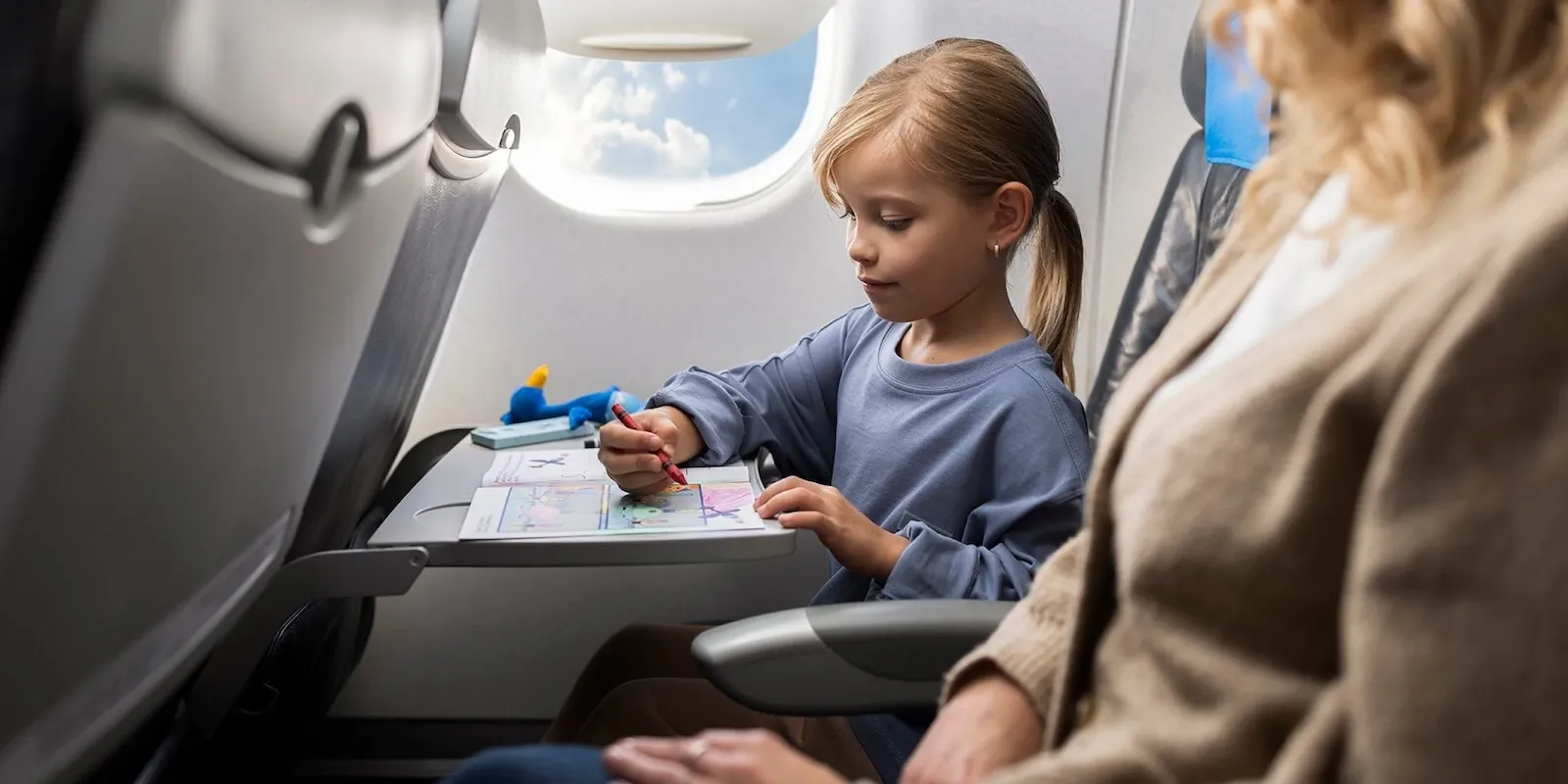
Baby's first flight: how to prepare them psychologically
More than logistics, it's emotional preparation that determines whether a child's first flight becomes a pleasant memory or a fright: a few simple steps in the days before departure make all the difference.
Talk about it in advance with age-appropriate words
Explaining step by step what will happen—security screening, waiting at the gate, the sound of takeoff—reduces the element of surprise, often the real cause of fear in small children. Picture books dedicated to flying for children help in the same way, showing the airplane as something familiar instead of an unknown.
Simulate key moments of the flight at home
Practicing wearing the seatbelt, sitting still for a few minutes or repeating the routine of "we'll leave soon" makes concrete what would otherwise remain an abstract idea. Even a daytime and short flight, when possible to choose, is a first experience more manageable than a long or overnight flight with no previous experience.
The parent's calm is transmitted to the child
Children easily perceive the tension of those around them, so the parent's attitude during the most delicate moments—mild turbulence, new sounds—matters as much as the words used in advance. Celebrating the achievement with a small positive gesture after arrival helps establish a favorable memory for future trips.
The most practical advice remains this: if you can choose, book your child's first flight on a daytime and short route, so they face one novelty at a time.
You might also like...
Power banks on planes: what to know before you leave
Traveling with newborns: the guide for new parents
Airport parking: is it really worth booking online?
Scoot: Singapore Airlines' Long-Haul Low-Cost Carrier Between 787 Dreamliners and Regional Routes
AirAsia X: The Long-Haul Low-Cost Carrier Linking Asia to Oceania