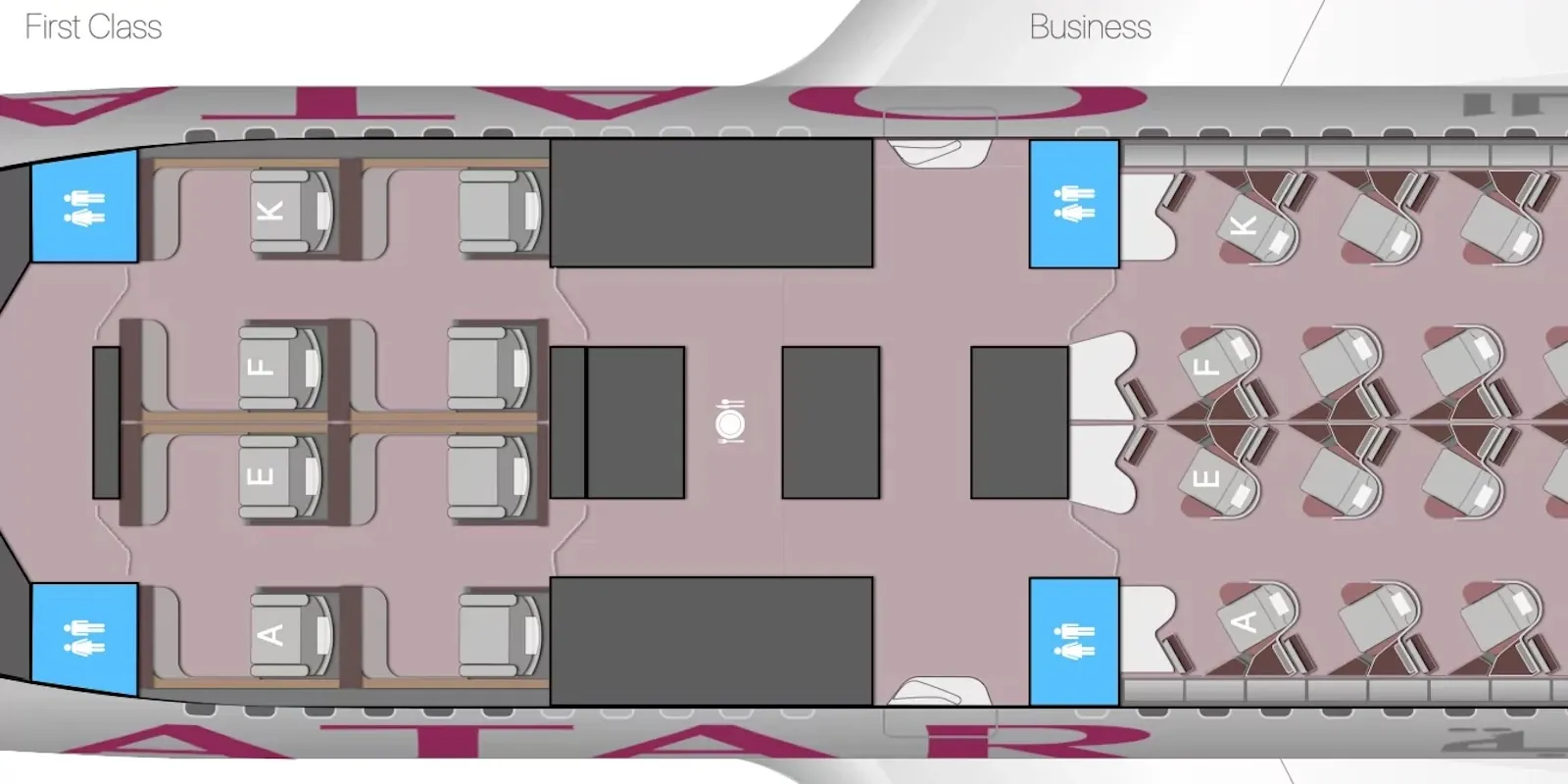
Check-in and seat selection: how to read the seat map
The seat map uses a color code to distinguish standard seats from those with extra legroom, usually paid, and from rows near emergency exits, which offer more space but impose specific requirements on who occupies them.
Window, aisle, and emergency exits
The window seat offers a headrest for sleeping and a view of takeoff and landing, while the aisle seat guarantees freedom of movement without disturbing neighbors, a factor that weighs especially on long flights. Rows at emergency exits almost always offer more legroom, but occupants must be able to assist in case of evacuation: aviation regulations also require that they understand the language in which the crew gives emergency instructions, not merely as a formality — on routes where Italian and English are the only safety languages used, a passenger who understands neither can be reassigned to another seat already at the gate.
Seats to avoid if you want quiet or space
Rows at the back of the cabin, often near lavatories or galley, are more subject to noise and foot traffic throughout the flight. On wider aircraft, middle rows can have five seats between one aisle and the other, making movement without disturbing neighbors complicated: aircraft with wide fuselage and dual aisles generally offer more middle options with direct aisle access.
Families and children: what changes from 2027
Today the possibility of sitting next to a minor on paid seat selection tariffs depends on each airline's policy, and should be verified with customer service if the online system doesn’t apply it automatically. An agreement reached by the European Union in mid-2026 will make it mandatory, effective in 2027, to provide free seating next to a caregiver for children under 14 years. For infants, the travel bassinet (bassinet) should be requested as soon as possible, not at the last moment: it is available only on long-haul flights, in very limited numbers per aircraft, generally for children under 6 months and up to about 9 kg, and several airlines — including low-cost carriers like Ryanair and Wizz Air — do not offer it at all.
Details to check before trusting the map
If the map comes from a third-party app rather than the airline’s website, verify that it is up to date: cabin configurations change periodically with refurbishments, and an old map may indicate advantages that no longer exist on that aircraft. Anyone over six feet tall will find an aisle seat more comfortable, which allows them to stretch their legs; those who suffer from motion report generally less discomfort in middle rows near the aircraft’s center of gravity compared to the tail, where the lever effect amplifies every oscillation.
If you need a bassinet for an infant, request it at the time of booking or by phone as soon as possible: seats with bulkheads set up for the bassinet are always very few compared to demand, especially on long-haul routes.
You might also like...
Tigerair Taiwan: How the Low-Cost Carrier Linking the Island to Japan and Korea Works

Princess Juliana International Airport: where to stay, areas and recommended hotels

Friedrichshafen Airport: where to stay, areas and recommended hotels
How to find affordable flights

When to do online check-in for a flight