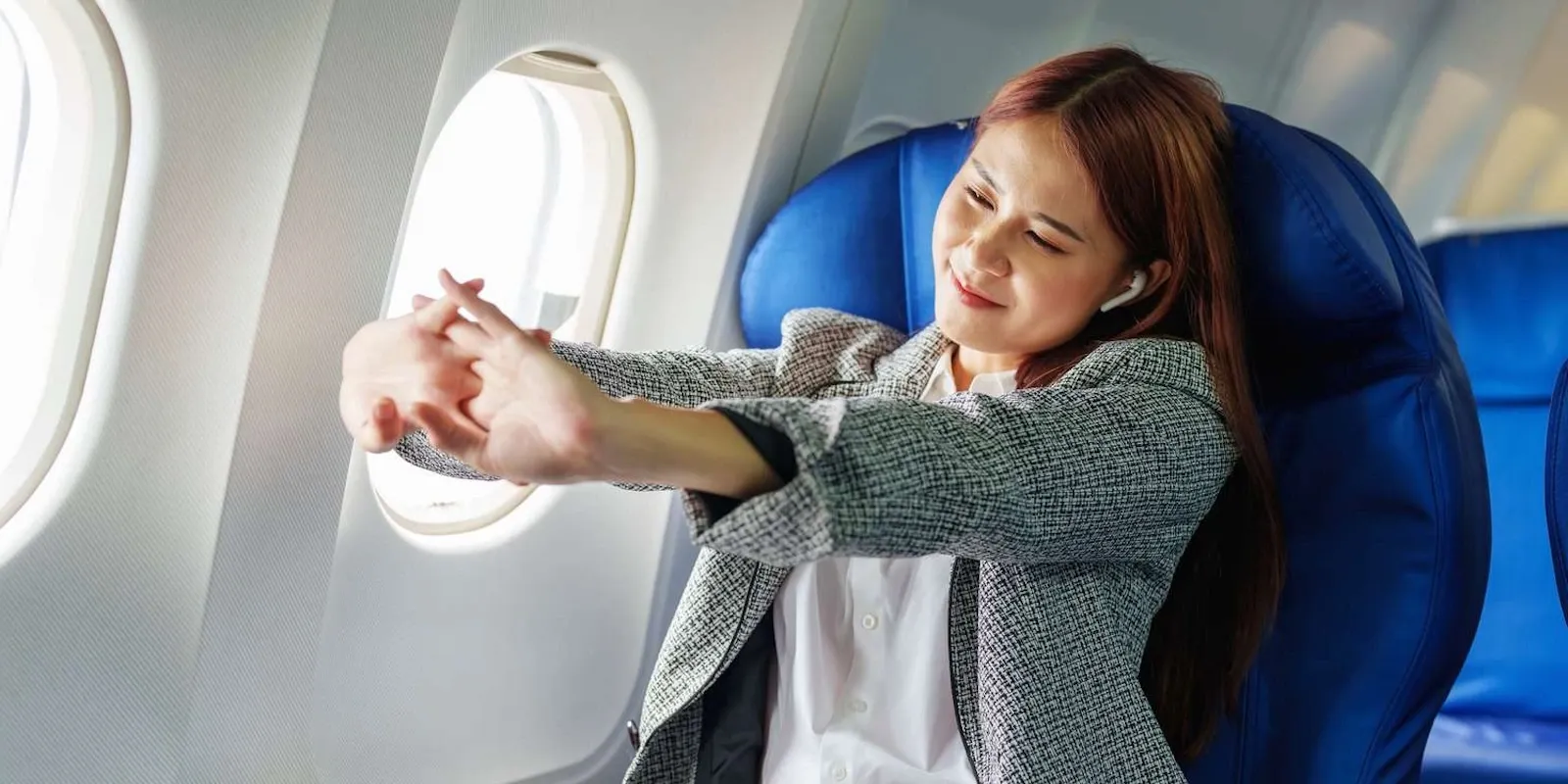
How and when to move during a long flight
According to the CDC, flights beyond four hours carry a risk of venous thrombosis two to three times higher than normal, especially when you stay still for more than ninety minutes in a row: knowing how often to get up matters more than knowing individual exercises.
The two-hour rule, with exceptions
The most common guideline is to get up every two hours or so during a long flight, walking for a few minutes along the aisle. When meal service, turbulence, or the seatbelt sign prevent getting up, moving feet and ankles while seated, flexing your toes back and forth, still keeps circulation active.
The right seat and natural opportunities to move
Choosing, when possible, an aisle seat makes it easier to get up without repeatedly disturbing neighbors, a detail worth considering already during booking on longer flights. Even the line for the restrooms, often seen as a nuisance, is a movement opportunity that fits in without needing separate planning.
A reminder for intercontinental flights
On longer flights, setting a phone reminder in airplane mode helps you not lose count of hours spent still, especially if you fall asleep. A polite nod to your seatmate, when you need to get up more often than usual, avoids any awkwardness and keeps a relaxed atmosphere for the entire leg.
If you're worried about losing track, set a silent alarm every two hours for the rest of the flight: it is more reliable than willpower alone, especially on night flights.
You might also like...

Nauru Airlines: The Air Thread Holding the Central Pacific Islands Together

Kiruna Airport: where to stay, areas and recommended hotels

Shreveport Regional Airport: where to stay, areas and recommended hotels
Jet lag: effective remedies to recover quickly

When to do online check-in for a flight