How to manage nausea during a flight
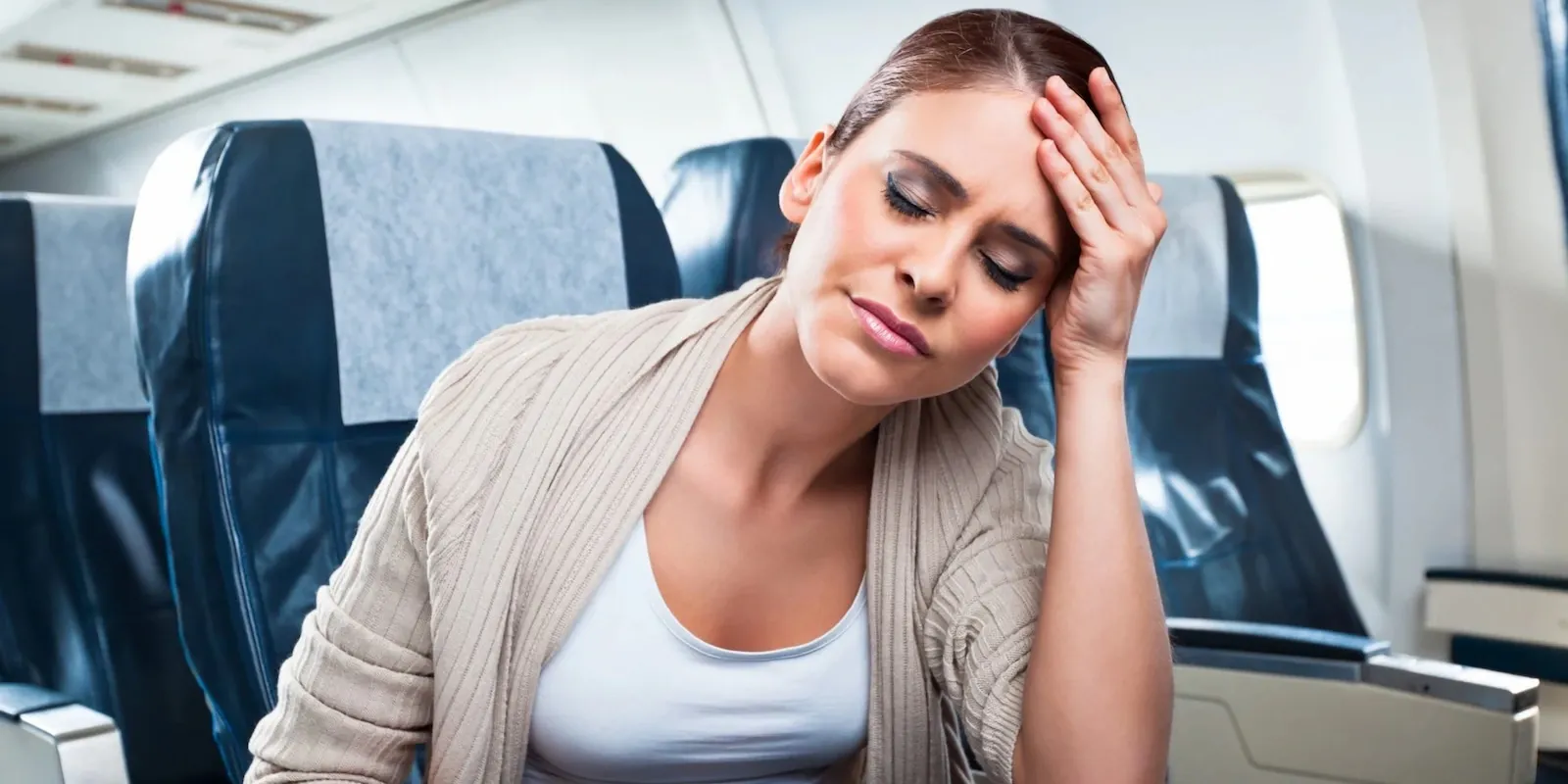
Flight nausea arises from the conflict between signals from the vestibular system and visual signals, and is more intense at the tail of the aircraft and less perceived above the wings, where movement is felt less.
Seat location and visual reference point
Choosing a seat above the wings, near the aircraft's center of gravity, reduces the stimulus that triggers nausea compared to rear seats. In case of discomfort, focusing your gaze toward the horizon from the window helps the brain realign visual signals with those of balance, while reading or watching a screen tends to amplify disorientation.
Diet and fresh air
A light meal before the flight, without fatty, spicy, or overly elaborate foods, reduces the digestive load that adds to motion sickness. Individual air vents above the seat, directed at your face, help dissipate the sensation of heat that often accompanies and worsens the discomfort.
Medications and natural remedies
For those who regularly suffer from motion sickness, an over-the-counter antiemetic based on dimenhydrinate (in Italy the active ingredient of Xamamina), taken about thirty minutes before departure as per the instructions, prevents most symptoms. Ginger, in the form of candies or preserved ginger, is a supporting natural remedy, useful as a light option to always keep handy.
If nausea is recurring, a seat above the wings booked in advance and an antiemetic taken with sufficient lead time are worth more than any last-minute remedy.
You might also like...
Mental wellbeing on board: managing takeoff anxiety

How to pack for a short trip
Jet lag: effective remedies to recover quickly

Harare International Airport: where to stay, areas and recommended hotels

Bhairahawa Airport: where to stay, areas and recommended hotels