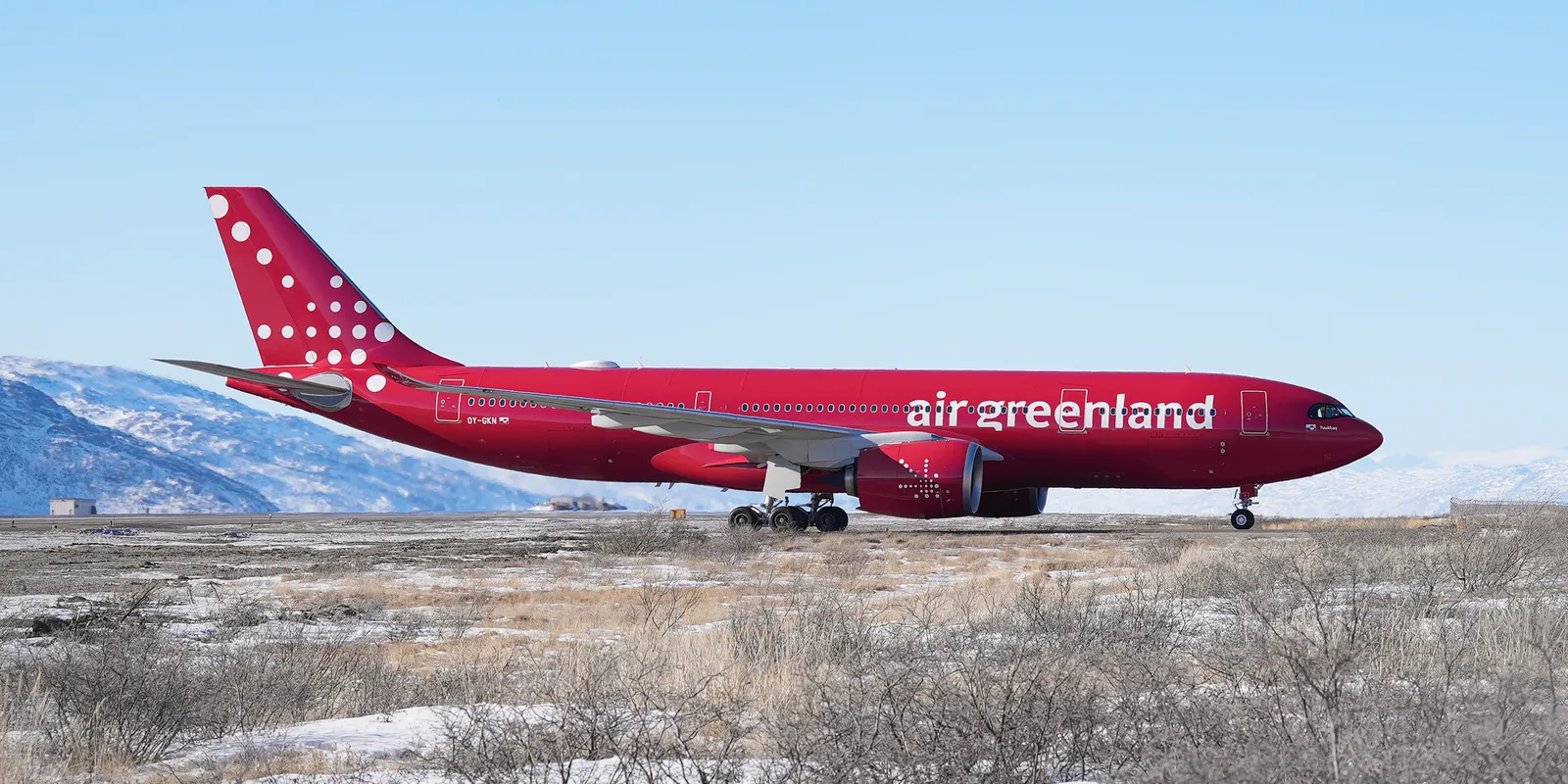
Air Greenland After Nuuk's New Runway: What Changes for Those Flying to Greenland
Founded in 1960 as Grønlandsfly, Air Greenland has been solely owned by the Greenlandic government since 2019, after buying back the shares held by SAS and the Danish state. It is the only real air link between the villages and towns of a territory as big as Western Europe but with very few roads, and since November 2024 it has operated from the new, extended airport at Nuuk, finally able to handle direct intercontinental flights.
The vital link of an entire territory
Before the opening of Nuuk's new runway, intercontinental flights had to rely on Kangerlussuaq airport, a former American military airfield in the interior, with a further domestic flight needed to reach most inhabited destinations. The capital Nuuk's transition to an intercontinental hub, completed at the end of 2024, has eliminated an intermediate stop for most passengers arriving from Europe.
A fleet split between long haul and remote islets
Most operations rely on 8 Dash 8-200 turboprops for the shortest domestic routes and a fleet of 18 helicopters (Airbus H225, H155 and AS350) that reach otherwise isolated settlements where no suitable runways exist. The intercontinental link relies on a single Airbus A330-800, supplemented by leased aircraft in the months of peak summer tourist demand.
A network that is more of a web than a line
Air Greenland serves 12 civilian airports in Greenlandic territory and a further network of about 45 heliports reaching remote settlements, in addition to regular international links to Copenhagen and Reykjavík-Keflavík. In summer, seasonal routes are added to Iqaluit in Canada and to Billund and Aalborg in Denmark.
What passengers say
Those who fly with Air Greenland report above all:
- Almost total dependence on weather conditions, with frequent delays and cancellations on the most remote routes.
- Staff described as competent in handling difficult operating conditions.
- Domestic fares perceived as high, but consistent with the absence of overland transport alternatives.
Air Greenland is simply the only realistic option for those who want to visit remote settlements in Greenland, not an airline to compare on price or comfort with other European carriers. It is not suitable for those planning tight connections: domestic routes depend on Arctic weather far more directly than elsewhere.
If your itinerary includes a domestic flight after the intercontinental one, always leave at least a day of margin in Nuuk or Copenhagen: a weather delay on a Dash 8 or helicopter route can easily push the continuation of the trip to the next day.
You might also like...
CemAir: The South African Airline Born from Cement and Its Long Tug-of-War with the Aviation Authority

Luggage for business trips: what to pack

Joensuu Airport: where to stay, areas and recommended hotels
Aeroitalia: The ITA Airways Lawsuit, the Growing Fleet and What to Expect On Board

Dubai airport lounges: which one to pick by terminal
