Allegiant Air: How the American Low-Cost Model Really Works and How Much You Spend Beyond the Base Fare
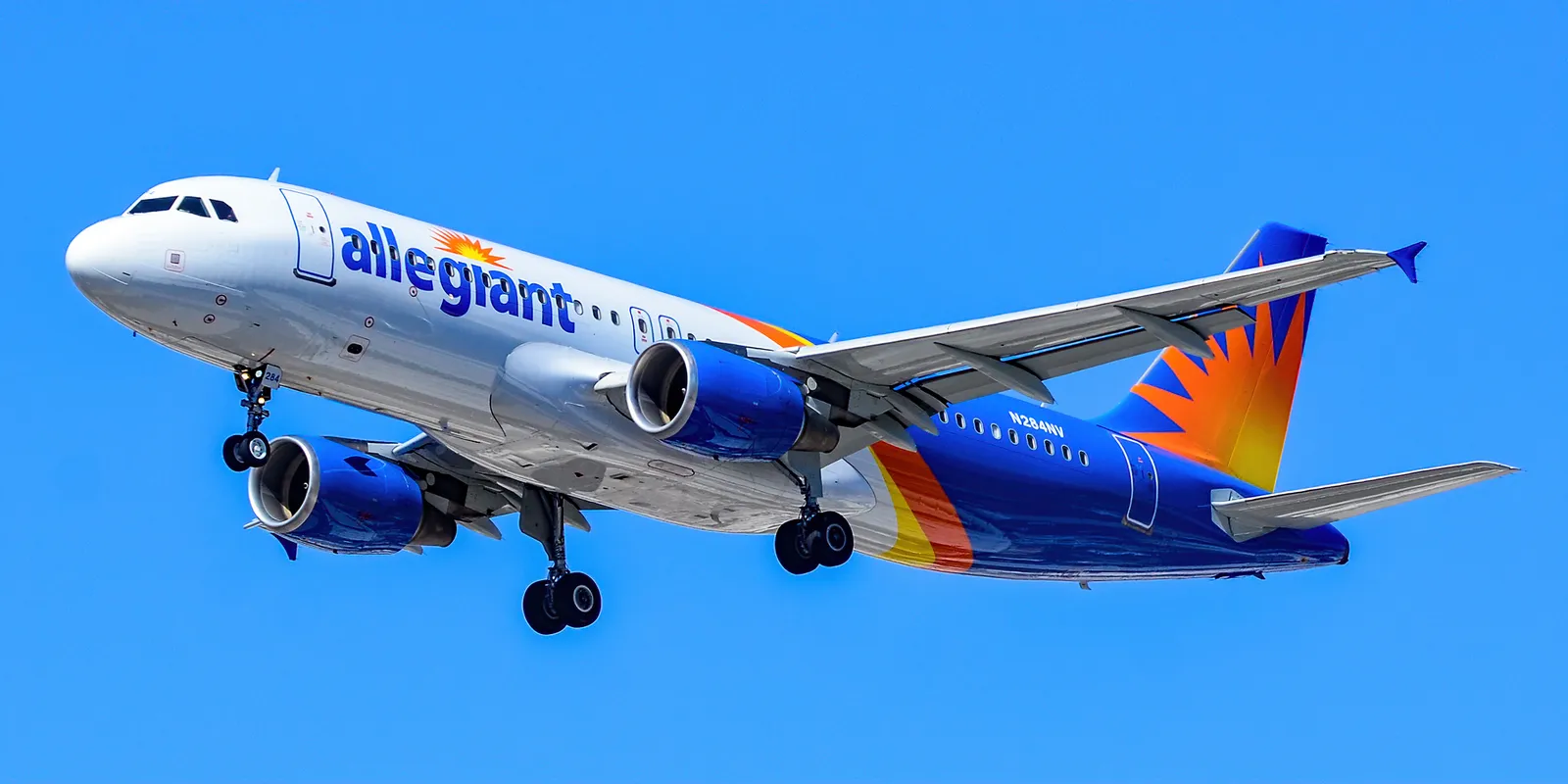
Allegiant Air is a US ultra-low-cost carrier based in Las Vegas, specializing in point-to-point leisure connections between small and medium-sized cities and tourist destinations, often on routes that no other carrier operates directly. The commercial model is built around very low base fares and intensive monetization of ancillary services, rather than around an extensive network or an elaborate loyalty program.
The fleet
The fleet is made up of Airbus A319 and A320 aircraft in a standard 3-3 configuration, chosen for low operating costs more than for comfort, with a seat density higher than that of many competitors on the same type of aircraft.
Routes and network
The business model focuses on low-frequency routes (often only two or three times a week) between secondary airports and leisure destinations such as Las Vegas, Orlando or the Florida coasts, avoiding direct competition on the busiest routes dominated by the large legacy carriers.
Fares and baggage
The base fare includes only one personal item: every carry-on or checked bag is a separate cost, about $35 per leg if bought at the time of booking, rising to $70 if added later and to $75 if bought directly at the airport. According to the company's financial data for the first quarter of 2025, passengers spend on average almost $80 more on ancillary services such as baggage and seat selection, a figure that often wipes out much of the initial saving on the advertised fare.
What passengers say
Online reviews clearly reflect the trade-off of the ultra-low-cost model.
- What works, according to regular travelers: unbeatable starting fares on niche routes with no direct alternatives, useful for reaching leisure destinations without connections; generally nonstop flights even from smaller airports far from the big hubs.
- What leaves people dissatisfied: a final cost that can exceed that of a traditional carrier once baggage and seat are added, low frequency that makes rebooking complicated in case of cancellation, reduced onboard space compared with the industry average.
Allegiant Air is a good fit for those flying one of its niche nonstop routes to a leisure destination and traveling with a single small carry-on bag, planning every extra at the time of booking. It is not recommended for those who need flexibility with schedules or an alternative route in case of cancellation, since many Allegiant routes are operated only two or three times a week. Before comparing the price with a traditional carrier, always calculate the total cost including baggage and seat: the advertised fare rarely matches the final one.
You might also like...

Montpellier-Méditerranée Airport: where to stay, areas and recommended hotels

Kittila Airport: where to stay, areas and recommended hotels
Ariana Afghan Airlines: What You Really Need to Know Before Booking a Flight

Online check-in: how to do it without problems
Air France: Fleet, Routes and Service of the French Flag Carrier