Coastal Aviation: The Bush Flight Airline That Takes You to Tanzania's Parks
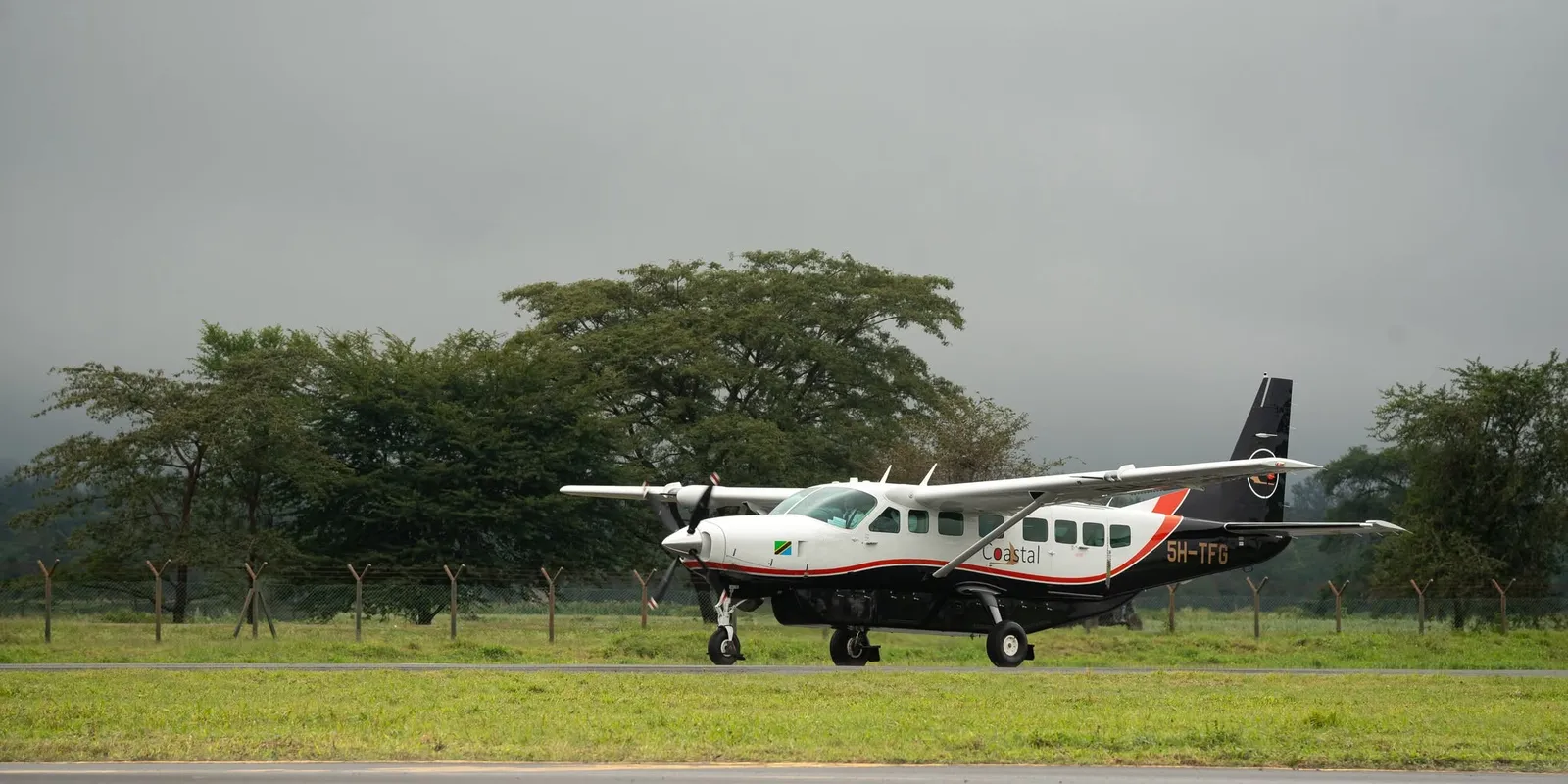
Coastal Aviation is a Tanzanian airline founded in 1987, specializing in flights to the national parks and wildlife reserves of Tanzania, Rwanda and Kenya, with the motto "The Flying Safari Company." Headquartered in Dar es Salaam with operating bases also in Arusha and Zanzibar, it operates small aircraft able to land on dirt airstrips inside protected areas, a service very different from that of conventional scheduled airlines.
History and positioning
Born from a single link between Dar es Salaam and the Selous reserve, Coastal Aviation has gradually turned into a regional bush flight network that today serves over 40 destinations, many of them airstrips inside parks with no commercial infrastructure beyond the airstrip itself.
The fleet
The fleet is made up of small aircraft suited to short, unpaved airstrips, including the Cessna Grand Caravan, Cessna Grand Caravan EX and Pilatus PC-12, for a total that, depending on the period, ranges between nine and fourteen aircraft. The airline has recently introduced its first 36-seat De Havilland DHC-8-100, wet-leased from the Kenyan carrier Renegade Air, intended for the domestic tourist routes with the highest capacity demand.
Routes and network
From its three bases of Dar es Salaam, Arusha and Zanzibar, Coastal Aviation links destinations such as the Serengeti, Lake Manyara, Grumeti, Mafia Island, Pemba, Tanga, Mwanza, Geita, Musoma and Dodoma, and also extends Pilatus PC-12 operations to Kenya, Zambia and Rwanda. It is therefore a network designed around safari tourism flows rather than links between cities.
On board and service
Flying with Coastal Aviation means accepting the typical conditions of bush flights: tighter baggage weight limits than scheduled airlines, often around 15 kg per passenger in soft bags without a rigid frame, and no catering on board, since the trips are generally short and organized to connect several airstrips in sequence on the same day.
Anyone on a safari in Tanzania who needs to connect several protected areas without covering long distances by road will find Coastal Aviation the almost inevitable solution; for ordinary travel between cities there are cheaper alternatives on other carriers. Before departure it is always worth checking with your safari operator the exact weight limit and the type of bag allowed, because the rules can vary slightly from airstrip to airstrip, and a rigid or overweight bag can mean paying a surcharge or even being refused boarding.
You might also like...

Guarulhos - Governador André Franco Montoro International Airport: where to stay, areas and recommended hotels

Modlin Airport: where to stay, areas and recommended hotels

Online check-in: how to do it without problems

Airport parking: is it really worth booking online?

Bahamasair: The ATR and Boeing Fleet of the Bahamas' Flag Carrier