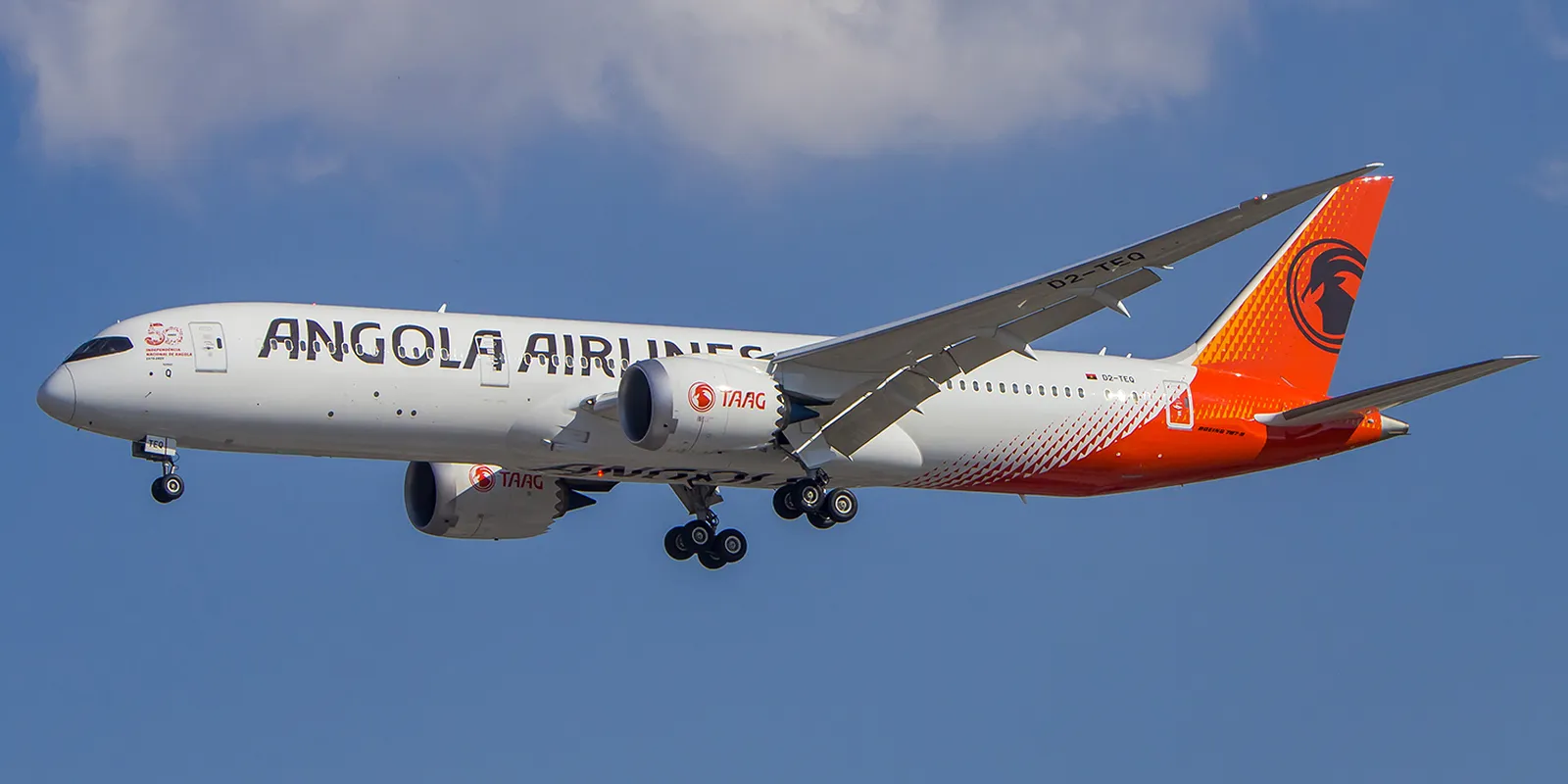
TAAG Angola Airlines: The New Fleet and the Route to Lisbon
TAAG Angola Airlines traces its roots to the DTA, founded in 1938, nationalized in 1973 under its current name and still controlled today by the Angolan state. The hub remains Luanda, in the process of moving to the new Dr. António Agostinho Neto International Airport, and the most strategic route links the Angolan capital with Lisbon with two daily flights.
History and positioning
TAAG traces its roots to the DTA (Divisão de Transportes Aéreos), founded in 1938 during the Portuguese colonial period, nationalized in 1973 under its current name and still today entirely controlled by the Angolan state. In recent years it has embarked on a fleet renewal and on regaining direct control of key international routes, after years in which some routes, including the one to Lisbon, had been entrusted in part to codeshare or shared management with other carriers because of the airline's own capacity limits. The renewal under way also reflects the Angolan government's ambition to relaunch Luanda as a regional hub for links between Europe, southern Africa and Brazil.
The fleet
TAAG now operates five Boeing 777-300ERs and three older 777-200ERs, the latter due to be gradually replaced by four Boeing 787 Dreamliners on delivery, of which the first 787-8 has already arrived at the end of January. On African regional routes it flies Boeing 737-700s and two Airbus A220-300s, a relatively recent aircraft by the standards of mid-sized African carriers, while the shorter domestic links are entrusted to six Dash 8 Q400 turboprops, suited to the shorter runways of many inland Angolan cities. Managing such a diversified fleet, ranging from Dash 8 turboprops to the 777 and 787 wide-bodies, requires distinct maintenance expertise for each aircraft family.
Routes and network
The hub remains Luanda, in the process of moving to the new Dr. António Agostinho Neto International Airport. The most strategic route links the Angolan capital with Lisbon with two daily flights, totaling 14 weekly connections, back under TAAG's direct management in 2024 after a period of shared operations. The African regional network includes several capitals served with the Boeing 737s and the A220s, while Angolan domestic traffic is entrusted to the Dash 8 Q400s to cities such as Benguela, Lubango and Cabinda, also important for links with the country's oil industry. Besides Lisbon, the airline maintains links to other European capitals and to Brazil, where the Portuguese-speaking community represents a natural pool of demand for TAAG flights.
On board and service
Travelers on the Luanda-Lisbon route, operated with 777-300ERs configured for 293 passengers, report improved onboard service compared with the past, with hot meals and courteous staff in both classes offered. The incoming 787s promise a more modern cabin product than the older 777-200ERs being phased out, with updated seats and a more recent in-flight entertainment system.
Fares and baggage
On the Luanda-Lisbon route, the economy fare generally includes a checked bag, in line with the airline's full-service model, while premium fares offer a larger allowance and change flexibility. Online purchase through the official website has become the prevailing channel for international passengers in recent years, alongside local travel agencies in Angola.
What passengers say
Punctuality on intercontinental routes is judged on the whole to be improving, while it remains a more delicate issue on African regional routes, where congestion at some transit airports weighs on overall punctuality. Reviews in Portuguese remain the most widespread online, consistent with the strong historical and linguistic bond between Angola, Portugal and Brazil.
- Onboard service rated positively on the route to Lisbon, with hot meals and courteous staff.
- Intercontinental punctuality perceived as improving in recent years.
- A fleet being renewed with the arrival of the new 787 Dreamliners.
- An African regional network expanding with the arrival of the new Airbus A220s.
- More frequent delays reported on African regional routes.
- Gate changes at transit airports not always handled clearly.
- The move to the new Luanda airport may bring temporary changes of procedure.
- A fleet still in transition, with some older 777-200ERs awaiting replacement.
TAAG is now the most direct choice for anyone linking Luanda with Lisbon or other African capitals without multiple stopovers. Anyone who instead needs tight margins on a regional route within Africa would do well to allow an extra buffer of time. A practical tip: check well in advance which terminal or airport you will use for departure or arrival in Luanda in the coming months, given the transition to the new airport.
You might also like...

Ruzyně International Airport: where to stay, areas and recommended hotels

Chinggis Khaan International Airport: where to stay, areas and recommended hotels
Aeroitalia: The ITA Airways Lawsuit, the Growing Fleet and What to Expect On Board

Bahamasair: The ATR and Boeing Fleet of the Bahamas' Flag Carrier
Guarulhos lounges: which one to choose in the three terminals