WestJet: Fares, Baggage and What It Really Costs to Fly Canada's Airline
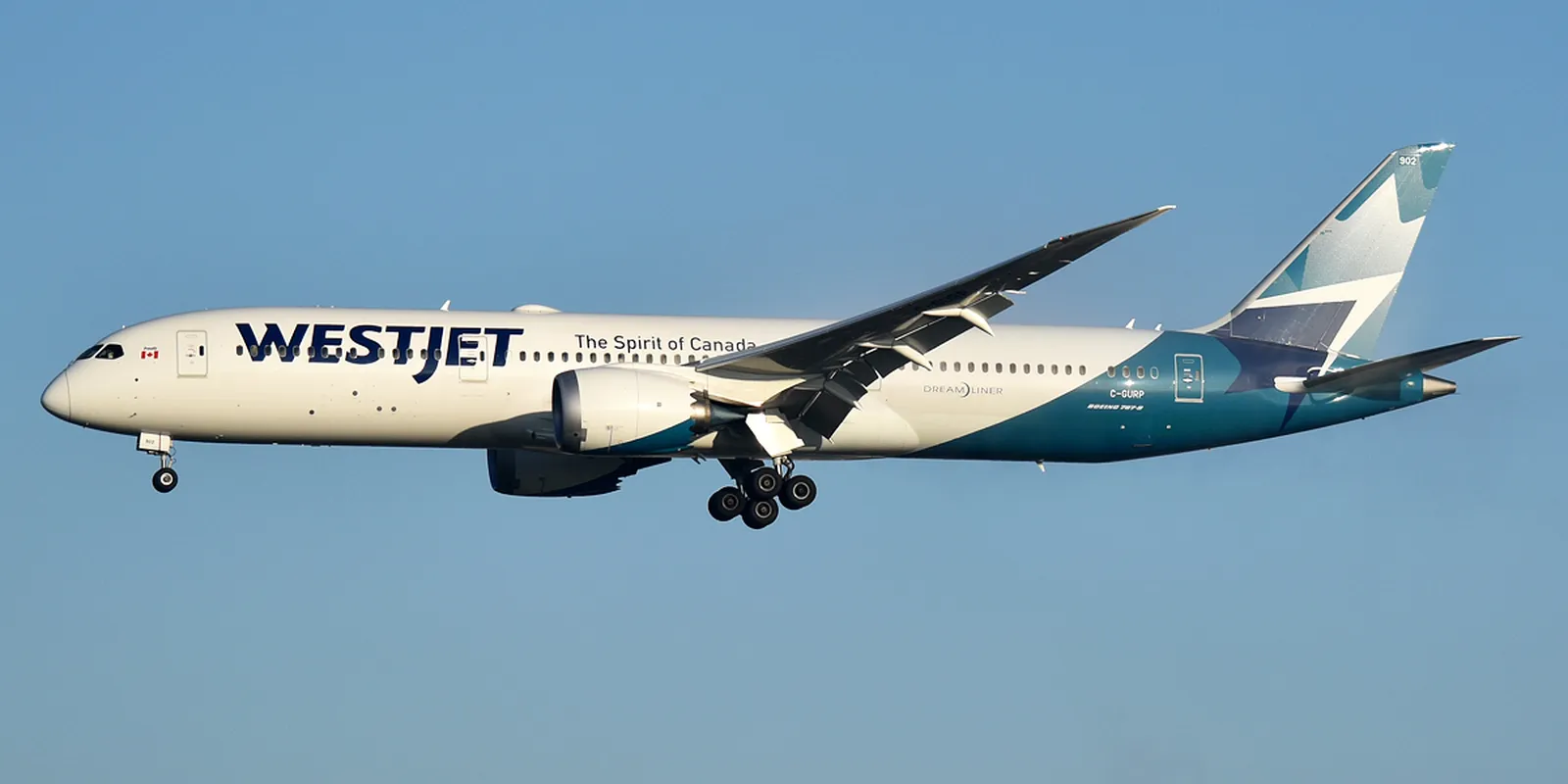
Founded in Calgary in 1996 as a low-cost challenge to Air Canada, WestJet is now Canada's second-largest airline and a hybrid carrier: low-cost fares on domestic routes, a traditional-airline product on long-haul with its Boeing 787s. Since 2019 it has been privately owned by the Onex fund, and in 2023 it acquired the tour operator and leisure airline Sunwing, strengthening its presence in the Caribbean and Mexico.
History and positioning
WestJet was born in Alberta in 1996 with the stated aim of offering a cheaper alternative to Air Canada on domestic routes, a role it has kept even after becoming a publicly listed company and then, from 2019, a private one again under Onex's control. The 2023 acquisition of Sunwing added in one stroke a significant share of leisure traffic to the Caribbean and Mexico, while the launch of the Boeing 787s took the airline onto intercontinental routes that were once outside its ambitions.
The fleet
Most of the fleet is made up of Boeing 737s (700, 800 and MAX 8 versions) for domestic and North American routes, joined by Boeing 787-9 Dreamliners for long-haul to Europe and intercontinental destinations. Its regional subsidiary WestJet Encore operates Bombardier Q400 turboprops on lower-demand routes, typically between mid-sized Canadian cities.
Routes and network
The main hub is Calgary, with secondary bases in Toronto and Vancouver. The domestic network covers all of Canada, the North American one reaches the main US cities and the sun destinations of Mexico and the Caribbean (strengthened by the integration with Sunwing), while long-haul with the 787 connects to London Gatwick, Dublin, Paris and Rome, among others.
Fares and baggage
The fare structure follows the tiered model that is now common: the cheapest fare (Basic) includes no checked baggage or seat selection, and even carry-on baggage may be subject to stricter limits; the higher tiers (Econo, Premium, Business) progressively add baggage allowance, change flexibility and, on the 787, lie-flat seats in business. The WestJet Rewards loyalty program accumulates dollars that can be spent on future flights rather than miles in the traditional sense.
What passengers say
- Cabin crew often described as friendly and straightforward, in line with the airline's informal image.
- 787 business product appreciated for long-haul comfort.
- Operational reliability generally good on the main domestic routes.
- Phone customer service wait times reported as long, especially after the Sunwing integration.
- Basic fare seen as unclear about what is really left out.
- Destination network less extensive than Air Canada's for smaller Canadian cities.
WestJet is the most sensible choice if you are departing from western Canada for the United States, the Caribbean or Europe and want a compromise between price and comfort, and less so if you need to chain several stops between small Canadian cities, where Air Canada has a denser network. The practical tip: unless your baggage is truly superfluous, the Econo fare almost always pays for itself compared with Basic, because the extra charges for baggage and seat selection paid separately quickly eat into the initial saving.
You might also like...
Washington Dulles lounges: a concourse-by-concourse guide

Luleå Airport: where to stay, areas and recommended hotels
How to choose the right airport parking
ITA Airways in 2026: The New Fleet, the Move to Lufthansa and What Passengers Really Say
HiSky: The Moldovan Low-Cost Carrier With Four Fare Classes
