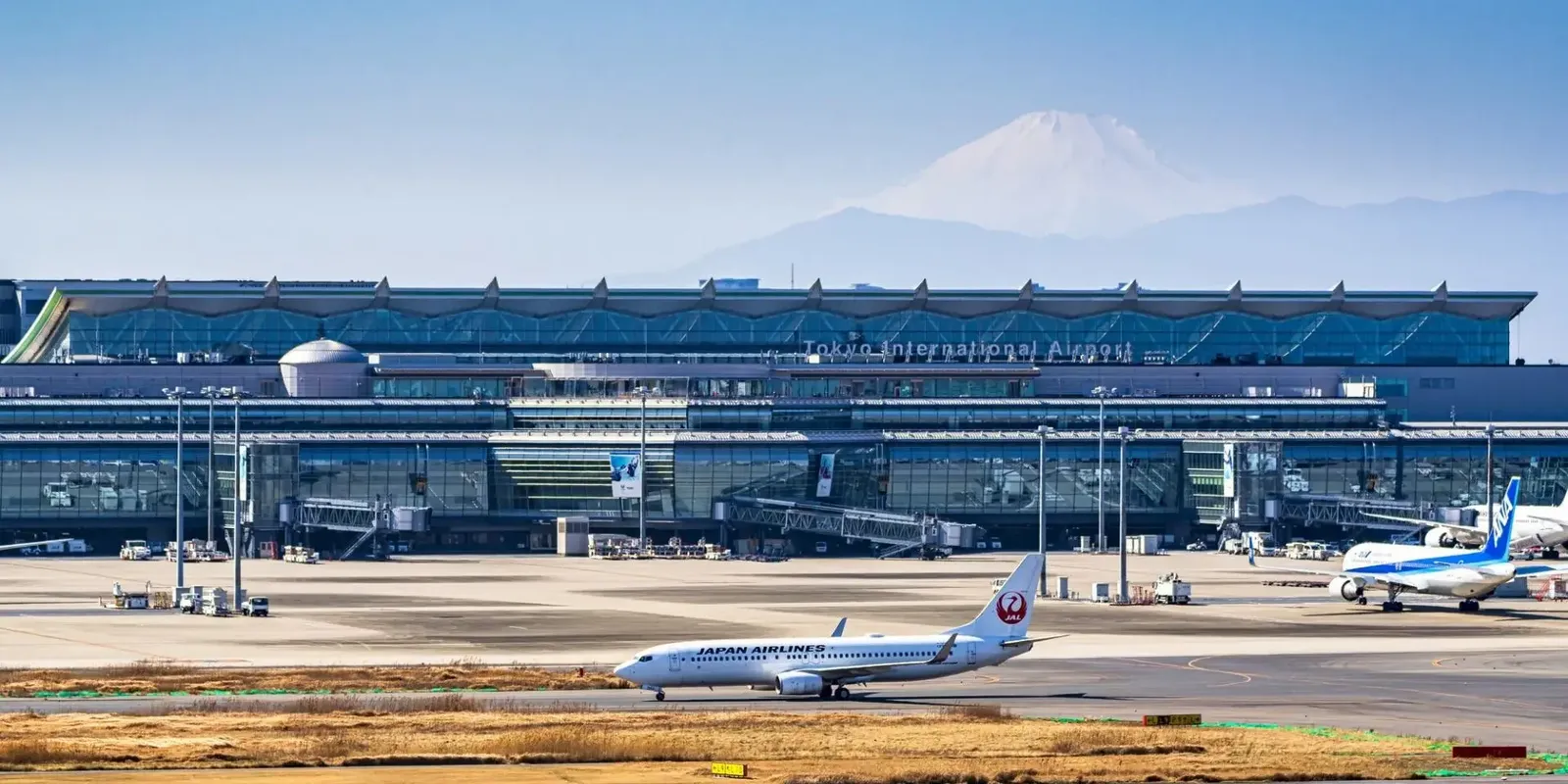

Haneda Airport is Tokyo's main hub for domestic flights and a rapidly growing international hub, just 15 km from the city center: in 2024 it handled 85.9 million passengers.
Its proximity to the city center often makes it the preferred choice for those wanting to minimize transfer times.
How to get to Tokyo International Airport
By Car
By Train
By Bus
Average travel time to HND
Parking near Tokyo International Airport
A multi-level parking structure flanks the terminal.
Rates are high, consistent with standards for a major international hub.
How to get to Tokyo from HND
By Train
By Bus
By Taxi
Airport transfers you can book in advance
Shuttles and private transfers you can book online, picked from the best rated by travelers.
Haneda Airport HND Private Transfer to/from Tokyo Region
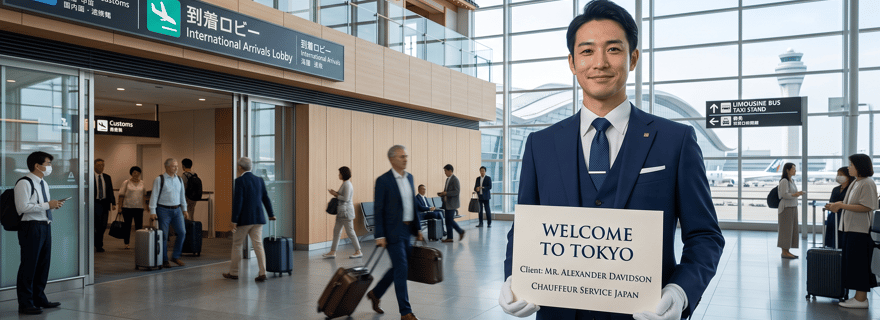
HND Airport Private Transfer to/from Tokyo City Center

Tokyo: NRT/HND Airport Private Transfer
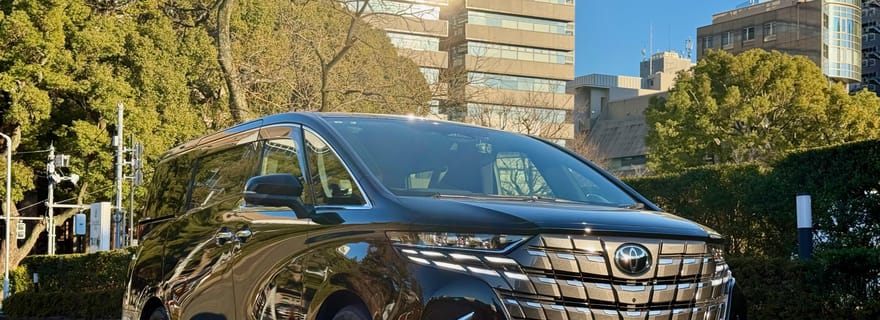
Haneda Airport (HND) Private Transfer to/from Tokyo City
From HND to the most sought-after destinations
| If you want to... | Choose | Estimated cost |
|---|---|---|
| Spend less | Keikyu Line, local train (13-15 min) | ~300 yen |
| No transfers and arrive near your hotel | Limousine bus to hotels and major stations (30-60 min) | 1,000-1,500 yen |
| Arrive at Tokyo Station as quickly as possible | Tokyo Monorail + JR Yamanote via Hamamatsucho (about 30 min) | ~700 yen |
| Heavy luggage or a late-night flight | Fixed-rate taxi (teigaku) | 7,600-9,100 yen |
Haneda → Ginza
The most direct route combines Tokyo Monorail to Hamamatsucho, JR Yamanote Line to Shimbashi, and a final stop on the Ginza Line metro: in total about 30-35 minutes and 700 yen. Those preferring a single transfer can get off the Keikyu Line at Higashi-Ginza, just steps away from the department stores in the district.
Haneda → Shinagawa
The Keikyu Line reaches Shinagawa in just 13 minutes for about 300 yen: it's the most convenient hub for those continuing immediately with Shinkansen to Kyoto, Osaka or elsewhere in Japan, thanks to the direct connection with JR lines.
Haneda → Yokohama
The fast trains on the Keikyu Line arrive at Yokohama Station without transfers in about 30 minutes, for a fare of just 400 yen: it's the simplest alternative for those staying in the port area or Minato Mirai.
Haneda → Odaiba
There is no direct railway connection: the most practical solution remains the Limousine bus to Odaiba (about 30 minutes) or a taxi, also useful for those arriving with heavy luggage after a late-night flight who want to avoid transfers.
Car rental at Tokyo International Airport
The major car rental companies have desks at the airport, although driving in Tokyo is generally discouraged given the excellent public transportation network.
Bring your driving license, passport, and an International Driving Permit (IDP); remember that in Japan you drive on the left.
Hotels near Tokyo International Airport
Terminal 3 (international flights)
The hotels are inside or next to Terminal 3: you reach them on foot in a few minutes, without going outdoors.
Best for: Anyone leaving at dawn for abroad or landing in the dead of night from an intercontinental flight.
- From the room to the check-in desk is a walk, even when the trains aren't running
- Shops and restaurants of Haneda Airport Garden in the same complex
- Convenient after a night arrival: no taxi and no changes into the city
- To see Tokyo you still need 15-30 minutes of train each way
- Far from the domestic flights of T1 and T2, reachable only by shuttle
Recommended hotels
- Villa Fontaine Grand Haneda Airport Connected to T3 by a one-minute covered walk; it gives discounted access to the Izumi Tenku no Yu natural hot springs, open day and night. View availability
- The Royal Park Hotel Tokyo Haneda The entrance is in the T3 departures hall, on the third floor beyond the N counters: from the room to check-in is just a few steps. View availability
Terminal 2 (domestic flights)
Hotel directly connected to the T2 domestic departures hall (2nd floor); it is 3 minutes on foot from the monorail station.
Best for: Anyone taking a domestic flight in the morning, for example to Sapporo, Osaka or Okinawa.
- You step out of the hotel and you are already in front of the security checks
- Monorail and Keikyu stations a few minutes away for getting into the city
- After midnight the entrance from the departures hall closes: you go through the night elevator
- For an international flight from T3 you need the shuttle between terminals
Recommended hotels
Shinagawa
Keikyu Line from Shinagawa to the Haneda terminals: about 13-15 minutes, with no changes.
Best for: Anyone who wants to visit Tokyo and then continue by Shinkansen to Kyoto or Osaka.
- Direct train to Haneda and Shinkansen in the same station
- JR Yamanote to Shibuya, Shinjuku and Tokyo Station with no changes
- An area of offices and large hotels: the evening is less lively than Shibuya or Shinjuku
- A huge station, crowded at peak times when you have suitcases
Airport services
Shopping & Duty Free
Lounges & relaxation
- lounges
- 17
- with Priority Pass
- 9
- open 24 hours
- 2
Connectivity & Wi-Fi
Families & Children
Terminal guide
Haneda has three modern terminals, with Terminal 3 dedicated to international flights; the terminals are linked by a free shuttle bus (roughly every 4 minutes during the day), by the Keikyu line and by the Tokyo Monorail, and between Terminal 1 and Terminal 2 there is also an underground pedestrian passage with a moving walkway.
It is advisable to arrive at the airport with 2.5–3 hours in advance for international flights.
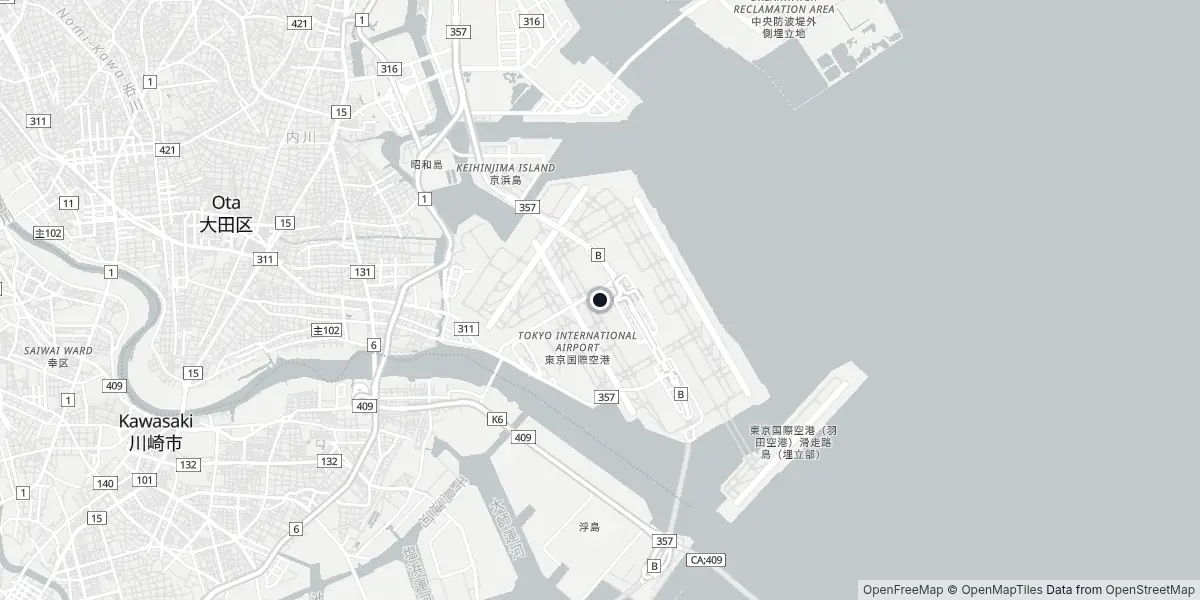
Map of Tokyo International Airport
Frequently asked questions
Q. Is it better to land at Haneda or Narita?
Haneda is much closer to central Tokyo (15 km versus 60 km) and generally preferable when available; Narita remains relevant for many low-cost carriers and some intercontinental flights.
Q. Monorail or Keikyu line for the center?
Both are good options: the Tokyo Monorail reaches Hamamatsucho (useful for the Yamanote line), the Keikyu line reaches Shinagawa (useful for the Shinkansen); choose based on your final destination.
Q. How much does a taxi cost from Haneda to the center?
Fixed fares (teigaku) start at about 7,600 yen for Tokyo Station up to 9,100 yen for Asakusa, plus tolls and any night surcharge.
Q. Does Haneda have direct international flights from Europe?
Yes, increasingly so: in recent years Haneda has significantly expanded its intercontinental connections, joining Narita as a gateway to Tokyo.
Q. Which lounges accept Priority Pass?
9 lounges, including Sky Lounge South (T3), TIAT Lounge (T3), POWER LOUNGE CENTRAL (T1), POWER LOUNGE NORTH (T1), POWER LOUNGE SOUTH (T1) and Airport Lounge (South) (T2).
Q. Are any lounges open 24 hours?
Yes: Sky Lounge South (T3) and TIAT Lounge (T3).
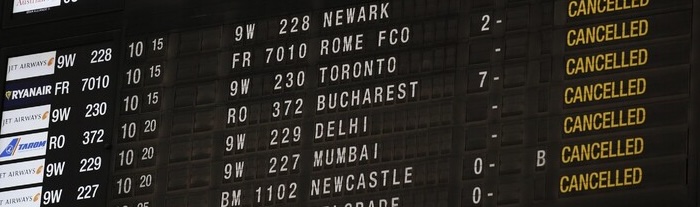
Flight board
Real-time status of arriving and departing flights