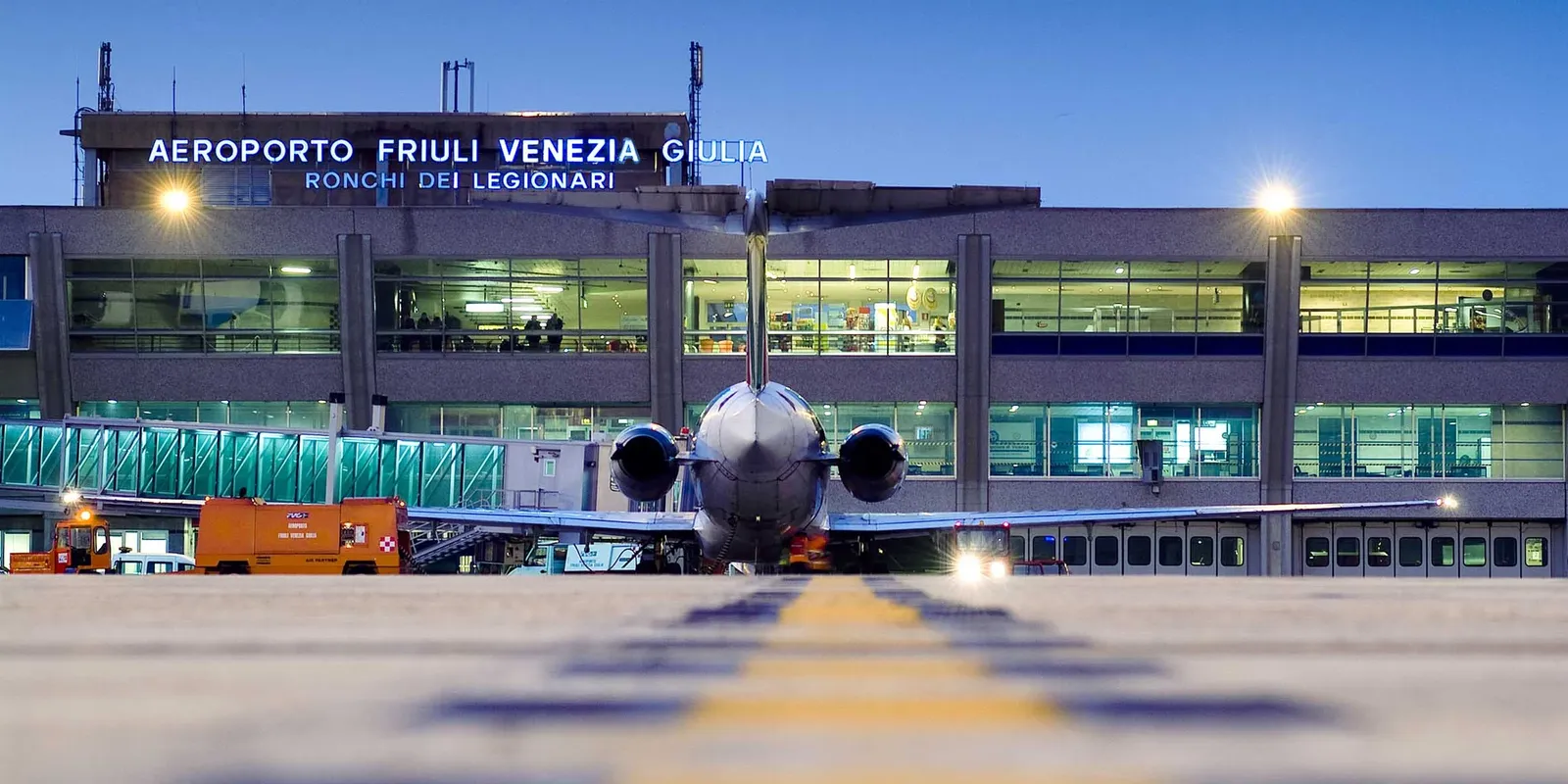

Friuli Venezia Giulia Airport, also known as Ronchi dei Legionari, is the reference hub for Trieste, Gorizia and Udine. It stands out for being one of Italy's most advanced intermodal poles.
Located in a central position, it is the ideal gateway not only for the Italian North-East, but also for Slovenia and Croatia, offering rapid and modern connections.
How to get to Trieste Friuli Venezia Giulia Airport
By Car
By Train
By Bus
Average travel time to TRS
Parking near Trieste Friuli Venezia Giulia Airport
Several official parking areas available: P1 (Short-term), P3 (Long-term), and covered multi-level P2.
Short-term P1 costs approximately 2-3 euros per hour, the covered multi-level P2 is slightly higher, while long-term P3 is significantly lower for multi-day stays when booking online.
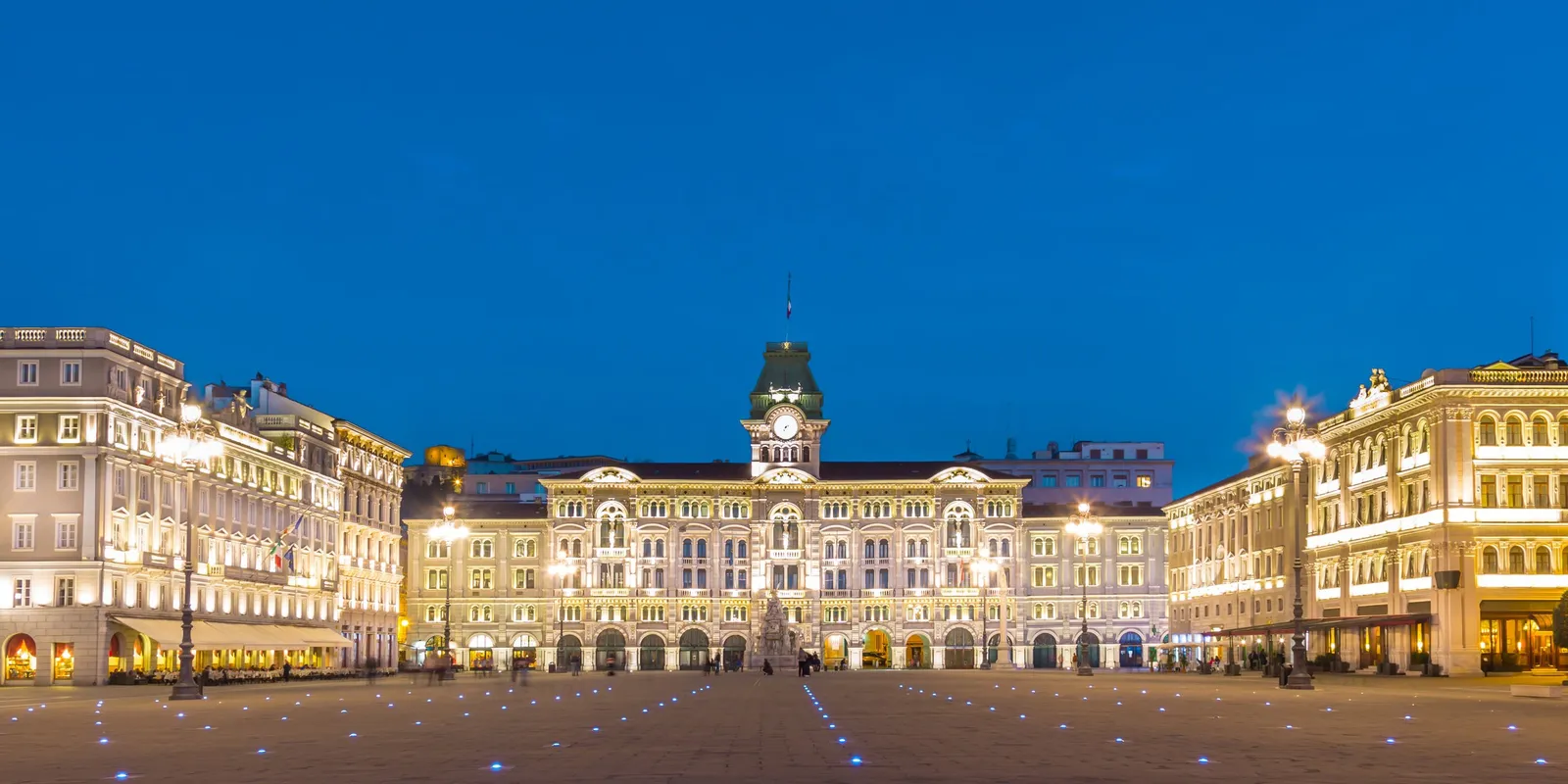
How to get to Trieste from TRS
By Train
By Bus
By Taxi
Need an airport transfer?
Compare taxis and shuttles on Booking.com
Car rental at Trieste Friuli Venezia Giulia Airport
Car rental desks are located in the intermodal hub, easily reachable from the terminal.
Hours generally follow operating flight times. Bring license, ID document and credit card registered to the driver for the deposit. Italian and other EU/SEE citizens drive with only their national license; for all others, the International Driving Permit (IDP) is generally required.
Hotels near Trieste Friuli Venezia Giulia Airport
Old town: Grand Canal and Roman Theatre
Regional train from the airport station to Trieste Centrale, 30-40 minutes, then a few minutes on foot; by taxi 35-45 minutes.
Best for: For those who prefer to move on foot among the Grand Canal, the synagogue and the Roman theatre.
- Grand Canal, Roman theatre and synagogue a few steps away
- A pedestrian area, handy for getting around without a car
- Parking is difficult for those arriving with a rental car
- More touristy, bars and restaurants pricier than elsewhere
Via Carducci and Borgo Teresiano
Regional train from the airport station to Trieste Centrale, 30-40 minutes, then 2 minutes on foot; a shuttle to the airport is available on request for a fee.
Best for: For those who want a more residential neighbourhood that is still central.
- 2 minutes from the historic Trieste-Opicina tram, one of the attractions of the city
- A neighbourhood with local shops, less touristy than the old town
- Further from the seafront and Piazza Unità d'Italia
- Fewer evening venues than the old town
Recommended hotels
San Giusto hill and San Giacomo
As for the old town, train to Trieste Centrale (30-40 minutes) or taxi (35-45 minutes); the climb up the hill takes 10-15 minutes on foot.
Best for: For those seeking the view over the gulf and an authentic neighbourhood, away from the tourist flow.
- View over the Gulf of Trieste from the castle and the cathedral
- The lively and authentic San Giacomo neighbourhood
- An uphill walk to reach the castle and centre
- Fewer direct connections to the city centre in the evening
Recommended hotels
Airport services
Shopping & Duty Free
Lounges & relaxation
Connectivity & Wi-Fi
Families & Children
Terminal guide
Single modern and functional passenger terminal, directly connected to the train station.
Given the compact structure directly connected to the train station, from check-in to gate you walk in a few minutes, with security queues generally minimal.
Served mainly by national and European carriers, with a more limited offering compared to major Italian hubs.
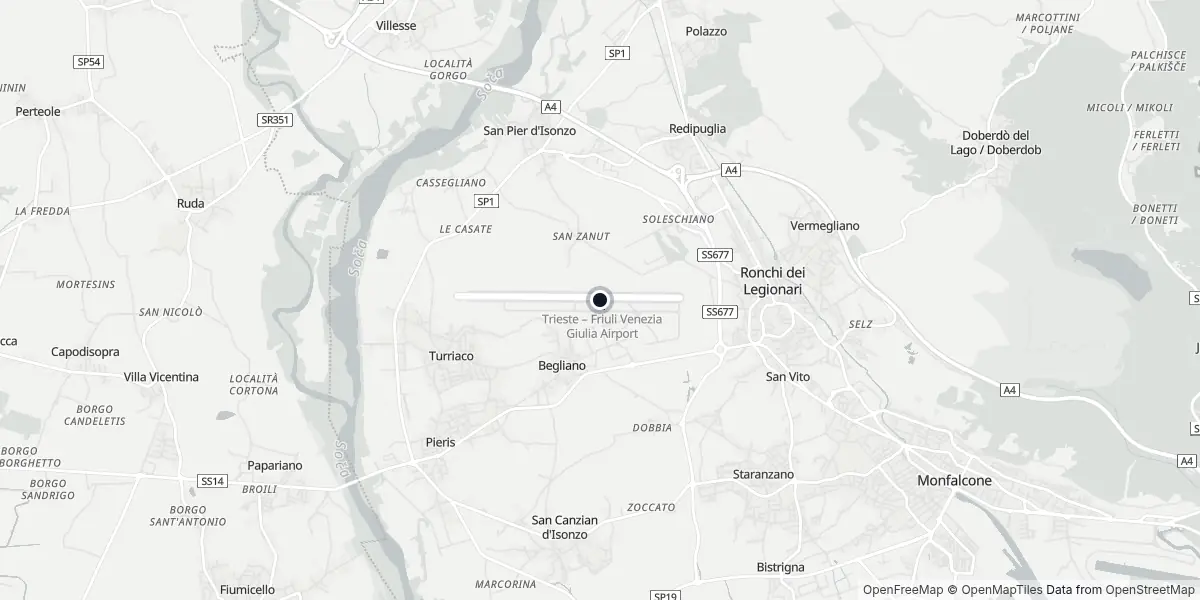
Map of Trieste Friuli Venezia Giulia Airport
Frequently asked questions
Q. Is Trieste Airport also convenient for Slovenia and Croatia?
Yes, its central location makes it a practical gateway to nearby Ljubljana and Croatian Istria as well.
Q. How do you get to central Trieste from the airport?
With bus line G51, which regularly connects the airport to the city centre.
Q. Why is Trieste Airport's train station considered cutting-edge?
Because it's linked to the terminal by an elevated walkway with a moving walkway, with no need for external shuttles.
Q. Are there many international flights from Trieste?
The offering is limited compared to major Italian airports, with domestic connections and a few selected European routes.
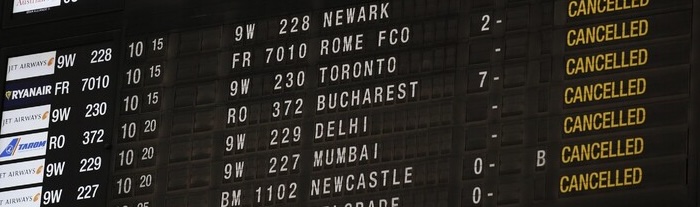
Flight board
Real-time status of arriving and departing flights