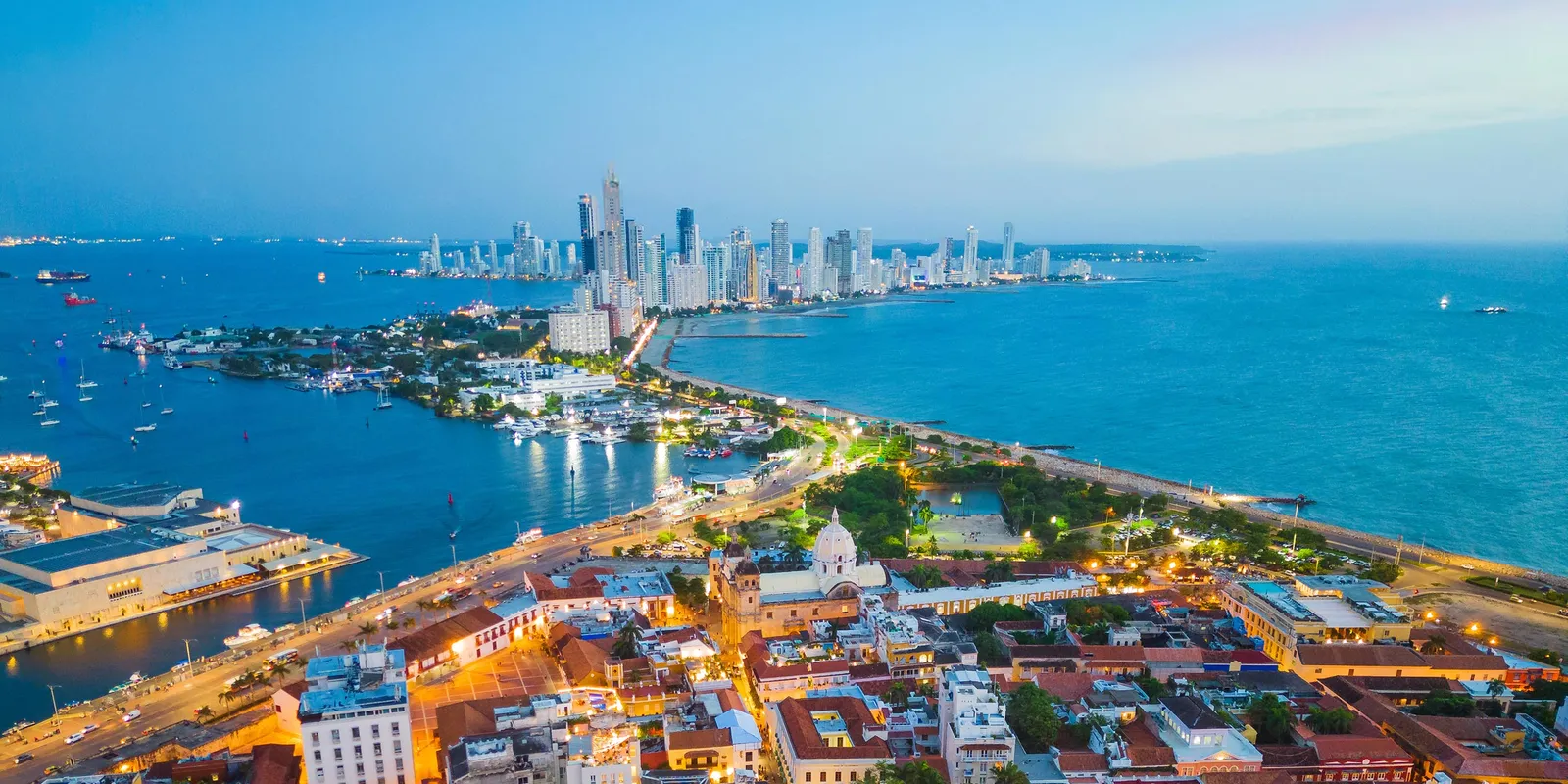

Cartagena de Indias: the walled city
Ringed by more than eleven kilometers of walls built to resist pirates, Cartagena de Indias preserves one of the best-preserved colonial centers in Latin America, a UNESCO World Heritage site since 1984.
The Walled City is easily explored on foot, preferably during the cooler hours of the day.
The San Felipe de Barajas Castle, one of the largest fortifications ever built by the Spanish in the Americas, develops on multiple levels connected by underground galleries designed to amplify the sound of enemy footsteps approaching.
The city walls, walkable on long stretches especially at sunset, resisted for centuries the assaults of English and French corsairs aimed at the Spanish colonial port.
The Getsemani neighborhood, once popular and peripheral to the walled city, today attracts visitors with colorful murals, fabric banners suspended between buildings and among the most vibrant nightlife in the city.
The Palace of the Inquisition, on the city's main square in the old town, still displays today the torture instruments used during Spanish Inquisition trials in the New World.
The underground tunnels of Castillo San Felipe and the instruments in the Palace of the Inquisition tell two faces of the same colony: defense against external enemies and repression of internal ones.
Getsemaní, grown right outside those same defensive walls, shows today the part of the city that this logic of control always left freer to reinvent itself.
Guided tours and experiences in Cartagena de Indias

Related articles

You might also like...
Barranquilla: the capital of Carnival
Santa Marta: Colombia's oldest city

Yakutia Airlines: The Superjets Linking the Russian Far East from Yakutsk

Sharm El Sheikh International Airport: where to stay, areas and recommended hotels

Valencia Airport: where to stay, areas and recommended hotels