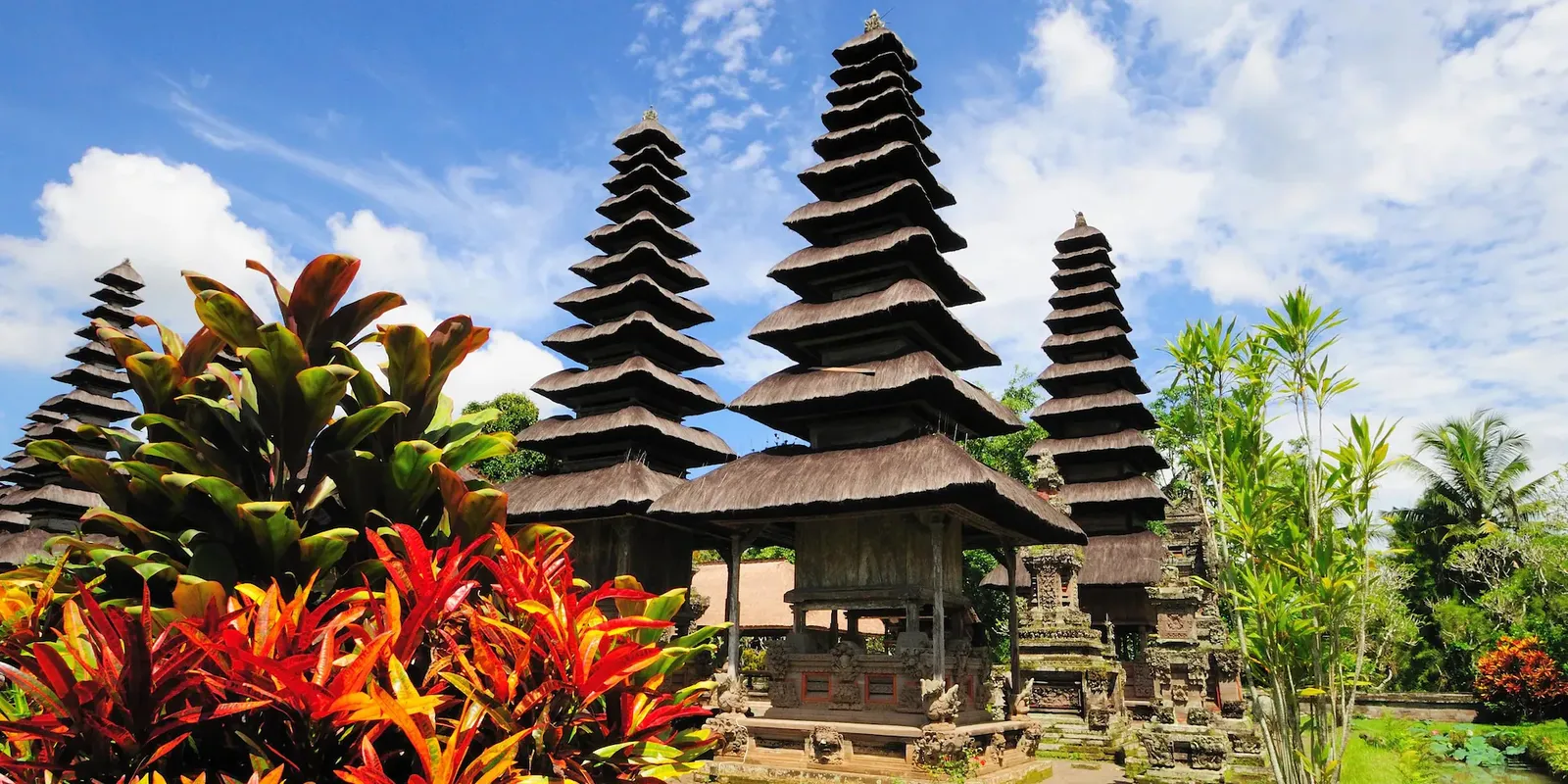

Denpasar: temples and the memory of Bali
More the administrative capital of Bali than a tourist destination in itself, Denpasar is often rushed through by those heading for the island's beaches, overlooking a center that actually preserves monuments and museums key to understanding Balinese history.
The city traffic, among the island's most intense, makes a scooter or private driver convenient for the entire day.
The Bajra Sandhi Monument, bell-shaped like a Hindu ritual bell, recounts through internal levels and dioramas Bali's history from prehistory to Indonesian independence in 1945.
Puputan Square, a broad green space in the city's heart, takes its name from the ritual mass suicide by which the Balinese royal court chose death rather than surrender to Dutch colonial troops in 1906.
The Pura Jagatnatha Temple, dedicated to the supreme Hindu-Balinese deity Sang Hyang Widhi, stands out for the tall carved-stone throne dominating the central courtyard, always open to respectful visitors observing the ongoing worship.
The Bali Museum, the island's oldest, gathers ceremonial masks, textiles, and traditional instruments in buildings constructed in the architectural style of Balinese royal palaces.
Puputan Square bears the name of a colonial tragedy that the rest of Bali, focused on beaches, rarely pauses to consider.
Denpasar, precisely for this reason, remains perhaps the best place on the island to understand what came before the resorts — and at what cost the island traversed the last century.
Guided tours and experiences in Denpasar


Related articles

You might also like...
Mataram: the gateway to Lombok and the Gili Islands
Surabaya: heroism and trade on the island of Java

Jeju Air After the Muan Accident: Fleet, Routes and What to Know Today

LIAT: What to Expect Today When Flying Between the Caribbean Islands

Alfonso Bonilla Aragon International Airport: where to stay, areas and recommended hotels
