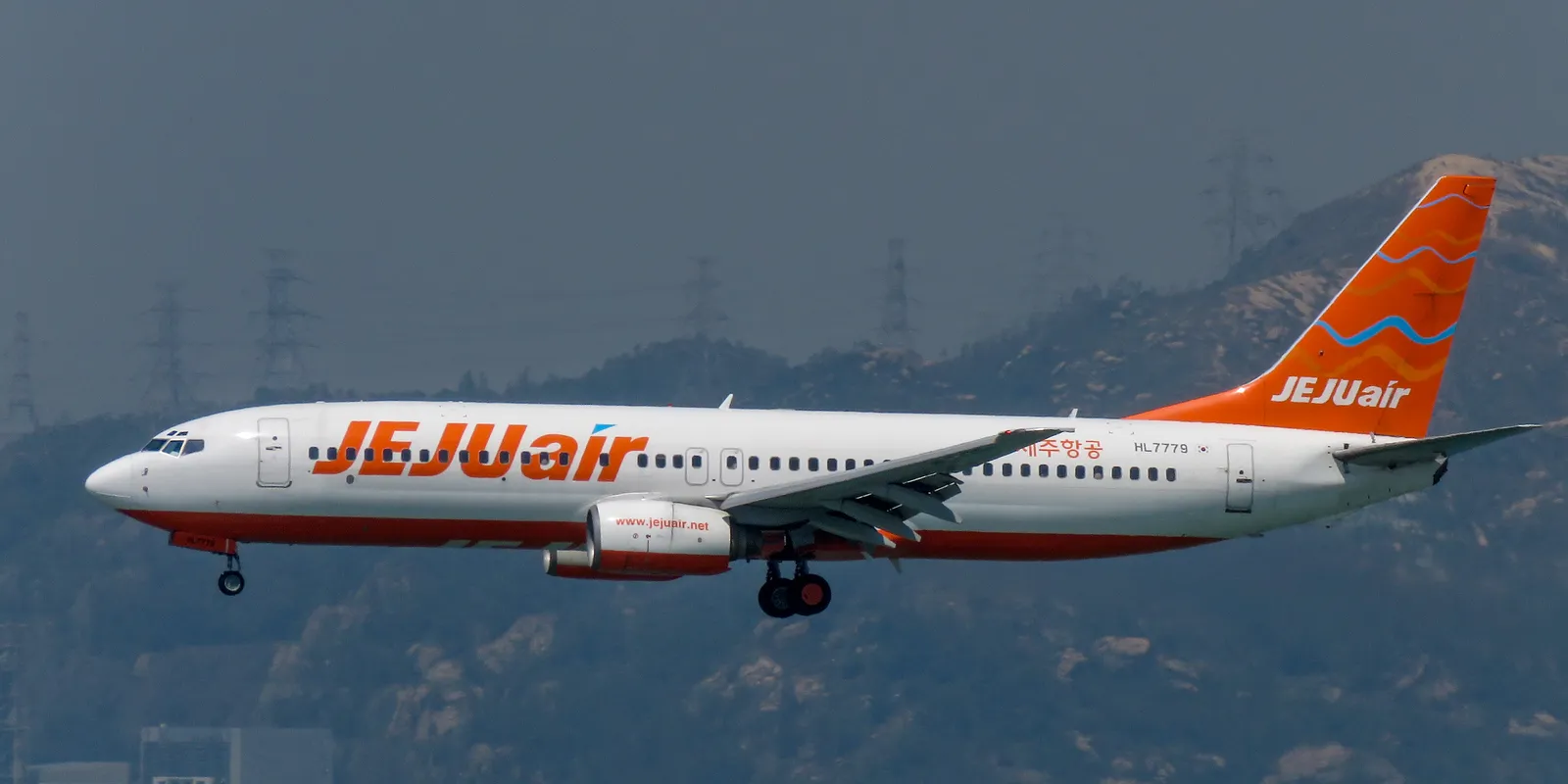
Jeju Air After the Muan Accident: Fleet, Routes and What to Know Today
Jeju Air, founded in 2005, is the largest low-cost airline in South Korea by fleet size, with its main base at Gimpo Airport in Seoul. On December 29, 2024, one of its Boeing 737-800s was involved in the worst accident in the history of South Korean civil aviation, at Muan Airport, an event that inevitably marked public perception of the airline in the following years.
The Muan accident
The flight, coming from Bangkok, touched down on the Muan runway without the nose gear being extended, continued past the end of the runway and struck a structure at its end: 179 of the 181 people on board lost their lives. Early reconstructions pointed to a bird strike shortly before landing among the factors under examination, while investigations into technical and procedural causes and into the airport's structure itself were still under way in the following months. It is reasonable to expect that the final reports of the South Korean aviation authorities will continue to be the most reliable source on how the investigation develops.
The fleet
Jeju Air operates a uniform fleet of Boeing 737-800s, among the largest of the Korean low-cost carriers, with the stated aim of introducing the newer 737 MAX in the coming years to gradually renew its fleet. Fleet uniformity remains an operational strength typical of the low-cost model, useful for keeping maintenance and training costs down.
Routes and network
The network covers South Korean domestic routes and short and medium-haul international connections to Japan, China and Southeast Asia, as well as more distant leisure destinations such as Thailand, reached with the 737-800 thanks to configurations optimized for range. It is a network profile typical of Korean low-cost carriers, oriented to regional tourism rather than direct intercontinental routes.
What passengers say
- Historically appreciated: competitive fares on leisure routes to Southeast Asia, good frequency on the most in-demand domestic routes.
- Elements of greater attention after Muan: more frequent requests for information on fleet age and maintenance from those booking, a topic on which the airline has stepped up its public communication.
Jeju Air remains operational on most of its historic network and continues to be one of the cheapest options for leisure connections from South Korea. If you are particularly sensitive to safety after the Muan accident, you can consult the official reports of the South Korean aviation authorities, published progressively as the investigation advances, before deciding.
If you book a Jeju Air flight, always check the exact aircraft type shown at booking: the 737-800 fleet will coexist for a few more years with the first arrivals of the new MAX generation.
You might also like...

Tbilisi International Airport: where to stay, areas and recommended hotels

Land's End Airport: where to stay, areas and recommended hotels
ITA Airways in 2026: The New Fleet, the Move to Lufthansa and What Passengers Really Say
People's Viennaline: The Tiny Austro-Swiss Airline and the Routes It Really Flies

Copenhagen: the right lounge for Schengen and non-Schengen