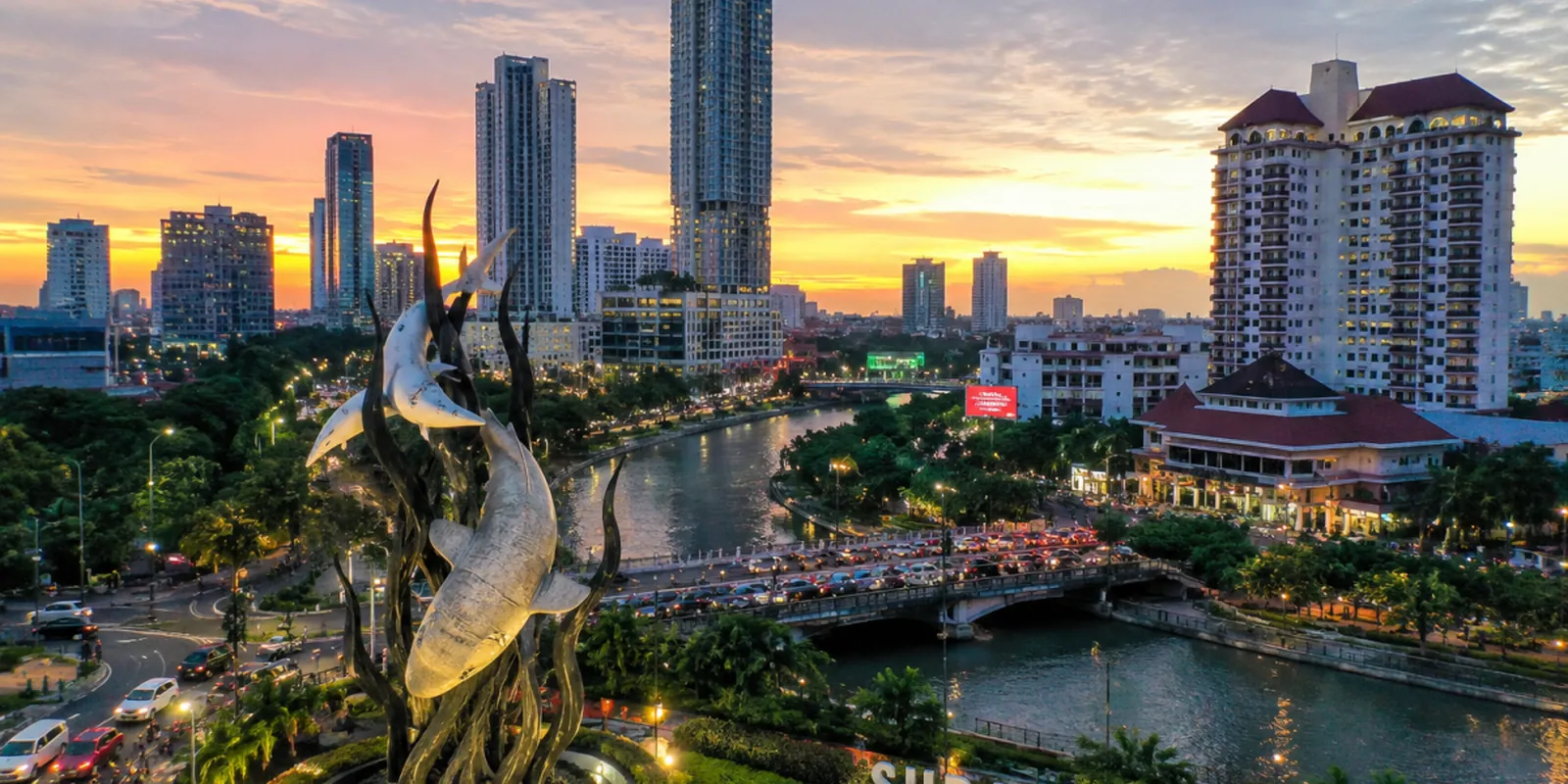

Surabaya: heroism and trade on the island of Java
Indonesia's second-largest city, Surabaya was the site in 1945 of one of the bloodiest battles of the Indonesian war of independence.
Taxis and ojek, local motorcycle taxis, remain the most common way to get around.
The Tugu Pahlawan Monument, a commemorative tower dedicated to those who died in the Battle of Surabaya in 1945, recalls the event considered the symbolic birth of Indonesian armed resistance.
A short walk away, the House of Cinta Rakyat, a Dutch colonial building, houses a museum dedicated to the history of the battle and its protagonists.
Continuing on, you visit the Arab quarter of Ampel, where a fifteenth-century mosque and spice markets tell of the city's ancient commercial role with the Middle East.
Toward evening, the Suramadu Bridge, one of the longest bridges in Southeast Asia, connects Surabaya to the island of Madura across the namesake strait.
The Battle of Surabaya in November 1945, fought between Indonesian forces and the British army just arrived to disarm the Japanese, is commemorated every year as Heroes' Day throughout Indonesia.
The Ampel district preserves one of Indonesia's oldest Arab Muslim communities, historically connected to the trade routes linking Java to the Arabian Peninsula.
Guided tours and experiences in Surabaya
Related articles

You might also like...
Yogyakarta: the gateway to Borobudur
Denpasar: temples and the memory of Bali
Missing your flight: a practical guide to handling the emergency

Osh Airport: where to stay, areas and recommended hotels

Ástor Piazzola International Airport: where to stay, areas and recommended hotels